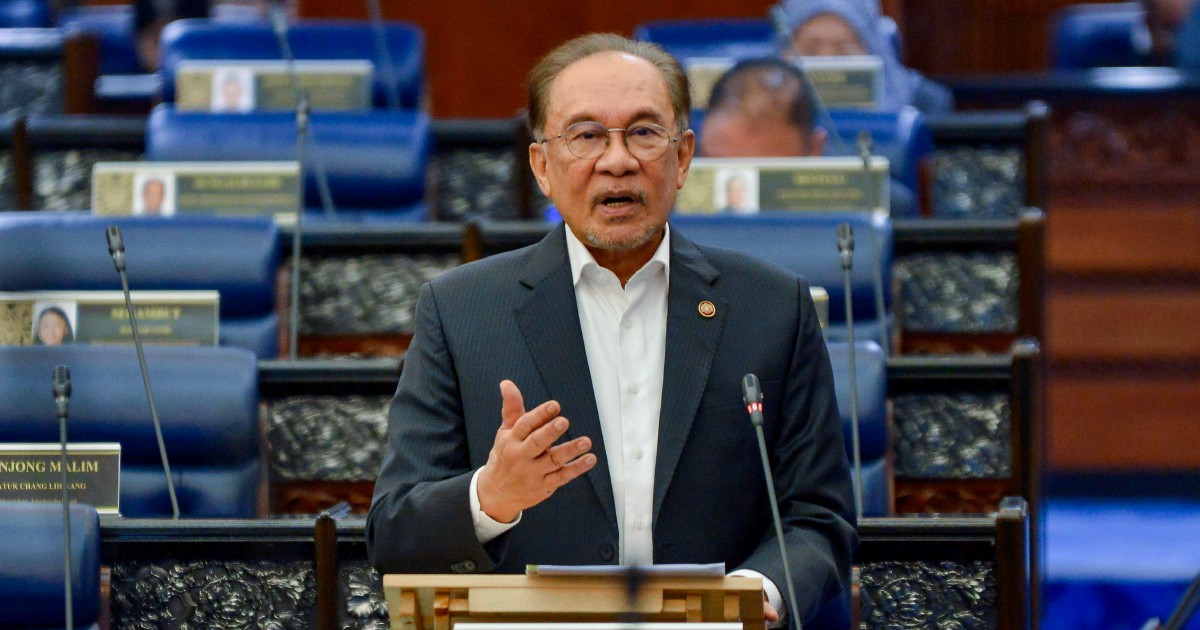
Malaysia's public pension system faces a deepening financial strain as the Retirement Fund Incorporated (KWAP) struggles to bridge the gap between its investment earnings and burgeoning retirement liabilities. Prime Minister Datuk Seri Anwar Ibrahim has highlighted the structural challenge confronting the nation's pension arrangements, noting that KWAP's annual investment returns of RM12.9 billion represent less than 30 per cent of the government's annual pension bill, which has reached nearly RM45 billion.
This substantial funding gap underscores a broader challenge affecting Malaysia's fiscal framework. The widening disparity between revenue generation and pension expenditure reveals the mounting cost of honouring commitments to retired civil servants, a demographic obligation that has grown steadily as the public sector workforce expanded over decades. The RM32.1 billion annual shortfall represents a significant claim on government resources that must be sourced from general revenue, effectively diverting funds from other critical areas including healthcare, education, and infrastructure development.
KWAP's investment performance, while respectable in absolute terms, reflects the inherent limitations of relying primarily on market returns to fund an expanding pension liability. The fund's annual earnings have grown substantially over the years, yet they continue to fall far short of meeting the government's pay-as-you-go pension system obligations. This structural mismatch points to a deeper demographic and actuarial reality: the ratio between active contributors and pension beneficiaries has shifted unfavourably as Malaysia's civil service matured and retirement rates increased.
The magnitude of the annual pension bill provides insight into the scale of Malaysia's public sector commitments. With nearly RM45 billion allocated annually to pension payments, this represents one of the largest single expenditure categories in the federal budget. For context, this outlay rivals or exceeds spending on entire ministry budgets and reflects the generosity of civil service pension schemes that remain largely unfunded on an actuarial basis. These defined benefit arrangements guarantee retirees a percentage of their final salary, creating open-ended obligations that grow with salary increases and longer life expectancies.
The timing of the Prime Minister's acknowledgement of this fiscal challenge suggests growing political recognition that current pension arrangements may not be sustainable without significant reform. Malaysia's ageing population, combined with rising medical costs and extended retirement periods, will likely intensify pressure on public finances if the current system remains unchanged. Neighbouring countries including Singapore and Australia have substantially reformed their retirement systems, transitioning towards defined contribution models that shift some actuarial risk from government to employees.
KWAP's role as the primary investment manager for Malaysia's civil service pensions places substantial responsibility on its shoulders to generate competitive returns. The fund has developed a diversified portfolio spanning equity markets, fixed income, property, and alternative investments. However, even with sound stewardship and favourable market conditions, the mathematics of covering such a large liability through investment returns alone remains problematic. The fund would require annual returns substantially exceeding historical averages to narrow the funding gap meaningfully.
For Malaysian taxpayers and the broader economy, the pension funding challenge carries significant implications. The government must either increase contributions to KWAP, reduce future pension benefits, raise the retirement age, reform the pension formula, or some combination thereof. Each option carries political and social consequences. Public sector employees have structured their lives around existing pension entitlements, making changes contentious. Simultaneously, the fiscal burden of unfunded pension liabilities constrains the government's ability to invest in future growth initiatives or respond to emerging crises.
The regional context amplifies Malaysia's pension challenge. Across Southeast Asia, governments grapple with similar demographic shifts and budgetary pressures from ageing populations. However, countries that implemented pension reforms earlier or embraced private retirement systems earlier have potentially cushioned themselves against the most severe fiscal impacts. Malaysia's delay in addressing structural pension issues may force more dramatic adjustments when political space and fiscal capacity become increasingly constrained.
Private sector parallels offer cautionary lessons. Malaysian private companies that operated traditional defined benefit pension schemes have increasingly frozen new accruals or converted to defined contribution arrangements, recognising the unsustainable trajectory of unfunded liabilities. The government, lacking comparable market discipline and able to mandate tax revenue allocation, has deferred similar hard choices. However, the mounting gap between KWAP's earnings and pension obligations suggests that deferral itself has become increasingly costly.
Looking forward, the government faces strategic decisions about balancing intergenerational equity. Current and retired civil servants benefit from generous defined benefit pensions, while younger workers face uncertain retirement prospects and mounting taxation. Some economists argue that moving towards contributory systems for new entrants, whilst honouring existing commitments to current pensioners, represents a pragmatic middle path. Such approaches have been implemented in various forms across the region.
The Prime Minister's public acknowledgement of the pension funding gap suggests awareness of the need for longer-term solutions. Whether Malaysia moves towards increased government funding, pension reforms, or hybrid approaches remains uncertain. What appears clear is that relying on KWAP's investment returns to bridge the widening pension gap is mathematically insufficient without complementary structural changes to Malaysia's retirement system.

