Three prominent Malaysian professional bodies have joined forces to elevate standards in Islamic wealth planning, signalling growing recognition that sophisticated estate administration requires collaboration across religious, legal and financial disciplines. Labuan IBFC Incorporated Sdn Bhd, the Association of Shariah Advisors in Islamic Finance Malaysia (ASAS), and the Society of Trust and Estate Practitioners (STEP) Malaysia hosted the 'Islamic Wealth & Legacy Forum 2026 - Beyond Faraid: Islamic Wealth Governance, Labuan Structures and Legacy Continuity' in Kuala Lumpur, bringing together the professionals who guide high-net-worth families through wealth succession.
The forum's central theme reflects a maturing understanding within Malaysia's Islamic finance ecosystem. While faraid—the Islamic system of testamentary distribution—provides the foundational framework for Muslim estate planning, contemporary wealth structures often exceed its scope. Families increasingly hold assets across multiple jurisdictions, operate through corporate vehicles, and maintain investments in instruments unknown to classical jurisprudence. The gathering addressed this gap by exploring how practitioners can design comprehensive succession plans that remain compliant with Shariah principles while accommodating modern financial complexity. This represents a significant shift from viewing Islamic estate planning as a purely religious obligation toward recognising it as a sophisticated wealth management discipline.
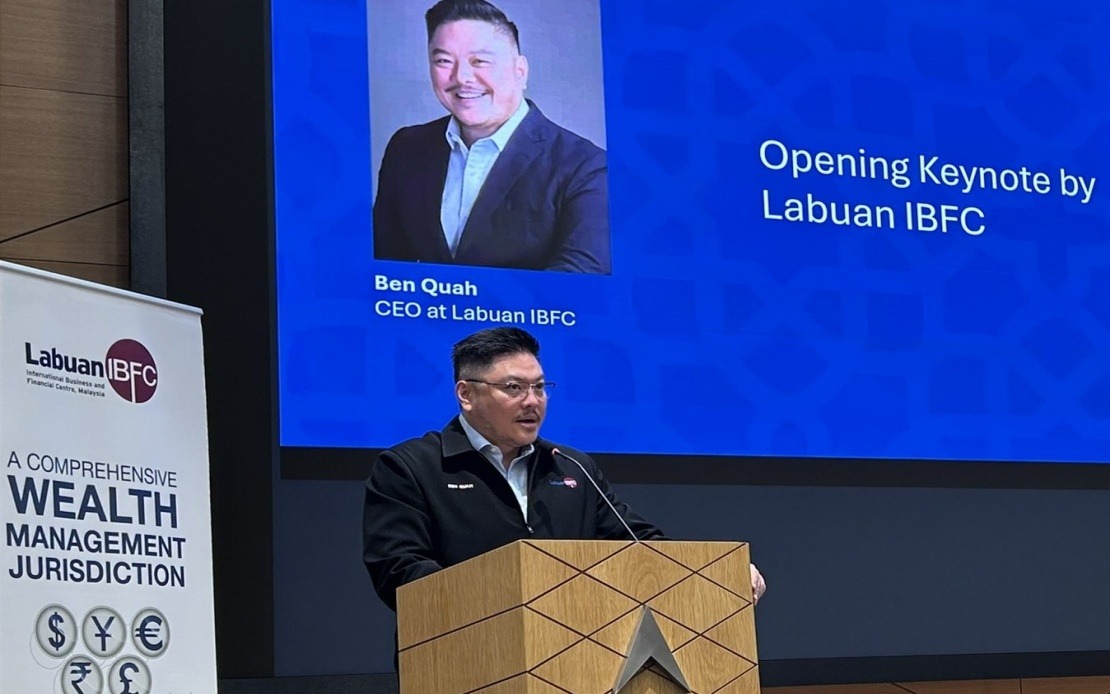
Labuan IBFC Inc Chief Executive Officer Ben Quah positioned the forum within a broader strategic narrative, emphasising that Labuan's offshore financial centre serves as an essential infrastructure for cross-border Islamic wealth solutions. As Ultra-High-Net-Worth individuals increasingly spread assets internationally—holding properties in London, investments in Singapore, and business interests across the Gulf Cooperation Council states—they require structures that protect assets, minimise tax leakage, and maintain predictability across different legal jurisdictions. Labuan IBFC offers corporate vehicles, trust frameworks and holding structures specifically designed for families managing multi-generational wealth within Islamic parameters. Quah's remarks underscored that Malaysia aspires to position itself not merely as a domestic Islamic finance hub but as a genuine international player, competing with jurisdictions like the Cayman Islands and Luxembourg for sophisticated Muslim client portfolios.
Farah Deba, chairing STEP Malaysia, articulated how each participating organisation contributes distinct expertise to a unified ecosystem. STEP members—typically lawyers, accountants and trust specialists—accumulate decades of experience guiding families through the practical mechanics of estate administration, probate and trust management. Labuan IBFC brings institutional knowledge of offshore structuring, including the deployment of trusts, corporate entities and investment vehicles across regulatory environments. ASAS contributes Shariah certification and governance oversight, ensuring that complex structures do not inadvertently violate Islamic principles. By convening these perspectives simultaneously, the forum acknowledged that effective Islamic wealth planning cannot emerge from siloed professional communities but requires genuine interdisciplinary dialogue.
Critical discussion focused on practical challenges that estate planners encounter repeatedly. Muslim families often struggle to translate informal succession intentions—verbal agreements between fathers and sons, for instance—into legally robust documentation that courts would enforce. Gaps between Islamic inheritance principles and civil law jurisdictions create ambiguity; a will that complies with faraid may not satisfy probate requirements in Singapore or the United Kingdom, leaving beneficiaries exposed to lengthy disputes. The forum examined solutions including carefully drafted testamentary documents, explicit Shariah compliance statements, and coordination with trusts established during lifetime rather than posthumously. These mechanisms enable families to achieve substantive compliance with Islamic succession ideals while ensuring enforceability within secular legal systems.
The afternoon session pivoted toward implementation mechanisms, exploring how various financial instruments can support wealth preservation objectives. Takaful—Islamic insurance products—emerged as particularly valuable, allowing families to create liquidity pools that fund tax obligations, business succession, or charitable giving without compromising Shariah requirements or triggering prohibited interest-based debt. Trusts structured under Labuan law offer flexibility unavailable under traditional Islamic jurisprudence, permitting family councils to exercise discretion in distributing income while maintaining asset segregation. The forum distinguished between these mechanisms and faraid itself, clarifying that Islamic wealth planning integrates multiple tools; faraid establishes the baseline distribution framework, but additional structures address tax efficiency, creditor protection and generational continuity.
Shariah governance emerged as a persistent theme throughout proceedings, with ASAS Executive Committee Member Yusaini Yusof emphasising that religious oversight ensures wealth arrangements align with Maqasid Shariah—the overarching objectives underlying Islamic law. This articulation moved beyond mechanical compliance, recognising that authentic Islamic wealth planning should serve genuine human purposes: maintaining family cohesion, supporting charitable objectives, and ensuring that the deceased's moral legacy—not merely financial assets—transmits to subsequent generations. Yusaini's closing remarks affirmed that ASAS would intensify engagement with the wider practitioner community, indicating that Shariah advisors increasingly see wealth planning as central to their professional mission rather than peripheral.
The forum reflected broader structural shifts within Malaysia's Islamic finance sector. The memorandum of understanding between Labuan IBFC Inc and ASAS formalises an alliance that might have seemed improbable a decade ago. Labuan's identity as an offshore centre carried historical associations with tax avoidance and regulatory evasion; deepening Shariah governance oversight helps rehabilitate that reputation and attract clients for whom religious compliance represents genuine principle rather than marketing convenience. Simultaneously, ASAS has evolved from issuing occasional Shariah approvals toward actively shaping financial product design. This partnership signals that Shariah governance will increasingly resemble the compliance functions prevalent in conventional banking—integrated into institutional architecture from inception rather than applied retrospectively.
For Malaysian practitioners and high-net-worth families, the forum's outcomes carry immediate relevance. Estate planning represents one domain where Malaysia possesses genuine comparative advantage over regional peers. While Singapore has larger asset pools and the Gulf States command greater capital, Malaysia combines Shariah expertise, common law familiarity, and strategic geographic positioning between Asian and Middle Eastern markets. Professionals who master the integration of Islamic jurisprudence with offshore structuring will capture disproportionate share of regional advisory mandates. The forum essentially provided a roadmap: practitioners must develop fluency across three registers simultaneously—theological (understanding Shariah principles), technical (mastering trust law and corporate structures), and practical (solving real families' succession challenges). This tri-competency model requires substantial investment in professional development but creates durable competitive moats.
Looking beyond the immediate forum outcomes, this collaboration signals maturation within Malaysia's Islamic financial ecosystem. Rather than viewing Islamic and conventional wealth structures as competing approaches, sophisticated practitioners recognise they address complementary objectives. A family's comprehensive succession plan might utilise faraid's distributional framework, trusts' flexibility, insurance's liquidity, and corporate vehicles' asset protection—each element serving specific functions within an integrated strategy. The forum's recognition of this complexity suggests Malaysia's Islamic finance community has moved beyond ideological purity debates toward pragmatic professionalism. This evolution positions the country well for future competition in Islamic wealth planning, a sector projected to expand substantially as first-generation Gulf fortunes transmit to successors and as Asian wealth creation accelerates throughout the Muslim world.

