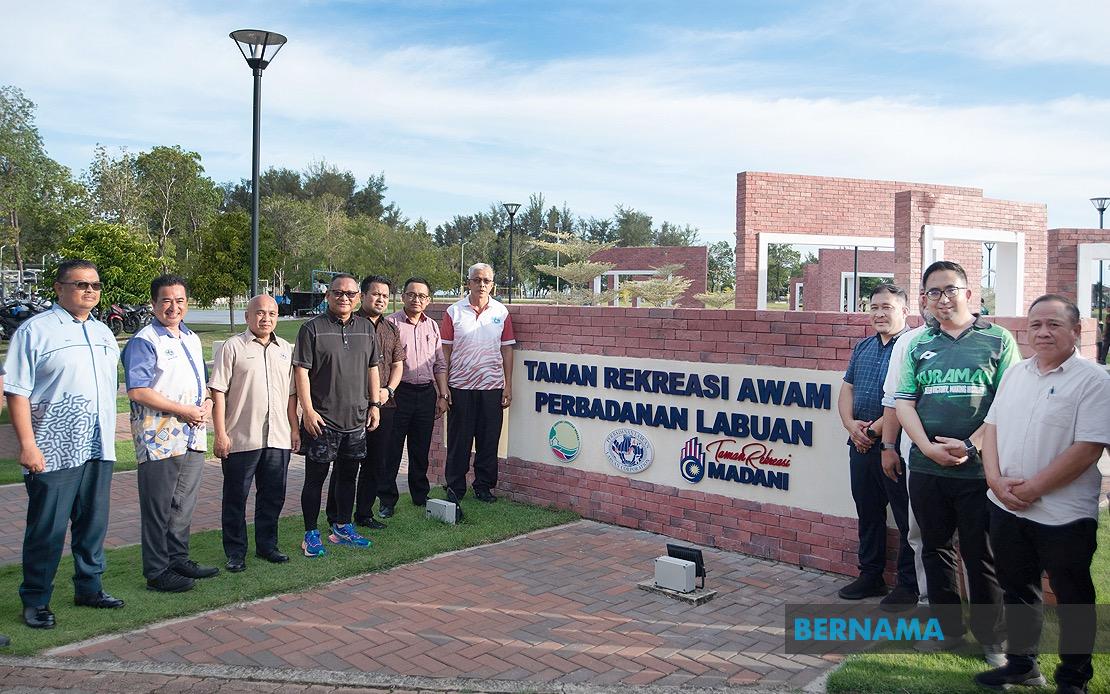
Labuan has taken a significant step towards promoting healthier lifestyles among its residents with the official opening of the upgraded Public Recreation Park at Tanjung Purun, located in the town centre. The project, which carried a price tag of RM495,382, forms part of the government's broader Madani Recreation Park initiative aimed at improving public spaces across Malaysia. This development underscores a growing recognition in Malaysian towns and cities that well-maintained recreational facilities are essential infrastructure for community wellbeing, not merely aesthetic additions to urban landscapes.
Rithuan Ismail, chief executive officer of Labuan Corporation, articulated during the opening ceremony that the park represents more than just a recreational venue. He framed it as a deliberate investment in social cohesion and public health, designed to accommodate people across all age groups and fitness levels. The inclusive approach reflects evolving urban planning principles that prioritise accessibility and community gathering over exclusive or specialised facilities. For residents of Labuan, an island that has undergone significant economic transitions, such amenities represent tangible improvements to daily quality of life that extend beyond commercial or administrative developments.
The transformation of the former LDA Field into a modern recreational space reveals the practical challenges faced by many Malaysian municipalities in managing public land effectively. The original site had deteriorated into underutilisation despite its advantageous downtown position, hampered by insufficient lighting, minimal facilities, and aging casuarina trees that created maintenance and safety concerns. This pattern mirrors conditions in numerous towns across Malaysia where prime public spaces have languished due to deferred maintenance and lack of coordinated investment. The National Landscape Department's decision to channel 2024 funding towards this project demonstrates how strategic public investment can reclaim and revitalise community assets that have effectively been lost to neglect.
The selection rationale for this location offers insights into contemporary municipal decision-making in Malaysia. Labuan Corporation identified several key advantages: the site's central position ensuring accessibility for the widest possible demographic, adequate land dimensions to accommodate diverse recreational activities, good transport links, and importantly, the absence of competing land claims that could complicate development. These criteria illustrate how planners must balance idealistic visions of public space with practical realities of property rights, infrastructure readiness, and fiscal constraints. Municipalities nationwide grapple with similar trade-offs when attempting to upgrade community facilities.
The upgraded facility now incorporates amenities reflecting contemporary recreational preferences among Malaysians. An 800-metre jogging track addresses the growing interest in running and walking activities, while concrete seating areas and outdoor fitness equipment cater to both casual visitors and dedicated fitness enthusiasts. The park's evening activation through lighting improvements addresses a critical gap in many Malaysian towns, where darkness discourages public space usage and reduces community safety. Evening recreation has become increasingly important as Malaysian workers seek accessible venues for physical activity outside standard business hours, particularly in smaller towns where gym memberships may prove expensive or unavailable.
Future expansion plans announced by Labuan Corporation indicate sustained commitment to the facility's development. Three additional courts designated for pickleball and sepak takraw are scheduled for completion by year's end, acknowledging both traditional Malaysian recreational preferences and the burgeoning popularity of newer sports like pickleball. This phased development approach allows for initial assessment of community usage patterns before substantial additional investment, a pragmatic strategy that mirrors successful park development in other Southeast Asian cities. The inclusion of sepak takraw particularly reflects cultural continuity, while pickleball's addition signals openness to contemporary sporting trends gaining momentum among Malaysian recreational players.
The funding mechanism through the Ministry of Housing and Local Government's National Landscape Department illustrates how Malaysian federal resources can effectively reach local communities when proper coordination exists between national agencies and municipal corporations. This funding pathway, when functioning smoothly, enables smaller municipalities like Labuan to access capital for infrastructure improvements that local budgets might struggle to accommodate independently. Understanding these financial conduits helps residents and stakeholders elsewhere in Malaysia advocate for comparable investments in their own communities, highlighting successful implementation models.
Community stewardship emerges as a critical theme in Rithuan's messaging regarding the park's long-term viability. His explicit call for public participation in facility maintenance acknowledges a persistent challenge in Malaysian public space management: preserving improvements once infrastructure reaches residents. Wear and tear from intensive use, vandalism, and inadequate maintenance budgets have compromised numerous public facilities nationwide. By framing preservation as shared community responsibility rather than solely a municipal obligation, park leadership attempts to cultivate collective ownership and pride in the facility. This approach recognises that public amenities thrive when users perceive them as community assets requiring collective protection.
For Malaysian policymakers and urban planners monitoring developments in smaller municipalities, Labuan's experience offers practical lessons. The town demonstrates how strategic investment in quality public infrastructure can activate previously neglected spaces, enhance community connectivity, and contribute to public health objectives. The project's relatively modest cost—RM495,382 is modest by many development standards—generated substantial improvements suggesting efficient capital deployment. Comparable investments in other Malaysian towns facing similar challenges with aging or underutilised public spaces could yield comparable benefits, particularly when coupled with ongoing maintenance commitments and community engagement.
The broader implications for Southeast Asian urbanisation trends become apparent when examining Labuan's approach within regional context. As Malaysian and regional cities expand and densify, ensuring equitable access to quality public recreational space becomes increasingly urgent. Not all residents can afford private gym memberships or country club facilities, making freely accessible parks essential social infrastructure. Labuan's investment signals recognition that public health extends beyond clinical settings and healthcare delivery to encompass environmental and social factors that enable healthy behaviour. This holistic perspective gains traction internationally and regionally, influencing how towns and cities allocate limited resources.
For Labuan residents, the park's opening addresses a tangible gap in available community amenities. The facility's design encouraging evening usage through improved lighting particularly benefits those unable to access recreation during daylight hours due to employment or family obligations. Families gain a safe, free gathering space fostering intergenerational interaction and community bonds increasingly strained by digital distractions and suburban sprawl. Fitness enthusiasts benefit from accessible infrastructure supporting their health goals without expensive memberships. These multifaceted benefits extend beyond recreation into public health, social cohesion, and quality of life dimensions that collectively define community wellbeing.
Looking forward, the success of Labuan's upgraded park will depend substantially on sustained municipal management and community engagement. Initial enthusiasm for newly opened facilities often wanes, with usage patterns stabilising at lower-than-projected levels. Ongoing programming, maintenance visibility, and attention to user feedback will determine whether the park becomes the vibrant community hub envisioned or gradually declines into neglect. Municipal leaders and residents both bear responsibility for ensuring this investment yields the intended long-term benefits. The coming months will reveal whether Labuan's investment represents a durable improvement to community infrastructure or another example of short-term enthusiasm followed by deterioration.