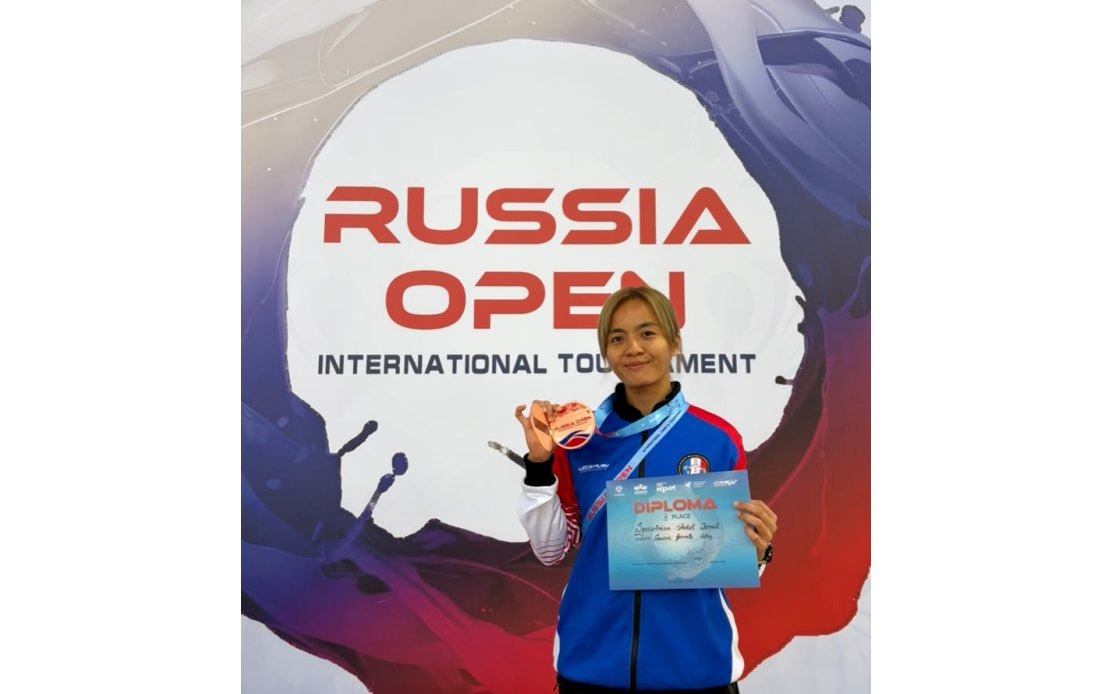
Syarulniza Abdul Jamil has added another credential to her growing list of international accolades, capturing bronze at the Russian Open Championship 2026 held in Sochi from July 21 to 26. The achievement marks a significant moment for the Labuan-born athlete, who continues to establish herself as one of Malaysia's most accomplished karate competitors on the global circuit.
Competing in the Senior Women's Individual Kumite Under-61kg category, Syarulniza navigated a championship that drew over 800 competitors representing 18 countries, underscoring the caliber of opposition she faced. Her performance in this field reflects not only her technical prowess but also her capacity to maintain composure under pressure in high-stakes international competition. The Sochi event remains one of the most demanding karate tournaments in the European calendar, attracting elite practitioners from across Eastern Europe and beyond.
Syarulniza's path to the podium demonstrated both resilience and strategic adaptability. She commenced her campaign with a decisive victory over Khatnyuk Victoria Alekseevna of the Krasnodar Region, establishing momentum early in the tournament. However, the quarter-finals presented a significant obstacle when she encountered Chizjokova Darya Alexandrovna of the Oryol Region, ultimately falling by a narrow 6-7 margin. Rather than allowing this setback to derail her ambitions, Syarulniza exploited the repechage opportunity—a second-chance format that allows defeated competitors to contend for remaining podium positions. Her determined comeback through this bracket ultimately culminated in a bronze medal playoff against Tsysova Anastasia Viktorovna of the Moscow Region, where Syarulniza prevailed in a closely contested 5-5 scoreline, with victory determined by the judges' decision.
The tournament saw Serbia's Brankica Negovanovic of Karate Klub Sampioni claiming the gold medal, while Chizjokova, the athlete who had eliminated Syarulniza in the earlier round, secured silver. The other bronze medal recipient was Sadikova Aigul Azatovna of the Republic of Bashkortostan in Russia. This distribution of medals reflects the competitive intensity that characterized the women's division, where even narrow margins determined final placements.
For Syarulniza, this represents her second appearance at the Russian Open Championship, indicating both her growing reputation within international karate circles and the strategic value of competing regularly at prestigious European venues. Such recurring participation allows athletes to build familiarity with varied competition styles and refine their tactical approaches against world-class opponents. Her progression from previous showings suggests a trajectory of continuous improvement and mounting confidence on the international stage.
Beyond her competition record, Syarulniza carries credentials as a certified Asia Karate Federation Kumite coach, positioning her as a contributor to the sport's development in the region. This dual role—athlete and coach—enhances her value to Malaysian karate, as she can translate international experience into coaching methodologies that elevate domestic training standards. Her coaching background also indicates a long-term commitment to karate beyond her own competitive career.
Aswadi Taba, president of the Labuan Karate Association, characterized Syarulniza's bronze medal as a source of pride extending beyond the athlete herself to encompass both Labuan and the broader Malaysian karate community. His comments underscore the significance attributed to international podium finishes within the national sporting apparatus. Taba emphasized that Syarulniza's achievement reflects qualities of dedication and discipline that define elite athletes, qualities he linked directly to the strength of talent emerging from Labuan despite the island's relatively constrained sporting infrastructure and resources.
The association president's remarks highlight a persistent challenge within Malaysian sports development: the concentration of elite facilities and funding in major urban centers, which can disadvantage athletes from smaller or less-developed regions. Syarulniza's success despite these structural constraints becomes more noteworthy when contextualized against resource disparities. Taba's assertion that Malaysian athletes possess genuine competitive capability when afforded adequate international exposure carries implications for policy discussions regarding sports funding allocation and the importance of tournament participation at world-class venues.
Looking forward, the Labuan Karate Association views Syarulniza's international achievement as a catalyst for grassroots development. Taba expressed hope that her bronze medal would inspire younger practitioners within Labuan to pursue karate seriously and aspire toward national and international recognition. This aspirational effect represents an often-underestimated benefit of individual athletic success—the ripple impact on community participation and youth engagement with a discipline. Success stories humanize the possibility of achievement and render elite competition less distant and abstract for emerging athletes.
Syarulniza's medal also positions Malaysia favorably within the Asia-Pacific karate landscape at a time when regional competition remains intensifying. Her ability to compete effectively against Russian athletes in Russia demonstrates that geographic proximity to established karate strongholds in Eastern Europe does not confer insurmountable advantages when athletes receive proper preparation and support. For Southeast Asian karate development, particularly as the sport strengthens its position within major sporting calendars across the region, examples of Malaysian success against non-Asian opponents validate the quality of training methodologies being implemented domestically.
The Russian Open Championship's scale—attracting over 800 athletes from across a genuinely global participant base—renders Syarulniza's podium finish a meaningful data point regarding Malaysia's standing within international karate hierarchies. Her bronze medal positions her competitively alongside European specialists while demonstrating that athletes from the Southeast Asian region can secure consistent placements at elite-level championships. As Malaysia continues developing its karate program and seeking to expand participation in international circuits, individual achievements by competitors like Syarulniza provide both validation of current developmental approaches and benchmarks for measuring future progress.

