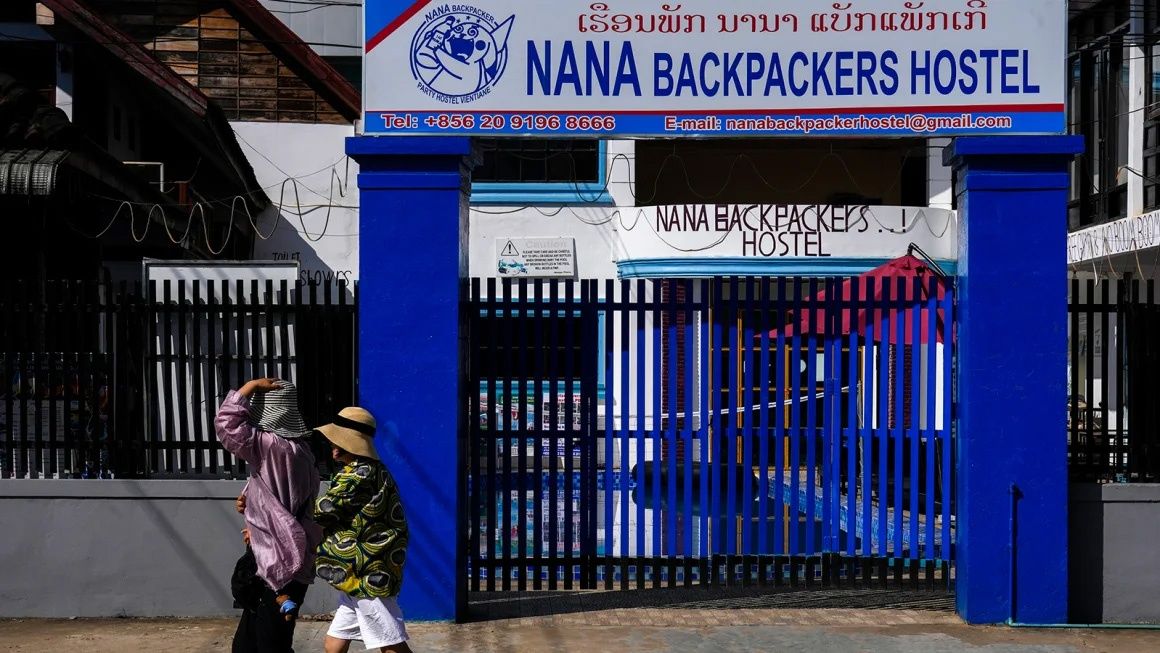
Laotian authorities have charged a distillery owner with selling contaminated food and operating an unlicensed business in connection with a November 2024 incident that claimed the lives of six foreign tourists at a backpacker hostel in Vang Vieng. The announcement has triggered a wave of diplomatic protests and family outcry, with multiple governments expressing deep frustration at what they view as inadequate legal accountability for a tragedy that devastated households across Europe and the Indo-Pacific region.
The incident centred on methanol-laced alcohol consumed at the Nana Backpacker Hostel, where the victims had ingested what were described as complimentary shots of Laotian vodka before visiting other venues. Among those who perished were Danish nationals Anne-Sofie Orkild Coyman, aged 20, and Freja Vennervald Sorensen, aged 21; Australian teenagers Bianca Jones and Holly Morton-Bowles, both 19; British solicitor Simone White, 28; and American James Louis Hutson, 57. The deaths underscore the persistent hazard posed by unregulated alcohol in Southeast Asian tourism destinations, particularly in establishments catering to budget-conscious travellers unfamiliar with local safety risks.
Denmark's foreign ministry, citing Lao judicial authorities, confirmed that the current charges carry potential penalties of three months to four years imprisonment plus financial sanctions if the accused is convicted. However, the ministry's statement revealed that the case file will remain formally open for 15 years, leaving open the possibility of upgrading charges to more grave offences such as negligent homicide should evidence surface. This procedural safeguard offers limited comfort to grieving families who view the initial charges as fundamentally misaligned with the severity of the loss.
Danish Foreign Minister Lars Løkke Rasmussen articulated his government's position with unusual bluntness, declaring himself deeply disappointed that the indictment failed to capture the magnitude and seriousness of a tragedy affecting numerous families. While acknowledging the legal complexities inherent in establishing proof for homicide charges, Rasmussen emphasised the profound difficulty families face when confronted with charges that appear trivial relative to their loss. Copenhagen has signalled its intention to coordinate with victim families and other implicated nations to determine collective next steps.
Australian authorities responded with comparable vigour, with Foreign Minister Penny Wong describing herself as bitterly disappointed and deeply frustrated at prosecutors' apparent unwillingness to pursue the most serious available charges. Prime Minister Anthony Albanese dispatched an envoy to Vientiane to lodge formal objections and underscore government expectations for a thorough investigation delivering meaningful justice. The Australian diplomatic mission summoned Laos' Canberra-based ambassador to convey the seriousness of the government's displeasure, signalling that bilateral relations may face pressure if the matter is not escalated.
Families of the Australian victims delivered particularly poignant testimony at a news conference on Friday morning. Michelle Jones, mother of Bianca, expressed anguish that the charges suggested her daughter's life carried little weight, stating that her children were simply engaging in the ordinary adolescent rite of passage of international travel when tragedy befell them. Shaun Bowles, father of Holly Morton-Bowles, warned that the apparent indifference shown by Laotian authorities would likely deter young international travellers from visiting the country, potentially damaging a tourism sector already challenged by reputation and infrastructure constraints.
The case has exposed troubling gaps in victim family communication and investigation transparency. Parents of Freja Vennervald Sorensen reported to Danish public broadcaster DR that they had received little information since the tragedy struck, with no post-mortem examination conducted on their daughter and a death certificate implausibly attributing her death to natural cardiac arrest rather than methanol poisoning. The family's experience illustrates the vulnerability of grieving relatives operating across jurisdictions with limited investigative cooperation mechanisms and opacity regarding foreign casualty cases.
Methanol poisoning represents a persistent public health challenge throughout the developing world, particularly in regions where legitimate alcoholic beverages command premium prices and illicit distillation is widespread. Data compiled by Doctors Without Borders identifies Indonesia, India and Russia as nations experiencing the highest reported incidence of methanol poisoning cases. The toxin enters the supply chain through two primary pathways: deliberate adulteration of commercial spirits at disreputable establishments seeking cost reduction, and accidental contamination from inadequately distilled home-brewed alcohol. The Nana Backpacker Hostel incident suggests potential negligence in sourcing or storing alcohol without adequate quality assurance, creating hazardous conditions for predominantly young, inexperienced international guests.
Vang Vieng's particular vulnerability to such incidents stems from its character as a backpacker destination heavily marketing adventure tourism and nightlife to budget-conscious international travellers. The town has cultivated a reputation for permissiveness and party culture that attracts hundreds of thousands of young visitors annually, many seeking inexpensive accommodation and entertainment. This commercial model creates structural incentives for establishments to cut corners on safety and regulatory compliance, knowing that transient customers unlikely to return often lack familiarity with local risks or recourse mechanisms.
Laos' political system presents additional complications for justice-seeking families. As an authoritarian single-party communist state, the country maintains tight state control over information, judicial processes and media access. The Lao Foreign Ministry declined to engage substantively with international media inquiries, instead restricting official comment to a news conference limited to domestic and embassy representatives—a posture that reinforces international perception of opacity and inadequate accountability. The country's limited institutional capacity, combined with strategic disinterest in antagonising tourism revenue sources, creates structural barriers to vigorous prosecution of crimes affecting foreign visitors.
The diplomatic mobilisation witnessed across multiple governments signals that the methanol poisoning incident has transcended a localised tragedy to become an international relations issue. The cumulative effect of Danish, Australian and British government interventions may gradually pressure Laotian authorities toward escalating charges, though such leverage remains constrained by limited economic or strategic interdependencies between wealthy Western nations and impoverished Laos. Nevertheless, the reputational damage inflicted by inadequate accountability could gradually erode the country's standing as a safe tourism destination, potentially imposing economic costs sufficient to motivate future prosecutorial rigour.
For Southeast Asian governments and tourism businesses throughout the region, the incident serves as a sobering reminder that budget tourism models dependent on minimal regulatory oversight and cost-cutting carry profound reputational and legal risks. Countries seeking to position themselves as reliable tourism destinations for international youth markets face mounting pressure to demonstrate credible safety standards, transparent investigative processes, and proportionate legal accountability when foreign visitors sustain life-altering harm. Malaysia and its regional neighbours would be prudent to examine their own regulatory frameworks governing alcohol sales, hostel operations and investigative protocols to ensure they do not inadvertently create similar conditions for preventable tragedy.

