Laotian authorities have exposed a sophisticated wildlife trafficking network operating across the Mekong region, culminating in a series of dramatic seizures that have highlighted the scale and organization of the illegal animal trade along Southeast Asian borders. In coordinated enforcement actions spanning early June, wildlife officials rescued nearly 300 live animals and confiscated substantial quantities of protected species products, offering a rare window into the mechanics of an illicit trade that generates billions annually and threatens some of the world's most endangered creatures.
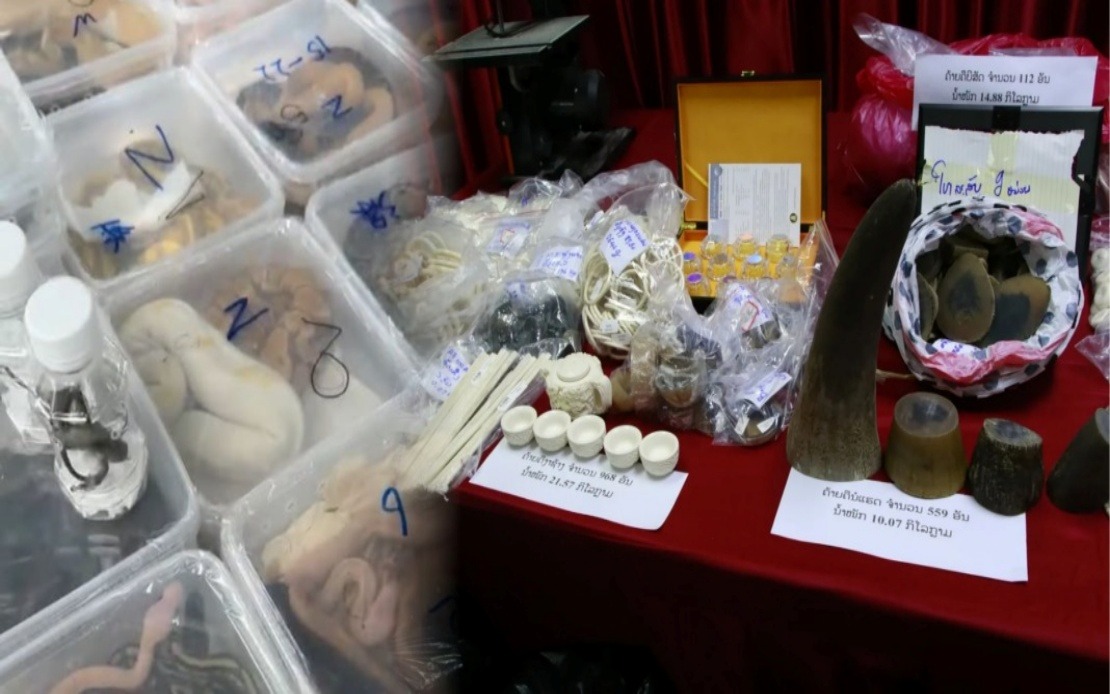
The scope of the operation became apparent when the Lao Wildlife Enforcement Network recovered 60 kilogrammes of suspected illegal wildlife materials in Luang Prabang, the kingdom's cultural heartland and a major tourist hub. Among the contraband were ivory-like objects, animal gallbladders sourced from endangered bears, processed pangolin scales, and rhinoceros horn—each item representing an endangered species pushed closer to extinction. The haul extended to more esoteric products including elephant skin powder, bear gallbladder derivatives, hornbill remains, and tubes of traditional herbal preparations suspected of containing wildlife ingredients, suggesting the trafficking network supplied not merely trophy hunters but also practitioners of traditional medicine and producers of luxury goods.
The most striking development occurred four days later when wildlife rangers intercepted 294 live animals at the Vang Tao International Checkpoint in Champasak Province, a critical crossing point between Laos and Thailand's Ubon Ratchathani Province. The confiscated creatures—comprising turtles, pythons, green snakes, gold-ringed cat snakes, and various lizard species—were being transported via hidden compartments in vehicles attempting to cross into Thailand. The sheer number of animals seized in a single operation underscores the industrial scale of trafficking operations; these were not isolated poachers but organized networks moving hundreds of creatures simultaneously across international borders.
Laos's geographic position as a crossroads between five nations—Cambodia, China, Myanmar, Thailand, and Vietnam—renders it uniquely vulnerable to trafficking networks that exploit porous borders and limited enforcement capacity. The country serves simultaneously as a source region for poached wildlife, a transit corridor for animals originating elsewhere in the region, and increasingly as a destination market for traditional medicine practitioners and wealthy consumers. This convergence of supply, demand, and geography creates an environment in which trafficking networks can operate with relative impunity, particularly in border regions where state authority remains limited and corruption endemic.
The recent Laotian successes must be contextualized within a broader pattern of enforcement activity across the Mekong region. In late May, Thai investigators arrested a woman operating a traditional medicine and souvenirs shop in Nakhon Phanom, northeastern Thailand, seizing over 100 protected wildlife remains believed to have originated in Laos. Weeks earlier, Thai and Lao authorities collaborated to dismantle an attempt to smuggle 130 kilogrammes of cut elephant ivory and animal carcasses across their shared border, a seizure that again emphasizes the volume and value of materials flowing through the region's smuggling networks.
For Malaysian stakeholders, these developments carry particular significance. The Mekong wildlife trafficking networks do not operate in isolation; they are integrated into regional and global supply chains that extend to Malaysian markets. Traditional medicine shops, wildlife markets, and illegal taxidermy operations in Malaysia depend substantially on contraband sourced from Lao and Thai forests. Purchasers of illegal wildlife products in Malaysia—whether bear bile derivatives, pangolin meat, or elephant ivory ornaments—directly fund the poaching and smuggling operations being documented along the Laos-Thailand border.
The United Nations Office on Drugs and Crime has identified wildlife trafficking as a persistent global phenomenon despite two decades of international coordination and enforcement. The UNODC's World Wildlife Crime Report 2024 estimates the global illegal wildlife trade at nearly US$10 billion annually, positioning it alongside human trafficking, narcotics, and arms smuggling as one of the world's most lucrative criminal enterprises. This valuation reflects the extraordinary profits available to traffickers; a single kilogramme of elephant ivory can command prices exceeding US$1,000 on black markets, while endangered animal species can fetch tens of thousands of dollars from private collectors and traditional medicine producers.
Corruption emerges from UNODC analysis as the critical enabler of wildlife trafficking. Without the complicity or negligence of customs officials, border guards, and law enforcement personnel, the movement of tons of illegal products and hundreds of live animals across international boundaries would prove far more difficult. The Laotian operations hint at this reality: animals and products reached border checkpoints only because officials either permitted passage or had been compromised. Strengthening enforcement capacity therefore requires not merely purchasing equipment and training rangers, but addressing the systemic corruption that allows traffickers to operate openly.
The animals rescued in the Champasak Province seizure now face an uncertain future. Many will require specialized rehabilitation to overcome the trauma of capture, transport, and confinement in inhumane conditions. Reptile species captured for the pet trade often arrive at rescue centers severely dehydrated and diseased. Authorities must coordinate with sanctuary facilities across Southeast Asia to provide appropriate care, yet such facilities remain chronically underfunded and overwhelmed. The burden of animal welfare falls on resource-strapped governments already struggling to contain trafficking networks themselves.
These seizures, while representing significant achievements for Laotian enforcement, likely represent only a fraction of trafficking volume. For every successful interdiction, wildlife experts estimate that five to ten smuggling attempts succeed. The animals confiscated in Champasak Province represented a single day's operations for networks that move contraband continuously across multiple border points. As long as demand persists among consumers in Thailand, Vietnam, China, and increasingly in developed nations, traffickers will adapt their methods and routes to circumvent enforcement.
The path forward requires regional coordination extending beyond the Mekong, with Malaysia positioned as a critical enforcement partner. Malaysian authorities must intensify scrutiny of traditional medicine imports, wildlife products in souvenir shops, and private collections suspected of containing illegal materials. Demand reduction campaigns targeting Malaysian consumers of endangered wildlife products remain underfunded relative to their potential impact. Until Malaysian purchasers understand the connection between their purchases and the depletion of Laotian forests, enforcement efforts in Laos will remain a temporary respite rather than a permanent solution to trafficking networks that view the region's wildlife as renewable commodities.