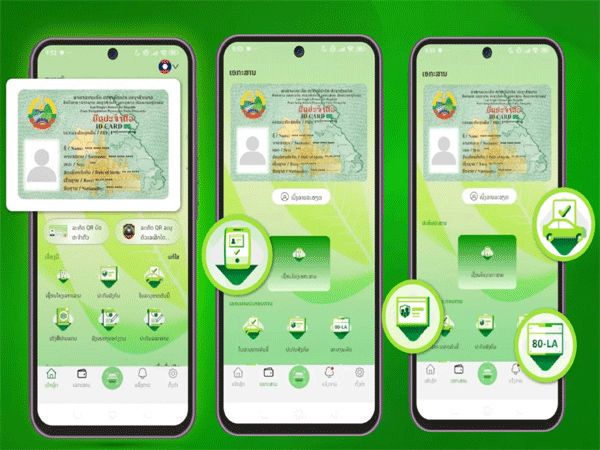
Laos has taken a decisive step toward modernising its public administration infrastructure by formally discontinuing paper-based identity documents in favour of a comprehensive digital alternative. The Ministry of Public Security has officially launched the LAeID application, simultaneously retiring the long-standing white and green identity cards and paper household registration books that have served as the backbone of Laotian civic identification for decades. This nationwide transition marks a significant milestone in the country's broader digital transformation agenda, positioning Laos alongside other Southeast Asian nations increasingly adopting mobile-first governance solutions.
The transition became effective on July 18, when the old physical identity cards ceased to hold validity for any official transactions. Citizens are now required to register for a digital identity through the LAeID application to conduct government business, access public services, and verify their identity across all official channels. The Ministry of Public Security has issued formal notices across all government ministries and agencies, instructing them to cease acceptance of paper documentation and household registration books from citizens who have completed their digital registration process. This coordinated rollout across the entire governmental apparatus ensures consistency and eliminates the possibility of dual-track document acceptance that could undermine the transition.
For ordinary Laotians, the practical implications are substantial. Rather than maintaining a collection of different documents and visiting multiple offices for various administrative needs, citizens can now consolidate their official identity information into a single smartphone application. The digital format eliminates the physical burden of carrying papers while simultaneously reducing the time spent on routine bureaucratic procedures. This streamlining extends beyond individual convenience—the LAeID system fundamentally restructures how government agencies interact with citizen data, replacing paper-based filing systems with centralised digital records managed by the Ministry of Public Security.
The registration process, while straightforward, requires active citizen participation. Individuals must visit district and provincial public security offices to register for a digital identity card before activating their electronic identification account within the LAeID application. Each account uses the citizen's identity number as the username, with password authentication managed through SMS verification or user-created credentials. This two-factor approach balances accessibility with security, ensuring that only authorised individuals can access personal digital documents. The decentralised registration infrastructure—utilising offices at both provincial and district levels—recognises the practical reality of Laos' geography and ensures rural populations are not excluded from the digital transition.
Government administrators anticipate significant systemic benefits beyond what individual citizens experience. The digitalisation of identity documents and household registration creates opportunities for substantial cost reduction across the public sector by eliminating paper production, storage, and administrative processing expenses. More importantly, the centralised digital platform enables faster information processing and more efficient delivery of public services. Where paper-based systems required citizens to present documents at each relevant agency, the digital approach allows instant verification and reduces redundant administrative steps. This efficiency gain compounds across thousands of daily transactions occurring across the Laotian government.
The LAeID application is deliberately designed as an expandable platform rather than a static solution. Currently, only the digital identity card and household information functions are operational, but the system architecture anticipates future integration of additional official documents. The long-term vision encompasses consolidating birth certificates, marriage certificates, health insurance cards, social security information, vehicle registration documents, driving licences, and passports into a single digital wallet. This phased approach reflects practical implementation strategy—launching with core functionality and progressively integrating additional government databases as technical integration work proceeds. Policymakers recognised that attempting to integrate all services simultaneously would risk system failures and citizen frustration.
This incremental rollout strategy carries particular significance for a Southeast Asian context where digital literacy varies across demographics and geographic areas. By beginning with the fundamental identity function and gradually expanding capabilities, Laos allows citizens and government staff to become comfortable with the system before adding complexity. This approach contrasts with more ambitious all-at-once digital transformations that have occasionally encountered adoption resistance in the region. The LAeID rollout demonstrates administrative sophistication in change management, recognising that successful digital transformation requires gradual familiarisation alongside infrastructure development.
Laos' transition to digital identity documents reflects broader regional trends among Southeast Asian governments seeking to modernise public administration through technology. Countries across the region have recognised that paper-based systems create bottlenecks, increase costs, and limit citizens' ability to access services efficiently. The Laotian government's decision to establish a centralised digital identity platform positions it alongside neighbours pursuing similar modernisation paths. However, Laos' approach of consolidating multiple document types into a single application offers a more comprehensive vision than some comparable systems in the region, potentially serving as a model for other nations considering similar transitions.
The security and data management implications warrant consideration, particularly regarding how the Ministry of Public Security safeguards citizen information within the LAeID system. Centralising identity documents on a single digital platform creates both efficiency gains and concentrated data security responsibilities. The ministry's oversight of system management means that cybersecurity protocols and data protection measures become critical governance concerns. Regional observers will likely monitor how Laos implements technical safeguards and whether the system demonstrates resilience against emerging cyber threats. Successful implementation could strengthen citizen confidence in digital government services, while security incidents could undermine public trust and slow adoption of future digital initiatives.
For Malaysian and broader Southeast Asian readers, the Laotian transition offers instructive lessons about digital government implementation. Despite substantial economic and technological differences between countries, the fundamental challenges of retiring legacy systems, managing citizen adoption, and integrating multiple government databases remain consistent across the region. Malaysia's own experience with digital identity initiatives and broader digital transformation efforts provides comparative context. The LAeID launch demonstrates that even developing economies can execute ambitious digitalisation projects successfully when supported by clear government commitment, phased implementation approaches, and adequate infrastructure investment. As Laos completes its identity system transition and begins integrating additional services, other regional governments will observe outcomes with interest, potentially informing their own digital governance strategies.

