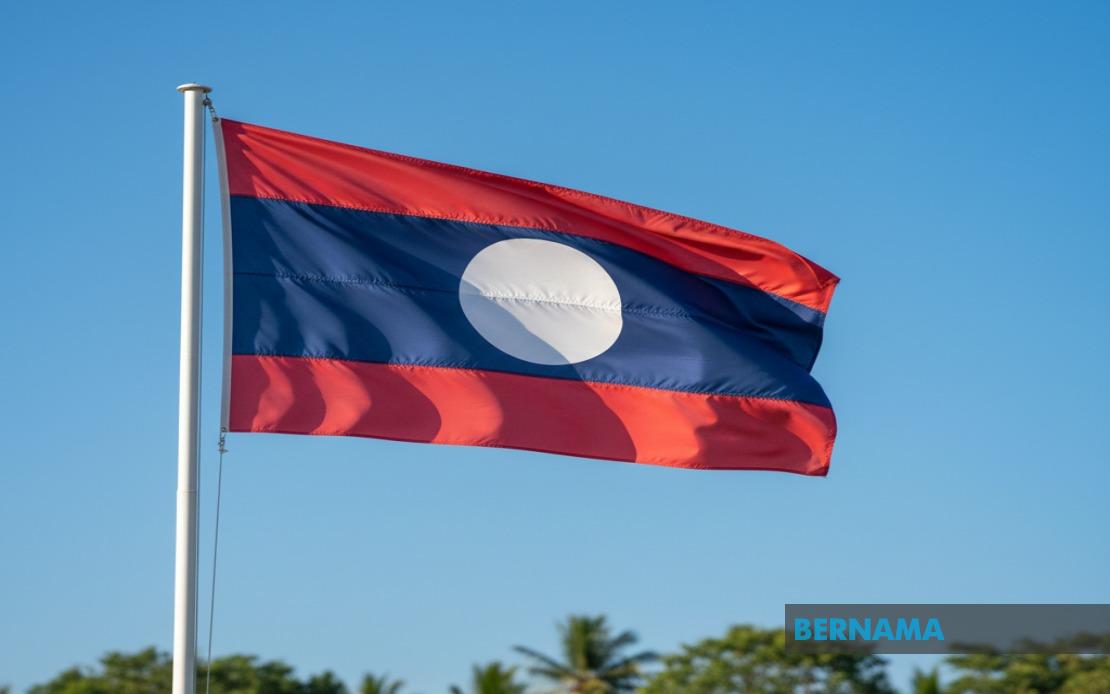
Laos has embarked on an ambitious restructuring of its media landscape through the adoption of a modernisation roadmap unveiled at the country's inaugural National Media Congress in Vientiane. The three-day gathering, convened from Monday to Wednesday this week, represented a significant moment for the Southeast Asian nation's information sector, bringing together government officials, media executives, newsroom editors, working journalists, and communications specialists to chart a collaborative course for the industry's future. The event, operating under the banner "Strengthening Party Leadership and Developing the Media Toward a New Level of Quality," signalled Vientiane's recognition that updating its media infrastructure and practices is essential to national development.
The congress concluded with a comprehensive summary report delivered by Khamphan Pheuyavong, who heads the Commission for Information and Education. In synthesising the congress's deliberations, Pheuyavong emphasised that the gathering had successfully accomplished its dual mandate: evaluating what the media sector had already achieved whilst simultaneously identifying structural weaknesses and mapping out concrete measures to enhance journalistic standards and communications impact across the country. This balanced approach suggests Laos intends to build upon existing strengths rather than impose wholesale systemic replacement, a pragmatic strategy for managing institutional reform.
President Thongloun Sisoulith's closing remarks provided the political framework for these reforms, articulating five strategic pillars designed to strengthen Lao media going forward. His address conveyed official confidence in the nation's journalism community whilst simultaneously establishing clear expectations for their role in advancing national objectives. The five-point agenda represents a comprehensive vision encompassing institutional coordination, professional ethics, editorial integrity, government support mechanisms, and workforce capability—domains that collectively define a functioning media ecosystem.
The first priority emphasises fostering genuine unity and active cooperation amongst Lao media organisations through mechanisms encouraging peer learning and shared understanding of the rapidly changing information environment. Crucially, the president stressed the importance of developing professional judgment to differentiate between legitimate critical commentary and unethical attacks designed to undermine institutions. This distinction carries particular weight in Southeast Asia, where managing the boundary between press freedom and social stability remains a nuanced challenge for governments across the region.
Second, the president positioned media practitioners as custodians of Lao cultural values, calling upon journalists to consciously promote virtues including humility, compassion, and mutual respect in their reportage whilst actively rejecting language and narratives that traffic in vulgarity, deception, and self-interest. This articulation of journalism's cultural mission reflects a worldview—prevalent across much of Asia—in which media practice is inseparable from broader social and moral commitments rather than operating as a purely autonomous professional domain.
Third, the president reaffirmed that defending factual accuracy and justice through responsible reporting constitutes an essential media responsibility. He explicitly called on journalists to resist the proliferation of misinformation whilst working consciously to sustain public confidence in information institutions. In an era of viral disinformation and competing narratives, this emphasis on truth-telling and institutional credibility carries immediate relevance not only for Laos but across Southeast Asia, where false information threatens political stability and public health initiatives alike.
Fourth, Thongloun Sisoulith positioned the Party and state apparatus as active partners in media development, calling for enhanced government guidance, increased material support, and constructive collaboration with news organisations. This framing invites Southeast Asian observers to contemplate the tension between press autonomy and state partnership—a perpetual challenge in regional media systems where formal independence often coexists with substantial official influence.
The fifth pillar emphasised investment in human capital through continuous professional development. The president encouraged media professionals to systematically strengthen technical skills, experiment with emerging technologies and formats, and cultivate the adaptive capacity necessary for journalism to remain relevant amid accelerating technological and social change. This focus on journalist capability-building acknowledges that quality media output ultimately depends upon the competence, motivation, and resources available to practitioners in the field.
Laos's initiative carries regional significance for several reasons. The Southeast Asian media landscape remains characterised by widely varying development levels, regulatory approaches, and professional standards. Laos's deliberate effort to codify media modernisation objectives and establish a consultative forum for stakeholders provides a model for peer countries examining their own institutional arrangements. The congress's emphasis on combining Party leadership with media development reflects the governance model common across communist and socialist-oriented nations in the region, yet the explicit attention to quality, professional standards, and public trust suggests adaptation toward international norms.
The roadmap adopted through this congress will shape Lao journalism for years ahead. How effectively the modernisation agenda translates from presidential rhetoric into operational changes within newsrooms, editorial standards, and training programmes remains to be seen. Success will depend partly upon resource allocation to implement the outlined priorities and partly upon evolving professional culture amongst journalists themselves. For Malaysia and other regional media systems, Laos's comprehensive approach to media modernisation—balancing institutional guidance with professional development whilst emphasising cultural values alongside contemporary standards—offers both opportunities for comparative learning and broader evidence regarding how Southeast Asian nations are addressing the complex challenge of building functional, credible, and culturally grounded media sectors in the twenty-first century.

