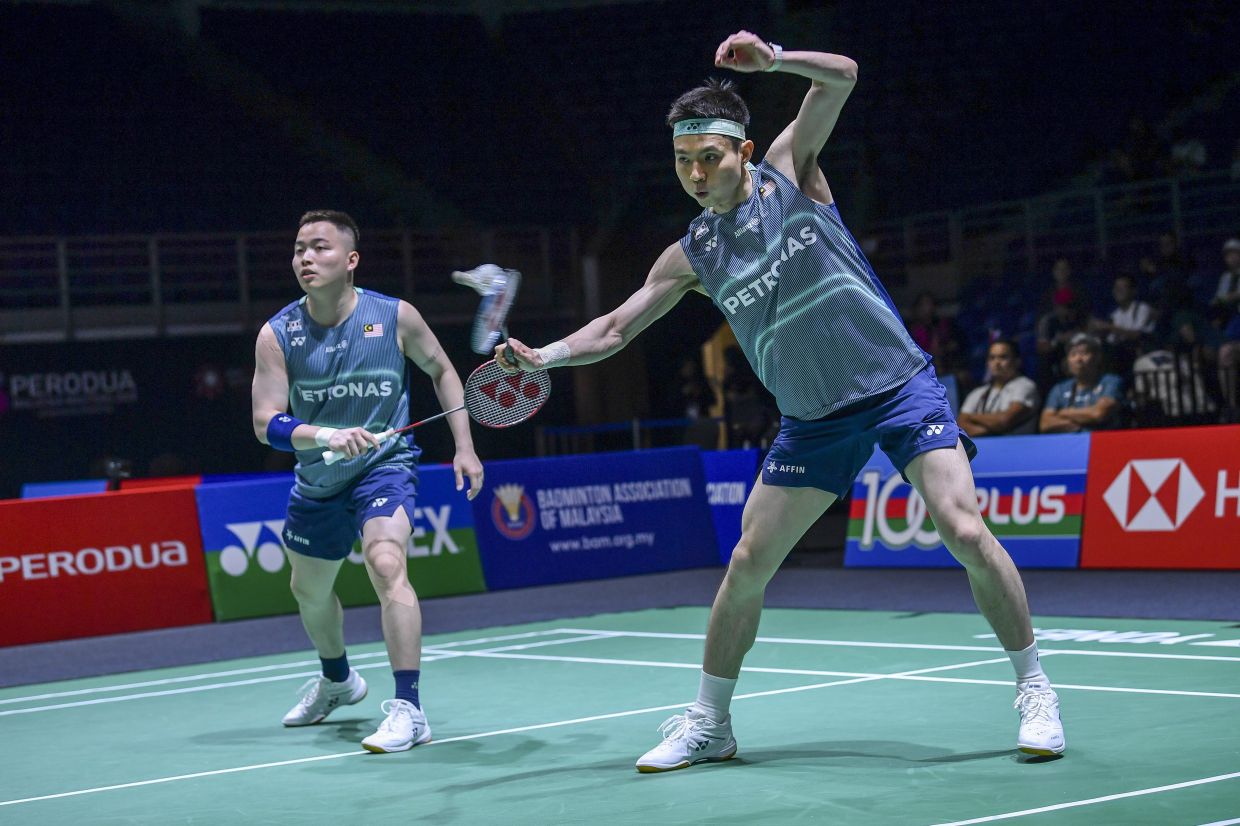
The Badminton Association of Malaysia's performance committee chairman Datuk Seri Lee Chong Wei has issued a firm message to the national squad: no individual athlete supersedes the collective interests of the team. Speaking from Petaling Jaya, the former Olympic champion emphasised that players attempting to leverage the prospect of leaving the national programme to influence BAM's administrative decisions would find little sympathy under the current management structure.
Lee's statement represents a direct response to recent comments from men's doubles specialist Soh Wooi Yik, who indicated he and partner Aaron Chia were exploring all available pathways as they pursue their objective of competing together through the 2028 Los Angeles Olympics. The pair demonstrated their pedigree by capturing silver at the World Championships in New Delhi the previous week, cementing their status as Malaysia's premier men's doubles combination. However, their ambitions have collided with BAM's broader tactical strategy of continuing to experiment with alternative pairings across the men's doubles division during this Olympic cycle.
Lee's remarks carry particular weight given his stature within Malaysian badminton and his proximity to key decision-making processes. He articulated a philosophy rooted in institutional memory and player development pathways. According to his perspective, athletes who rise to prominence within the national system owe a debt of gratitude to the structures and coaching frameworks that nurtured their abilities from junior levels through to elite competition. This foundational argument underpins BAM's resistance to what the organisation views as opportunistic demands, particularly when such pressure emerges following single tournament outcomes.
The new management's stated posture is one of transparency combined with firmness. Lee indicated that BAM remains receptive to formal dialogue with players and their support teams, provided discussions occur through proper channels rather than via public threats or media statements. However, he made unambiguous that the association will not retreat from unpopular decisions simply because athletes question their merit. This represents a notable shift from previous administrative periods, which Lee suggested may have been more accommodating of player demands.
The practical situation confronting Aaron Chia and Wooi Yik underscores the leverage dynamics at play. Both players remain contractually bound to BAM until 2028, meaning any unilateral departure would expose them to substantial financial penalties. Additionally, athletes who sever ties with the national programme risk forfeiting access to international competition pathways, a restriction that would severely compromise their ability to accumulate ranking points essential for Olympic qualification.
BAM's experimental approach to men's doubles combinations reflects a deliberate strategic recalibration. Over the preceding two months, Aaron Chia had been partnered with Aaron Tai, and this combination reached the Taiwan Open final. Simultaneously, Wooi Yik initially struggled alongside Man Wei Chong but subsequently achieved a final appearance at the Korean Masters. These results suggest that while the Aaron-Wooi Yik partnership remains formidable, other combinations possess potential that warrants systematic exploration before committing to a definitive pairing through 2028.
The forthcoming China Masters tournament, scheduled to commence September 1, represents another checkpoint in this evaluation process. The coaching staff have orchestrated a further reshuffle, positioning Aaron Chia with Man Wei Chong while Wooi Yik partners Aaron Tai. This continuous rotation reflects a philosophy that no combination deserves automatic permanence, even those that have delivered world-class results.
The broader implications for Malaysian badminton merit consideration. Player autonomy within elite sports systems consistently generates tension, particularly when individual athletes possess marketable value and demonstrated success. BAM's hardline stance reflects a conviction that institutional stability and long-term competitive planning must take precedence over short-term accommodation of star performers. However, this approach carries inherent risks, particularly if frustration drives elite athletes toward competing independently or relocating to other federations, scenarios that have affected Asian badminton in previous years.
Lee's public intervention serves multiple purposes beyond addressing the immediate Aaron-Wooi Yik situation. It establishes normative expectations across the entire national squad, signalling that leverage tactics will be ineffective under current leadership. This messaging may prove particularly influential for younger players observing how established stars navigate their careers within the system. Simultaneously, it reflects confidence within BAM's hierarchy regarding the depth of talent available within Malaysia's badminton programme.
The contractual framework protecting BAM's investments provides institutional insulation against sudden player departures, yet such protections cannot entirely eliminate the reputational costs of prolonged disputes with high-profile athletes. The association must therefore balance administrative firmness with strategic flexibility, ensuring that principled stands do not calcify into counterproductive rigidity that undermines athlete welfare or competitive prospects.
For Malaysian sports administrators and observers, this episode illustrates evolving governance dynamics within national sports bodies. Traditional hierarchical authority structures increasingly encounter pressure from professionalized athletes equipped with agency and alternatives. How BAM navigates this tension will likely establish precedents influencing player relations across multiple sports within the Malaysian federation system.

