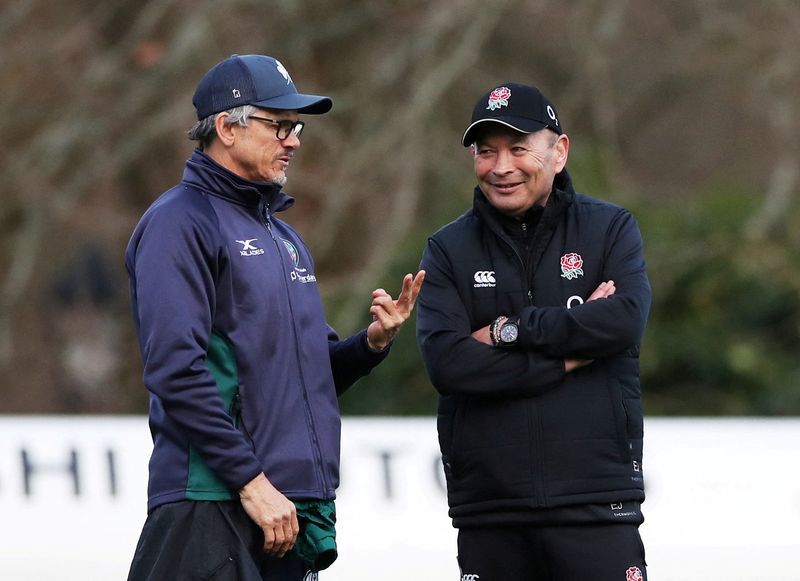
Les Kiss has taken the helm of Australian rugby with a clear message: talent acquisition will trump tradition. In his inaugural press conference as Wallabies coach, the 61-year-old former Queensland Reds director signalled a willingness to cast his net internationally, marking a notable shift from the cautious approach adopted by predecessor Joe Schmidt. Speaking in Sydney, Kiss declared he would not shy away from exploring overseas options if doing so enhanced Australia's chances of World Cup success, a stance that carries significant implications for how rugby talent is sourced in the region.
The timing of Kiss's appointment arrives at a critical juncture for Australian rugby. The Wallabies have deteriorated markedly in recent times, winning just two of their last 11 test matches and languishing in eighth position in the world rankings. This decline has prompted a reckoning within Rugby Australia about whether existing selection philosophies have become counterproductive. Against this backdrop, Kiss's pragmatic outlook on overseas recruitment represents a departure from established convention, one that could reshape how coaches approach squad building as the sport's next global tournament approaches.
Rugby Australia's institutional policy has traditionally discouraged coaches from selecting overseas-based players, a framework designed to incentivise talented athletes to pursue careers within the domestic professional competition. Schmidt honoured this approach throughout his two-year tenure, exercising his discretionary selections with restraint despite having the authority to look abroad when circumstances warranted. Kiss, however, appears unwilling to accept such self-imposed constraints if the competitive advantage justifies it. His determination to "look far and wide" suggests he will evaluate candidates based on merit rather than geographical convenience.
The coach has already begun preliminary consultations with several offshore-based performers, including Jordan Petaia, the Japan-based outside back and centre currently working his way back from injury. These early overtures demonstrate Kiss's intent to cast a wide recruitment net, signalling to the global rugby community that the Wallabies remain an attractive proposition despite their recent struggles. Such outreach also sends a message to overseas-based players of Australian heritage or connection that they should consider representing their country if the opportunity arises.
In assembling his inaugural squad for the upcoming two-test series against Japan, Kiss maintained continuity with Schmidt's approach, retaining virtually all available players from the recent Nations Championship campaign. This measured conservatism in his debut selection reflects an understanding that wholesale change often destabilises squad cohesion. However, the Japanese test matches also serve as an audition phase where Kiss can evaluate personnel and identify gaps that might be addressed through overseas recruitment during the longer World Cup preparation process.
Joseph Suaalii represents perhaps the most visible and controversial test of Kiss's selection philosophy. Rugby Australia invested A$5 million to lure the 22-year-old from rugby league, a significant financial commitment that reflects genuine belief in his potential. Since his eye-catching debut during the 2024 Northern Hemisphere tour, however, Suaalii has demonstrated only intermittent brilliance in the gold jersey, prompting debate about his positional suitability. Questions persist about whether he functions most effectively as a fullback or in the midfield, a strategic question that Kiss must resolve to maximise this prized asset.
Kiss has confirmed his intention to persist with Suaalii at outside centre, a positioning that preserves continuity with Schmidt's framework while attempting to build tactical familiarity around the high-profile recruit. The coach acknowledged Suaalii's capability to operate at fullback, noting that he could "go to 15 and win," but has designated the midfield as the primary focus for development. This decision reflects a deliberate choice to embed Suaalii within a broader tactical structure rather than constructing the entire attacking system around his individual capabilities.
The coach's broader vision extends beyond individual personnel matters. Kiss has articulated a commitment to reclaiming what he terms the "Australian way" of rugby—a fast, ball-in-hand game that delivered World Cup victories during the 1990s but has largely proven ineffective in the modern era due to insufficient world-class depth. Rather than pursuing a wholesale tactical overhaul, Kiss seeks to foster a playing identity rooted in creativity and competitiveness, attributes he views as inherent to Australian rugby culture. This philosophy represents an attempt to reconnect with historical strengths whilst acknowledging contemporary realities.
The broader significance of Kiss's appointment extends beyond Australian rugby itself. His willingness to pursue overseas talent has implications for regional player movement throughout the Pacific and Asia-Pacific rugby sphere. If Australia successfully integrates overseas-based players into a competitive World Cup campaign, other nations may reconsider their own recruitment frameworks. This could stimulate greater fluidity in player migration patterns, particularly affecting rugby talent from smaller nations who might otherwise have limited pathways to representation.
From a Southeast Asian perspective, Kiss's openness to overseas talent carries particular relevance given the region's growing rugby interest and Australia's role as a regional sporting powerhouse. Should the Wallabies successfully execute this offshore recruitment strategy, it may establish a template that other leading nations adopt, potentially creating expanded opportunities for talented players across the region who might seek representation at higher competitive levels. The implications ripple through talent development pathways and career trajectories for emerging players.
Kiss's inaugural squad selection for the Japan tests maintains Squad stability while signalling that future iterations may reflect greater flexibility. The retention of players used by Schmidt during the Nations Championship tests—which included narrow defeat to Ireland, heavy losses to France, and a dominant performance against Italy—preserves institutional knowledge while providing the new coach opportunity to embed his tactical preferences. These matches against Japan offer a practical testing ground for both personnel evaluation and implementation of Kiss's strategic philosophy.
The Wallabies' decline to eighth in world rankings represents the context within which Kiss must operate. This position falls substantially below the standard Australia previously maintained and below expectations for a nation with established rugby infrastructure and talent development systems. Kiss's willingness to pursue overseas resources can be interpreted as an acknowledgment that domestic pathways alone may prove insufficient to restore Australia to competitive prominence. This realism may ultimately prove more valuable than ideological adherence to existing conventions about where talent should be sourced.
As Kiss embarks on his tenure in the lead-up to the World Cup, his pragmatic approach to overseas recruitment may ultimately determine the success or failure of his coaching tenure. Whether additional international talent can meaningfully improve the Wallabies' trajectory remains an open question, but Kiss has at least signalled that he will not allow institutional constraints to prevent him from pursuing competitive advantage through whatever means prove necessary.

