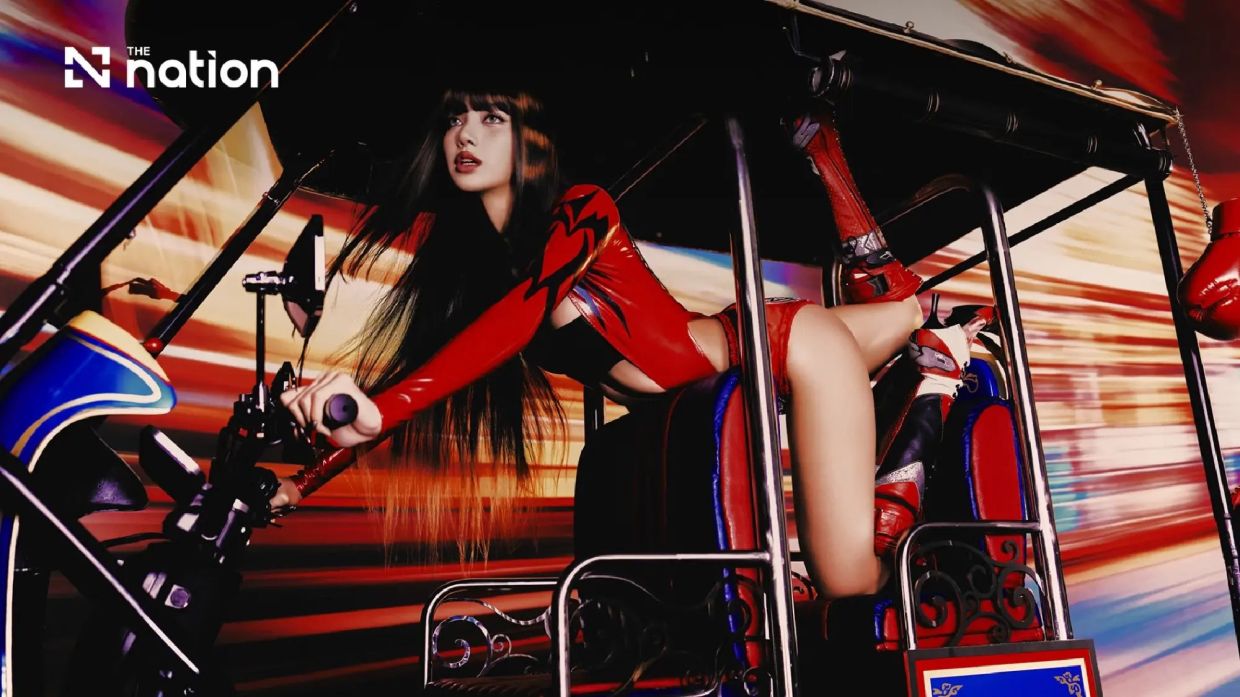
Thai pop sensation Lalisa Manobal, better known as Lisa from the global supergroup BLACKPINK, is set to release her latest single 'SaWaDiKa' on September 3, 2026, marking another chapter in her deliberate strategy to anchor her solo career firmly within Thai cultural identity. The newly unveiled campaign imagery reveals a sophisticated fusion of traditional Thai elements reinterpreted through a contemporary, high-fashion lens—a calculated move that speaks to both her home audience and the international fanbase that has propelled her to stardom.
The visual concept places Muay Thai at its centre, but reimagined rather than reproduced in its conventional form. Lisa appears in boxing shorts bearing her name in embroidered lettering, paired with a modern take on combat-sport aesthetics that strips away literal ring attire in favour of a futuristic sports fashion sensibility. This approach reflects a broader trend among Southeast Asian artists of reclaiming indigenous cultural symbols and refashioning them for global consumption without diluting their essence. The styling suggests power and athleticism whilst simultaneously nodding to Thailand's most celebrated martial tradition.
Equally prominent in the campaign are images of Lisa positioned atop a blue-and-red tuk-tuk—perhaps Thailand's most instantly recognisable symbol of transport and local culture. Clad in a leather bodysuit and high-heeled lace-up boots that echo Muay Thai footwear, she projects a striking contrast between the humble familiarity of the tuk-tuk and the aspirational glamour of contemporary pop stardom. Streaked lighting effects around the vehicle create an impression of speed and movement, suggesting dynamism and forward momentum. The tuk-tuk thus becomes more than mere set dressing; it functions as a cultural anchor that grounds the campaign in Thai specificity whilst simultaneously elevating domestic imagery to global significance.
The single's title itself carries profound cultural weight. 'SaWaDiKa' is a stylised romanisation of 'sawasdee ka'—the polite Thai greeting spoken countless times daily across the kingdom. By elevating this everyday phrase to the status of a global music release title, Lisa transforms a simple expression of courtesy into the centrepiece of her international promotional strategy. This linguistic choice signals a deliberate prioritisation of Thai language and identity within her solo career trajectory, a stance that carries particular resonance in Southeast Asia, where English-language dominance in global pop music often marginalises regional languages and cultural expressions.
The rollout strategy underscores this commitment. Before the single's official announcement, outdoor displays reading 'HELLO สวัสดีค่ะ [Sawasdee ka]' appeared simultaneously in Bangkok, New York, Los Angeles and Mexico City, creating a coordinated global awareness campaign that positioned the Thai greeting as worthy of international attention. This geographic simultaneity—spreading a Thai cultural reference across major cities on multiple continents—represents a significant statement about Lisa's willingness to centre her Thai identity rather than dilute it for perceived international palatability.
Thapanee Kiatphaibool, governor of the Tourism Authority of Thailand, publicly welcomed the campaign, observing that Lisa's promotion of the phrase reinforced broader perceptions of Thai warmth and hospitality. This official endorsement reflects the strategic alignment between Lisa's personal brand and Thailand's national tourism interests. Since accepting the role of 'Amazing Thailand Ambassador' in 2025, Lisa has served as a cultural envoy, tasked with showcasing Thailand's character and identity to global audiences. Her music campaigns thus function on multiple levels simultaneously—as artistic expression, commercial product, and soft power asset for her home nation.
The 'SaWaDiKa' campaign represents the latest development in a deliberate visual thread that Lisa has woven throughout her solo career. Her 2021 solo debut 'LALISA' featured traditional Thai dress, dance-inspired imagery and musical elements that she had specifically requested, reflecting her commitment to Thai representation from the earliest stages of her solo venture. The accompanying music video positioned her in elaborate gold Thai-inspired costume against settings referencing her native Buri Ram province's architecture, establishing a template for embedding Thai identity within pop production values.
That approach evolved with the 2024 release of 'Rockstar', which transplanted the connection to contemporary Bangkok. The video prominently featured Yaowarat Road in the capital's Chinatown and other Bangkok locations, framing the city's streets within a futuristic pop aesthetic. Rather than retreating into heritage nostalgia, the video demonstrated how Thai urban spaces could be repositioned as sites of contemporary cultural production and global significance. 'SaWaDiKa' extends this trajectory further, adding Muay Thai, tuk-tuks and the Thai language to the visual vocabulary Lisa has been systematically developing.
'SaWaDiKa' arrives as the lead single from her forthcoming six-track EP 'PRESS PLAY', scheduled for release on October 23, 2026. The project is being framed as a return to Lisa's roots and a celebration of her progression from Thailand to the international stage. This narrative structure—emphasising continuity and return rather than departure and assimilation—carries particular significance for Southeast Asian audiences who have historically witnessed their artists compromise cultural identity in pursuit of Western market penetration. Lisa's approach suggests an alternative pathway, one in which embracing Thai identity becomes a source of global appeal rather than an impediment to it.
For Malaysian and broader Southeast Asian audiences, Lisa's campaign strategy offers an instructive model of cultural confidence. In a music industry historically dominated by American and Anglo-European aesthetic standards, her deliberate centering of Thai language, martial tradition, transport culture and visual identity represents a form of quiet cultural assertion. The campaign demonstrates that global commercial success need not require cultural dilution or assimilation. Rather, authentically rooted artistic expression—grounded in specific place, language and tradition—can resonate powerfully across borders and markets.
The timing of 'SaWaDiKa's release reflects practical international scheduling considerations, but carries symbolic weight nonetheless. The single reaches Thai audiences at 7am on September 4, positioning Thailand as part of the global release schedule rather than an afterthought. This temporal prioritisation—giving Thai listeners early access—mirrors the campaign's overall commitment to treating Thai cultural expression as central rather than peripheral to Lisa's identity as an artist.
As 'SaWaDiKa' prepares for launch, it arrives at a moment when Southeast Asian artists increasingly assert agency over their cultural representation. Lisa's campaign, with its deliberate use of Thai martial tradition, domestic transport culture and vernacular language, signals a broader regional confidence in the global marketability of authentically rooted artistic expression. The strategy suggests that 'sawasdee ka'—that simple, everyday Thai greeting—carries resonance far beyond its immediate geographical context, a powerful affirmation of the universal appeal of specific cultural identity.

