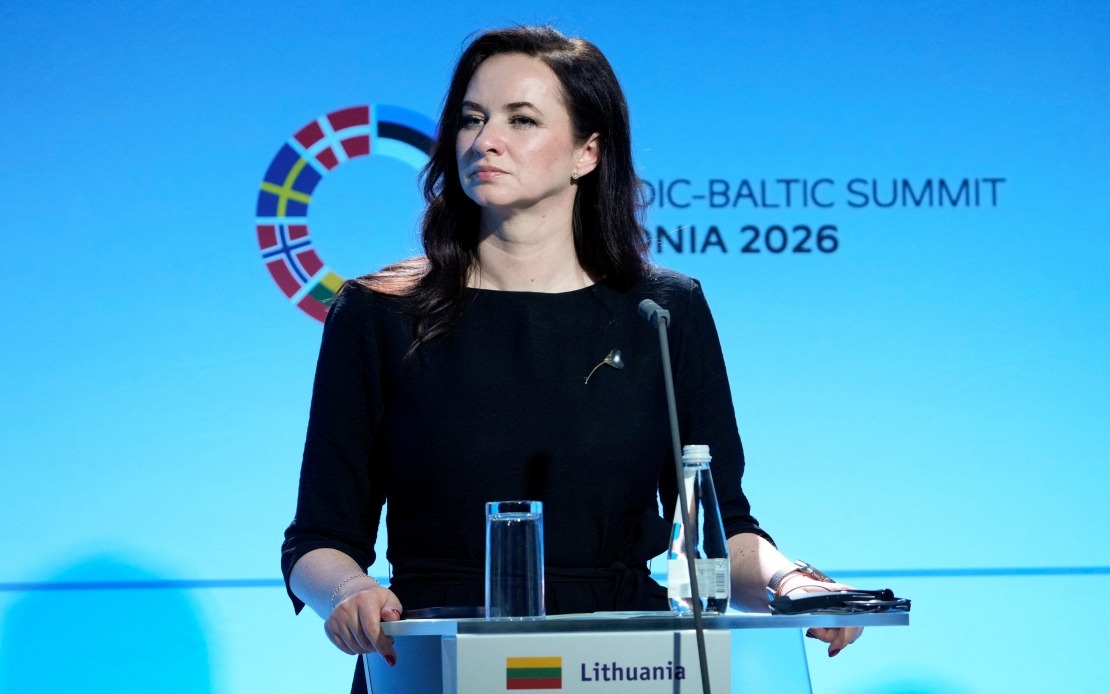
Lithuania's political landscape shifted markedly on Tuesday when Prime Minister Inga Ruginiene formally announced her government's resignation, setting in motion a carefully structured constitutional process to establish a fresh administration. The move comes after internal tensions within the ruling coalition prompted the overhaul, marking another significant pivot in Lithuanian governance since late 2024's parliamentary elections. President Gitanas Nauseda has accepted the resignation and tasked the outgoing Cabinet with maintaining basic governmental functions during the transition period.
The constitutional framework governing Lithuanian leadership changes provides a defined timeline for establishing a successor administration. President Nauseda now has precisely 15 days to formally nominate a candidate for the prime ministerial position. Once presented, that candidate requires parliamentary endorsement from the Seimas, Lithuania's unicameral legislative body, before assuming executive authority. The procedural structure aims to prevent prolonged political uncertainty while allowing adequate space for coalition negotiations.
Mindaugas Sinkevicius, who chairs the ruling Lithuanian Social Democratic Party, stands as the overwhelming favourite to receive the presidential nomination. Political observers anticipate his appointment represents a natural progression given his party's legislative dominance and coalition-building credentials. Should the Seimas confirm his nomination, Sinkevicius would then face his own compressed timetable—15 days to assemble a functional Cabinet and develop a comprehensive government policy platform. Following that initial period, he would possess an additional 15 days to present the complete ministerial lineup for parliamentary ratification.
The incoming coalition arrangement would constitute the Social Democrats' third governing alliance since the October 2024 parliamentary elections, a statistic underscoring the volatile coalition dynamics that have characterised post-election Lithuanian politics. The outgoing government, which itself assumed office only the previous August following then-Prime Minister Gintautas Paluckas's departure, lasted less than a year. This rapid succession of administrations suggests underlying structural tensions within the ruling coalition structure that successive governments have struggled to manage effectively.
The Cabinet's final meeting on Tuesday proceeded with formal solemnity, with ministers unanimously approving a resolution endorsing the resignation. Ruginiene used the occasion to reflect on her government's tenure, acknowledging both accomplishments and the considerable obstacles the administration had navigated during its period in office. Her measured tone suggested an orderly transition rather than a crisis-driven departure, despite the coalition's inability to sustain political cohesion through a full governmental term.
For Malaysia and Southeast Asian observers, the Lithuanian situation illustrates persistent tensions within coalition governance frameworks common across the region. Coalition governments frequently struggle to balance diverse political interests while maintaining policy coherence and governmental stability. The rapid turnover of Lithuanian administrations demonstrates how shifting party alliances and internal disagreements can destabilise even majority governments. Several Southeast Asian nations operating under similar multiparty coalition systems—including Malaysia itself—share comparable vulnerabilities to coalition instability.
The Lithuanian case also reflects broader European political fragmentation, where traditional party structures have weakened and coalition negotiation has become more complex. The necessity of three consecutive coalition attempts by a single party since recent elections suggests that electoral outcomes increasingly fail to produce durable governing majorities. This phenomenon extends beyond Lithuania to affect other Baltic states and wider Europe, creating patterns of governmental volatility that complicate long-term policy implementation and strategic planning.
The formal transition machinery provides Lithuania with institutional safeguards against potential governmental paralysis. The 15-day nomination period, combined with parliamentary confirmation requirements, establishes clear deadlines that prevent indefinite political wrangling. However, the expedited Cabinet-formation timeline leaves the incoming prime minister minimal opportunity to thoughtfully evaluate ministerial competencies or resolve substantive policy disagreements. This compressed schedule reflects a balancing act between preventing vacuum periods and allowing adequate deliberation.
The incoming administration inherits existing governmental priorities and external commitments that demand continuity despite the leadership change. Lithuania's geopolitical position as a European Union member bordering Russia necessitates consistent security policies and NATO alignment regardless of domestic coalition shifts. The caretaker arrangement ensures that critical governmental functions—defence coordination, diplomatic engagement, and emergency response capabilities—maintain operational continuity during the transition period. This institutional stability buffer represents a meaningful safeguard for continuity in sensitive areas.
The frequency of Lithuanian coalition transitions raises substantive questions about governance effectiveness in divided legislatures. When governments cycle through multiple iterations within single electoral cycles, implementing comprehensive policy agendas becomes progressively more difficult. Institutional memory erodes, administrative capacity becomes fragmented, and stakeholder confidence in governmental commitment to long-term initiatives deteriorates. The Social Democratic Party's necessity to construct three separate governing coalitions within months suggests fundamental incompatibility between coalition partners that successive negotiations have failed to resolve.
For regional policymakers observing Lithuanian developments, the situation underscores the importance of coalition-building discipline and inter-party consensus mechanisms. Malaysia's own history of coalition governance, particularly recent experiences with Perikatan Nasional and Pakatan Harapan arrangements, demonstrates parallel vulnerabilities when political partners maintain conflicting objectives or when smaller coalition members leverage disproportionate influence. The Lithuanian precedent illustrates how coalition instability ultimately undermines governmental credibility and policy implementation capacity across multiple policy domains.