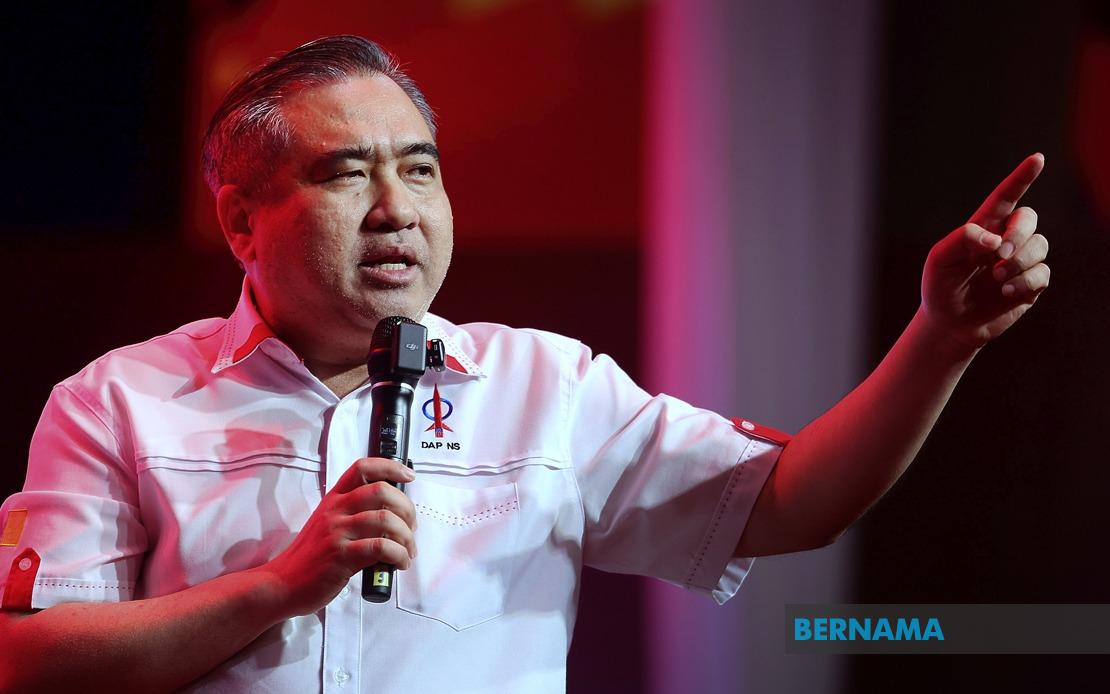
Anthony Loke, the DAP secretary-general and Transport Minister, has made a conscious decision to steer the Negeri Sembilan state election campaign away from mudslinging, championing instead a debate grounded in substantive policy offerings. Speaking in Seremban on July 19, Loke articulated a vision for electoral politics that prioritises what parties can deliver to constituents over attacks on political opponents, even when those opponents occupy senior positions in government.
This principled stance extends specifically to Cabinet colleagues, whom Loke regards as collaborative partners across the weekly Cabinet table. The reasoning is pragmatic and institutional: ministers and elected officials who work together on governance cannot simultaneously wage personal campaigns against one another without undermining collective responsibility and the functioning of government itself. Loke's position reflects the broader disciplinary framework announced by Prime Minister Datuk Seri Anwar Ibrahim, directing federal government office-holders to exercise restraint when campaigning in state elections, thereby protecting the integrity of the Federal Government.
For Malaysian political observers, this restraint among ruling coalition figures signals a shift in electoral conduct, particularly relevant in a Unity Government arrangement where Pakatan Harapan and component parties must maintain operational coherence despite competing in elections. In Negeri Sembilan specifically, this manifests in Loke's deliberate choice not to campaign in Rantau, the constituency contested by Foreign Minister Datuk Seri Mohamad Hasan, who also serves as Barisan Nasional deputy chairman. By stepping back from this particular battleground, Loke prioritises institutional harmony within the coalition structure over maximising electoral advantage in any single seat.
Instead, Loke has concentrated his campaign efforts on the Chennah state constituency that he personally contests, as well as supporting DAP candidates elsewhere. Additionally, he has assisted Menteri Besar Datuk Seri Aminuddin Harun in campaigning for the Linggi seat. This allocation of resources reflects a strategic calculation that maintaining coalition cohesion carries greater long-term value than short-term electoral gains achieved through targeted attacks on coalition partners.
The Transport Minister's position as a senior federal office-holder presents both opportunities and challenges for his constituency. Critics have suggested that his ministerial portfolio necessarily diverts attention from Chennah, leaving local needs unaddressed. Loke counters this narrative by highlighting concrete benefits his position has enabled, particularly through the Kampung MADANI programme, where ministerial access translates into resource allocations for the constituency. His argument rests on the premise that effective constituency work operates through multiple channels—not merely physical presence but institutional leverage.
Loke has also established, as he describes it, a full-time dedicated team operating within Chennah to manage constituent services and address local grievances. This infrastructure-based approach to representation attempts to decouple parliamentary effectiveness from a politician's personal visibility, suggesting that modern constituency management benefits from institutional depth rather than relying solely on individual prominence. For Negeri Sembilan voters, this raises questions about the quality of local representation when elected representatives balance state and federal responsibilities.
The Negeri Sembilan election cycle is progressing toward its decisive phase. Early voting takes place on July 28, with the main polling day scheduled for August 1. This compressed timeline compresses campaign opportunities, making strategic choices about where and how to contest particularly significant. In this context, Loke's deliberate narrowing of his direct campaign footprint—avoiding Rantau, focusing on Chennah and select DAP seats, and assisting with specific Menteri Besar campaigns—represents an explicit prioritisation framework.
The policy-focused campaign approach that Loke advocates aligns with broader calls from civil society and governance commentators for substantive electoral discourse. Rather than personality-driven politics or factional infighting, voters would theoretically benefit from clarity regarding different parties' proposed development trajectories, administrative priorities, and resource allocation philosophies. In practice, Malaysian campaigns often blend both personal and policy dimensions; Loke's attempt to elevate policy content while minimising personal attacks offers one data point in an ongoing evolution of electoral norms.
Within the Malaysia-wide political context, the Negeri Sembilan election carries significance as a test case for Unity Government cohesion. How Pakatan Harapan and BN components navigate simultaneous state competition while maintaining federal coalition structures will influence future electoral calculations. The election also reflects broader questions about whether the Anwar Ibrahim administration can sustain internal discipline across its heterogeneous coalition while remaining electorally competitive. Negeri Sembilan's outcome will provide important signals regarding both the Unity Government's stability and the viability of Loke's campaign model emphasising institutional responsibility over partisan aggression.

