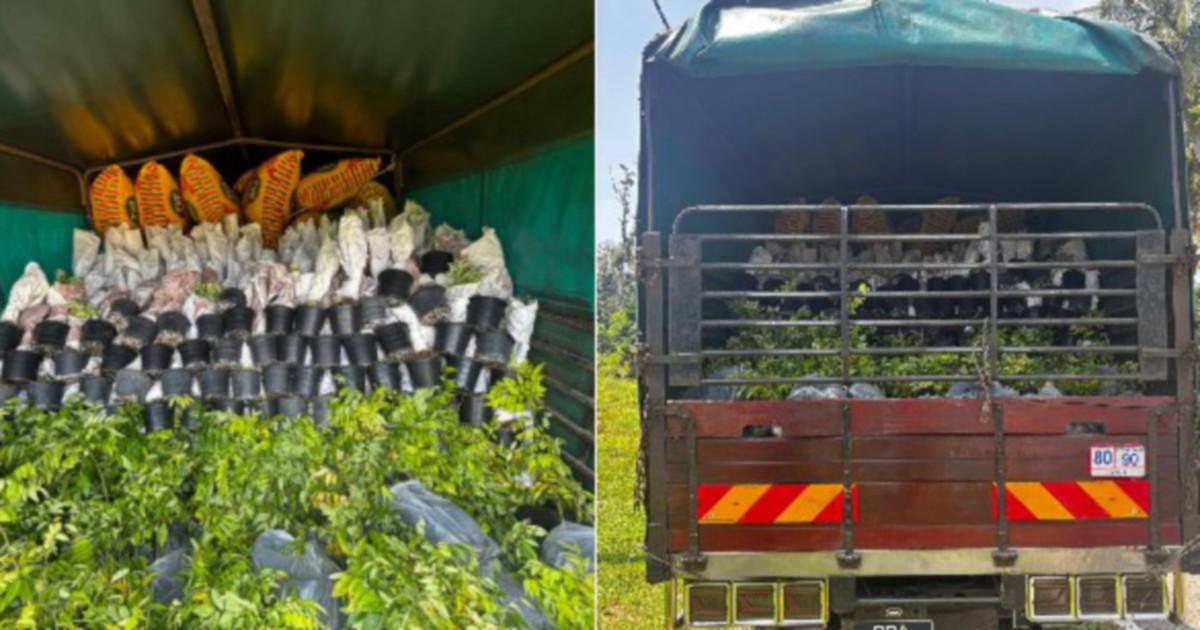
An enforcement operation at the Malaysia-Thailand border in Kelantan has resulted in the arrest of a lorry driver and the seizure of a substantial consignment of ornamental plant saplings valued at RM200,000. The operation, conducted at Kampung Padang Licin in the Rantau Panjang area, represents a notable success in the ongoing battle against illegal plant smuggling across Southeast Asia's porous land borders.
The 6,000 saplings recovered during the operation are suspected to have originated from Thailand, suggesting a well-organised cross-border trafficking operation. The sheer volume and declared value of the seized consignment indicate that illicit plant smuggling has become a significant concern for Malaysian customs and border enforcement agencies. The Kelantan region, which shares an extensive border with Thailand and serves as a major transit point for both licit and illicit goods, remains a critical enforcement zone.
Ornamental plants represent a less-publicised but nonetheless substantial component of regional smuggling networks. The high unit value of cultivated saplings, combined with lower regulatory scrutiny compared to other contraband categories, makes them attractive targets for trafficking operations. Sophisticated smugglers exploit the massive daily flow of cross-border commerce to conceal plant shipments within legitimate trade patterns, making detection and interdiction particularly challenging for resource-constrained border agencies.
The apprehension of the driver marks an important enforcement milestone, though analysts suggest it likely represents only a single node within a broader smuggling infrastructure. The professionalism evident in this operation—the assembly of thousands of saplings, their packaging for transport, and the timing of cross-border movement—suggests involvement of multiple actors along the supply chain. Understanding the complete distribution network, from nurseries in Thailand through Malaysian receivers to end retailers, remains crucial for disrupting trafficking patterns.
Cross-border plant smuggling carries significant environmental and economic implications for Malaysia. Beyond the revenue loss from evaded duties and taxes, uncontrolled plant imports pose biosecurity risks, potentially introducing invasive species, pathogens, or pests into Malaysian agricultural ecosystems. The ornamental plant industry, while appearing benign compared to controlled goods, nevertheless operates under regulatory frameworks designed to protect domestic growers and ensure environmental safety. Enforcement efforts therefore serve purposes extending well beyond simple tariff collection.
For Malaysian horticulturists and nursery operators, this seizure underscores ongoing concerns about unfair competition from smuggled plants entering the domestic market. By circumventing customs duties, taxes, and phytosanitary inspections, smuggled consignments undercut legitimate domestic producers unable to compete with artificially reduced prices. This creates perverse economic incentives that favour illegal operations over compliant businesses, potentially distorting market dynamics across the region's ornamental plant sector.
The Kelantan border region's vulnerability to smuggling operations reflects broader structural challenges in Southeast Asian border management. Despite technological advances and increased cooperation agreements, the sheer length and complexity of international boundaries, combined with limited personnel and resources, create enforcement gaps that organised trafficking networks systematically exploit. This seizure demonstrates both the determination of Malaysian authorities and the persistence of smuggling pressures against which they continuously operate.
Thailand's ornamental plant sector has grown substantially in recent decades, particularly in northern regions proximate to the Malaysian border. The legitimate trade in tropical plants, orchids, and decorative saplings has created infrastructure and expertise that also enables illicit operations. Cross-border movement of plant materials, particularly when documentation is forged or falsified, represents a persistent challenge for both nations' regulatory authorities despite established protocols for legal trade.
The investigation into the driver's involvement will likely extend beyond immediate apprehension. Authorities typically pursue supply chain connections, seeking information about consignment origins, intermediate handlers, and ultimate recipients within Malaysia. Such investigations, when successfully prosecuted, can yield valuable intelligence about smuggling routes, timing patterns, and the networks involved—information critical for designing more effective interdiction strategies and for coordinating enhanced enforcement efforts with Thai counterparts.
Government agencies overseeing customs, wildlife protection, and agricultural safety have incrementally strengthened border enforcement capabilities, yet interdiction rates suggest the majority of smuggled plant materials continue entering Malaysia undetected. This latest operation, while significant, reflects the broader dynamic wherein enforcement successes represent visible actions within a largely clandestine and ongoing flow of illegal trade. Sustainable resolution requires not merely reactive interdiction but proactive supply-chain disruption and stronger cooperation mechanisms with neighbouring countries to address smuggling at source.
The broader context of Southeast Asian trade dynamics remains essential for understanding plant smuggling patterns. Tariff differentials, exchange rate variations, and differing regulatory standards across neighbouring jurisdictions create profitable opportunities for smugglers willing to navigate enforcement risks. For Malaysia, particularly given its geographic position and the sophistication of its domestic horticulture market, continued vigilance and intelligence-led enforcement operations remain necessary components of effective border security.

