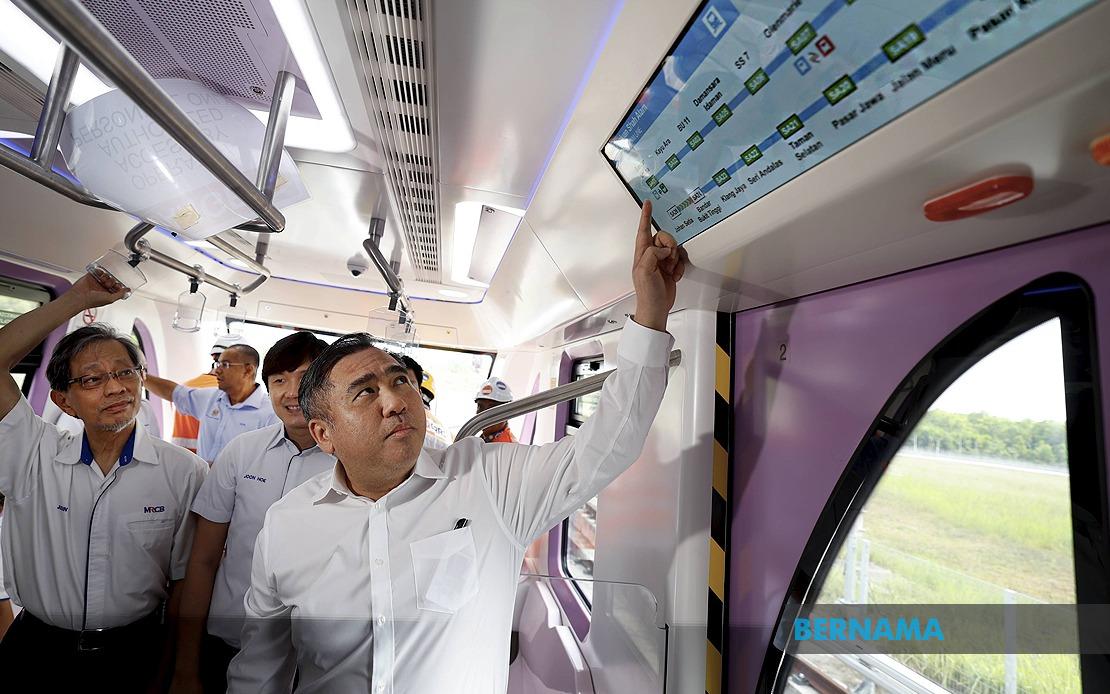
Malaysia's newest rapid transit line will enter service next week, marking a significant milestone for public transportation expansion in the Klang Valley. Transport Minister Anthony Loke announced on Saturday that the Light Rail Transit 3 (LRT3) will begin commercial operations on Monday, June 29, connecting Shah Alam and its surrounding municipalities. The announcement came during the minister's visit to the newly opened Road Transport Department branch at Terminal Bersepadu Selatan in Kuala Lumpur.
Prime Minister Datuk Seri Anwar Ibrahim will officiate the line's formal launch ceremony scheduled for Sunday, positioning the project as a major infrastructure accomplishment for the government. The timing underscores the administration's commitment to advancing public transportation infrastructure across the densely populated Selangor region. Loke confirmed that revenue service will commence immediately following the ceremonial proceedings, allowing commuters to begin using the line within hours of the official handover.
The LRT3 represents an ambitious expansion of the Klang Valley's rail network, spanning 37.8 kilometres across the western corridor. The line extends from Bandar Utama, serving the upmarket northern suburbs, to Johan Setia in the industrial heartland of Selangor's interior. This geographic coverage is carefully designed to connect major economic and residential nodes that have experienced rapid urbanisation over the past decade. The routing reflects strategic planning to integrate previously disconnected communities into the greater metropolitan transport ecosystem.
Projections indicate the line will serve approximately two million residents across its service corridor, though actual ridership will depend on factors including station accessibility, feeder bus networks, and commuter adoption patterns. The potential passenger base encompasses diverse demographic groups—from white-collar workers commuting to commercial districts to blue-collar employees accessing industrial zones. Students attending educational institutions along the route and shoppers visiting commercial centres also represent significant usage segments. This broad appeal suggests the line could meaningfully impact regional transportation patterns and congestion relief.
The project addresses longstanding connectivity challenges in western Selangor, where sprawling residential developments have outpaced public transportation infrastructure. Bandar Utama and surrounding townships have grown exponentially without proportional investment in rail access, forcing residents to depend heavily on private vehicles. The LRT3 completion removes a critical infrastructure gap that has constrained mobility options and contributed to traffic congestion on major arterial roads serving these communities. Improved connectivity should facilitate more efficient movement of labour across the region and reduce pressure on road networks.
Beyond passenger convenience, the line's opening carries economic implications for property values and commercial investment patterns. Historical experience from other rail projects across Southeast Asia demonstrates that proximity to transit hubs commands premium property valuations and attracts retail and office development. Zones surrounding LRT3 stations, particularly at major interchanges, are likely to experience increased development interest. Commercial entities may relocate operations to capitalise on improved accessibility, potentially reshaping the region's economic geography.
The project's integration with existing rail infrastructure presents both opportunities and challenges for the broader Klang Valley transport network. The LRT3's southern terminus at Johan Setia does not currently connect to other major rail lines, limiting its ability to function as a true metropolitan backbone during the initial operational phase. Future extension plans and integration with the proposed Selangor-Kuala Lumpur Mass Rapid Transit system could enhance its role within the larger network. Station design has reportedly incorporated provisions for potential future connections, suggesting planners anticipate eventual integration with complementary projects.
Operational sustainability will depend on competitive fares, reliable service frequency, and effective coordination with feeder bus networks. Malaysian transit operators have faced challenges maintaining ridership when pricing strategies undercut private vehicle costs. The LRT3's success will require deliberate marketing to establish modal shift behaviour, particularly among motorists accustomed to convenient private transport. Government subsidisation policies and integration with broader mobility payment systems will influence adoption rates during the critical early operational months.
The opening also reflects broader Malaysian infrastructure trends emphasising rail-based urban mobility. Federal and state investments in rapid transit represent a strategic pivot toward sustainable transportation, driven by congestion costs, environmental concerns, and demographic patterns favouring walkable, transit-connected neighbourhoods. The LRT3 joins other recent projects including the LRT2 extension and Putrajaya Line in expanding the Klang Valley's rail footprint. However, critics argue that network coverage remains fragmented, with significant suburban areas still lacking viable transit alternatives.
For Malaysian commuters in the affected region, the LRT3 opening provides the first practical alternative to private vehicles for many daily journeys. Journey time certainty, freedom from parking constraints, and reduced fuel expenses represent tangible benefits. However, realising these advantages depends on seamless first and last-mile connectivity, necessitating robust feeder services and pedestrian-friendly station precincts. The actual transformative impact will only become apparent once ridership patterns stabilise several months into operation.
Looking forward, the LRT3's performance will influence future public transport investment decisions across Malaysia. Successful operation demonstrating strong ridership would justify further network expansion and justify continued government funding for rail projects. Conversely, underperformance could prompt policy reassessment and shift priorities toward alternative transit modes. The line thus represents not merely a regional transportation upgrade but a test case for Malaysian urban mobility strategies in the coming decade.