The Armed Forces Fund Board (LTAT) has unveiled an expanded iteration of its Jelajah Wira LTAT 2026 initiative, launching the East Coast Edition in Kota Bharu on July 2 with a significant technological component designed to amplify its traditional community engagement model. By layering digital live-streaming capabilities onto the established roadshow format, LTAT aims to transcend geographical limitations that have historically constrained military outreach efforts, potentially reaching more than 10,000 personnel across the country whilst maintaining direct contact with projected physical attendance exceeding 3,600 armed forces members along the East Coast corridor.
Deputy Defence Minister Adly Zahari inaugurated the series at Desa Pahlawan Camp, with subsequent stops scheduled for Sri Pantai Camp in Kuala Terengganu on July 9 and Kuantan Air Base in Pahang on July 13. This multi-location approach reflects recognition within the defence establishment that military personnel remain dispersed across remote and strategically important installations, many of which face practical obstacles to attending centralised financial and social welfare briefings. The phased geographical rollout ensures that service members stationed in different operational theatres and bases receive equivalent access to institutional resources and information.
The strategic pivot towards digital infrastructure represents more than mere technological adoption; it embodies LTAT's institutional response to evolving expectations within the armed forces regarding service accessibility. The board has framed this modernisation as consistent with its core mandate to safeguard the financial wellbeing of contributors whilst simultaneously advancing national policy objectives including the MADANI Economy framework and PuTERA35 aspirations. This alignment signals that military personnel support has become integrated into broader socioeconomic development narratives, positioning armed forces welfare initiatives as foundational to Malaysia's economic transformation agenda rather than as peripheral administrative functions.
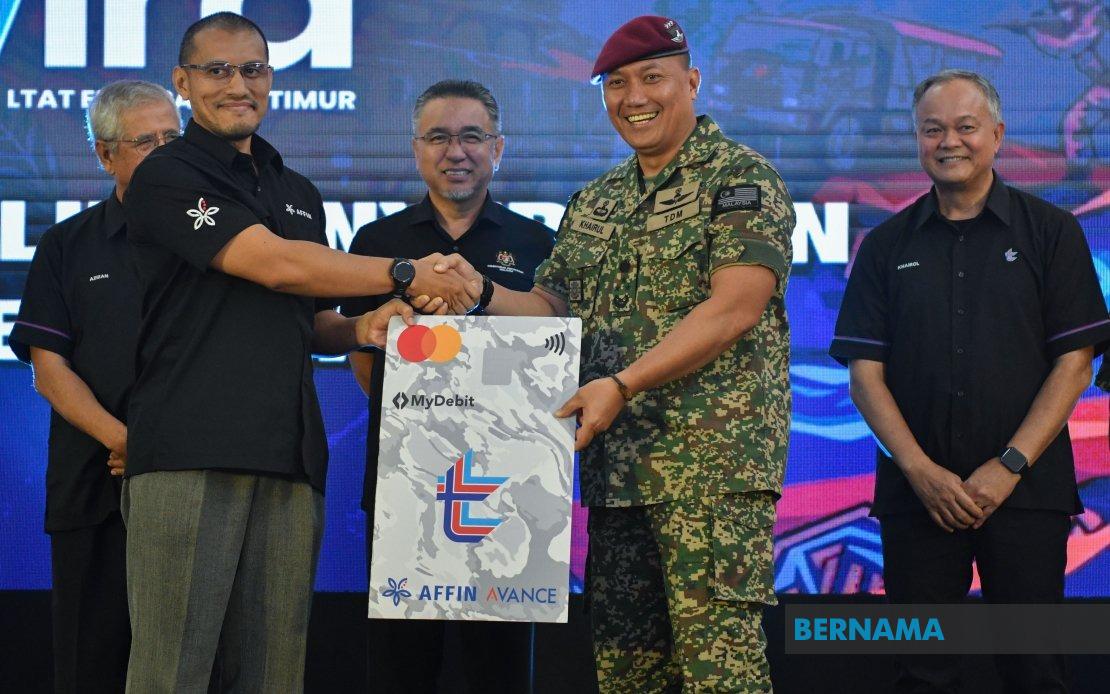
Beyond streaming capability, the 2026 edition introduces several substantive programmatic enhancements tailored to contemporary military family needs. The symbolic presentation of AFFIN LTAT Affiliate Debit Card and distribution of smart devices under the 2026 SPM e-Perkasa programme directly addresses educational access barriers for children of armed forces members. By facilitating free online tuition classes through device distribution, LTAT acknowledges that military family stability and generational advancement depend upon educational opportunity—a recognition that extends institutional responsibility beyond immediate service members into their household ecosystems.
A particularly noteworthy component involves honouring and economically empowering military veterans through structured entrepreneurship intervention. The graduation ceremony for the Second Series of the LTAT Wira Entrepreneur Empowerment Programme and launch of the East Coast-focused third series represent deliberate institutional commitment to transitioning retired military personnel into sustainable civilian economic activity. The available data on programme performance proves compelling: participants in the second series recorded average monthly business income increases of 162 percent, demonstrating that systematic business mentoring, financial literacy instruction, and targeted ecosystem support generate measurable economic advancement for veteran entrepreneurs.
This 162 percent income elevation statistic carries significant implications for military retirement planning and post-service economic security across Southeast Asia. Malaysia's defence sector has long struggled with designing effective veteran transition pathways, and LTAT's empirical results suggest that structured six-month economic intervention programmes substantially outperform passive severance arrangements. Other regional military establishments monitoring Malaysia's approach may discern a replicable model for converting military expertise and discipline into civilian entrepreneurial competence, particularly within small and medium enterprise sectors where veteran-led businesses demonstrate comparable stability to younger ventures despite generally higher barriers to capital access.
The Financial Literacy Programme represents another dimension of institutional deepening, having reached over 68,000 armed forces personnel since its December 2023 introduction. This cumulative engagement figure underscores the scale of LTAT's educational ambitions and suggests genuine traction in converting military institutional structures into conduits for financial competency instruction. For Malaysian policymakers concerned about household debt levels and savings adequacy among lower and middle-income cohorts, the armed forces population represents a particularly valuable demographic for financial literacy intervention—service members typically enjoy relatively stable employment, regular compensation, and institutional structures facilitating group instruction.
The decision to expand Jelajah Wira LTAT through digital means reflects broader Southeast Asian trends regarding hybrid service delivery models. Malaysia's defence sector increasingly recognises that contemporary military personnel—many themselves digital natives or experienced technology users—expect institutional engagement to accommodate remote access alongside traditional in-person formats. The roadshow's transformation into a two-way communication platform rather than a unidirectional information dissemination exercise signals maturation in how military establishments conceptualise member engagement, shifting from broadcast models to interactive dialogue frameworks.
For Malaysian and regional armed forces observers, LTAT's expansion carries implications extending beyond immediate military welfare considerations. The integration of military personnel outreach with national economic development frameworks suggests that defence sector contributions to broader socioeconomic objectives have become institutionalised policy considerations rather than peripheral concerns. When military fund boards design programmes explicitly supporting MADANI Economy aspirations and youth educational access through military family benefit structures, they implicitly embed defence sector interests within civilian economic narratives, potentially strengthening institutional positioning during budgetary negotiations and policy prioritisation exercises.
The phased East Coast introduction also demonstrates LTAT's pragmatic approach to digital infrastructure deployment, combining virtual reach with maintained physical presence rather than attempting wholesale transition to remote-only engagement. This hybrid methodology acknowledges that military institutional culture still privileges face-to-face interaction and that trust in financial services remains partially contingent upon direct human contact, particularly among service members from generations less comfortable with digital-exclusive transactions. By preserving physical roadshow components whilst expanding digital access, LTAT navigates the genuine institutional challenge of modernising service delivery without alienating demographic segments requiring traditional engagement modalities.
Looking forward, the East Coast Edition's success metrics will likely inform whether LTAT expands this digital-hybrid model across additional regions and whether other Malaysian government agencies adopt comparable approaches for military and public sector personnel engagement. If the combination of physical and digital outreach proves effective in boosting financial literacy adoption rates and veteran entrepreneurship programme participation, other defence establishments throughout Southeast Asia may examine LTAT's methodology as a replicable framework. The early emphasis on measuring specific outcomes—income increases, participation numbers, device distribution metrics—suggests that institutional accountability remains integral to programme design, distinguishing this initiative from earlier engagement efforts lacking comparable data transparency.

