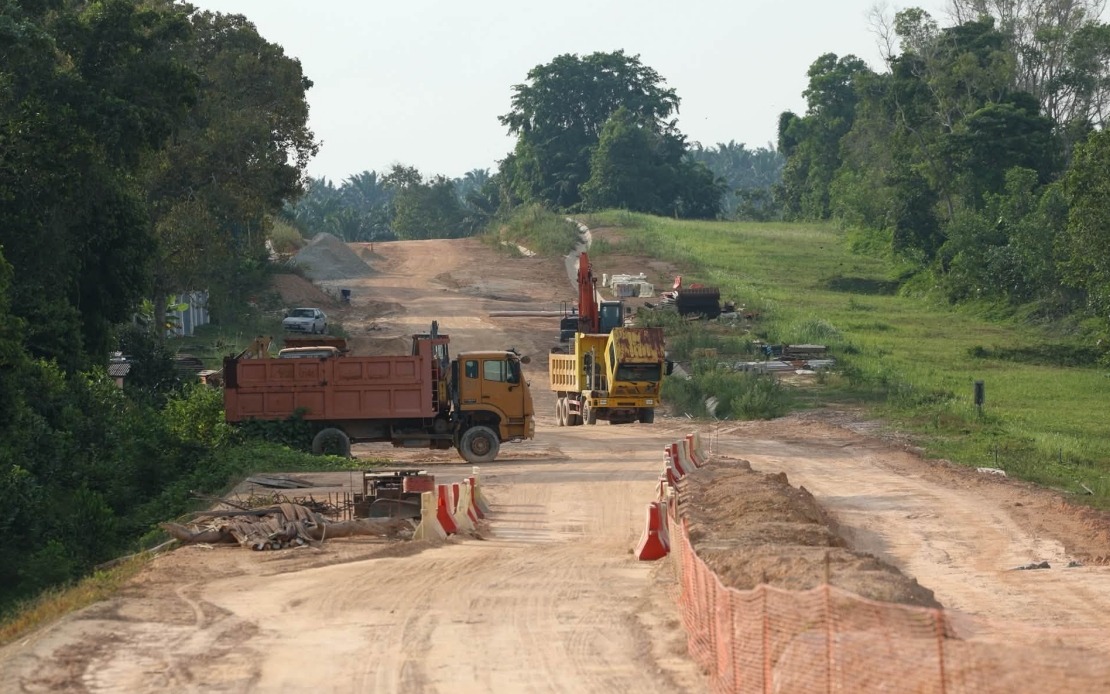
A major infrastructure undertaking spanning Port Dickson's rural settlements is demonstrating impressive momentum, with the 10-kilometre Lukut-Kampung Sirusa road project now substantially advanced in its construction phase. The initiative, valued at RM81.92 million, has reached 60.57 per cent physical completion and is tracking considerably faster than anticipated, having gained 43 days on its original timetable. The Works Ministry announced this progress following a site inspection by Deputy Works Minister Datuk Seri Dr Ahmad Maslan, underscoring government commitment to accelerating infrastructure delivery in Negeri Sembilan's coastal district.
The project represents a substantive commitment to improving transport infrastructure in a region where connectivity has historically constrained development and quality of life. The road will traverse through Kampung Paya and Kampung Bagan Pinang before reaching its terminus, creating a modern transport corridor that addresses longstanding accessibility challenges. Engineering specifications align with Public Works Department R2 standards, incorporating comprehensive supporting infrastructure including drainage systems, sewerage networks, slope stabilisation works, and utility provisions. This comprehensive approach ensures that the road functions not merely as a surface connection but as integrated infrastructure capable of supporting sustainable community development.
The construction timeline targets completion by August 10, 2027, though the current pace suggests potential for earlier delivery. This acceleration carries practical implications for the communities it serves, as every month of accelerated completion translates to earlier realisation of the project's intended socio-economic benefits. For Port Dickson residents, particularly those in peripheral settlements, the road promises transformative improvements to daily mobility patterns. Journey times between settlements and district economic centres will contract significantly, while traffic flow improvements should reduce congestion and enhance safety for commuters currently navigating inadequate routes.
Beyond immediate transportation benefits, this infrastructure investment functions as a catalyst for broader economic transformation in Port Dickson's hinterland. Improved accessibility to district commercial hubs, educational institutions, and healthcare facilities substantially elevates quality of life metrics for rural residents. The project specifically enhances connectivity to schools and clinics, addressing critical service accessibility gaps that have historically disadvantaged outlying communities. Tourism infrastructure around Port Dickson's attractions will become more accessible, potentially unlocking recreational and hospitality economic opportunities currently constrained by transport limitations.
The economic development dimension extends considerably beyond transportation convenience. Improved road connectivity traditionally stimulates entrepreneurial activity, as reduced transport costs and time barriers lower operating expenses for small businesses and traders. Local merchants gain more efficient access to district and regional markets, while external traders and investors face lower barriers to entering the area. This dual dynamic typically catalyses employment growth and attracts capital investment to previously marginalised localities. The Works Ministry explicitly identifies this catalyst effect in project documentation, anticipating that improved connectivity will generate knock-on investment and development across the surrounding economic landscape.
Implementation governance reflects structured interagency coordination, with the Ministry of Rural and Regional Development providing policy direction and federal development allocation funding, while the State Public Works Department assumes implementing agency responsibilities. This institutional arrangement ensures alignment between federal development priorities and state-level execution capacity. The project benefits from established bureaucratic frameworks and technical expertise, reducing implementation risks while maintaining accountability through existing governance structures. Deputy Works Minister Ahmad Maslan's site visit reinforces ministerial oversight and commitment to schedule adherence, signalling that monitoring mechanisms are functioning to identify and resolve bottlenecks promptly.
The ahead-of-schedule performance merits examination for lessons applicable to other infrastructure initiatives across Southeast Asia. Project acceleration despite Malaysia's tropical climate—which typically complicates construction timelines through seasonal rainfall and humidity-related challenges—suggests effective project management and possibly optimised resource allocation. Stakeholders monitoring infrastructure performance across the region will likely scrutinise whether Lukut-Kampung Sirusa demonstrates replicable best practices or represents exceptional performance reflecting site-specific advantages. Understanding acceleration drivers could inform planning methodologies for comparable initiatives elsewhere in Malaysia and neighbouring economies similarly confronting rural-urban connectivity deficits.
For Port Dickson district specifically, this project slots into broader connectivity architecture improvements. Complementary infrastructure investments in adjacent areas will amplify the transport corridor's impact, creating networks rather than isolated connections. Enhanced access from this road to Port Dickson's port facilities, industrial zones, and tourism establishments creates synergistic economic effects difficult to achieve through isolated interventions. The cumulative impact of improved settlement accessibility therefore extends beyond direct beneficiary communities to influence broader district economic geography and competitiveness.
Community-level impacts warrant consideration alongside formal economic assessments. Rural residents currently expending considerable time and resources accessing district services experience immediate quality-of-life improvements upon project completion. Educational access improvements particularly benefit school-age children, whose attendance and academic performance respond positively to reduced travel burdens. Healthcare facility access improvements carry genuine public health implications for emergency response times and routine care utilisation. These lived experience improvements, though less quantifiable than employment statistics or investment metrics, constitute meaningful development outcomes for affected populations.
The RM81.92 million investment scale reflects government prioritisation of rural connectivity across Malaysian states, illustrating broader policy commitment to reducing urban-rural service delivery gaps. Port Dickson's rural population receives recognition through tangible infrastructure allocation rather than abstract policy pronouncements, demonstrating governance responsiveness to peripheral community development needs. This capital commitment, whether viewed as equitable development redistribution or strategic economic activation, indicates that federal development planning incorporates rural connectivity as priority infrastructure category.
Looking forward, project completion will establish baseline data for assessing infrastructure's actual socio-economic impacts, allowing rigorous comparison between projected and realised outcomes. Monitoring post-completion community experiences, economic activity patterns, and service utilisation changes will inform evaluation frameworks applicable to similar initiatives. Port Dickson residents will essentially constitute a quasi-experimental cohort demonstrating whether well-planned, adequately-resourced rural connectivity infrastructure delivers anticipated transformation, with findings potentially guiding development allocation strategies across Malaysia and informing infrastructure policy discussions throughout Southeast Asia.

