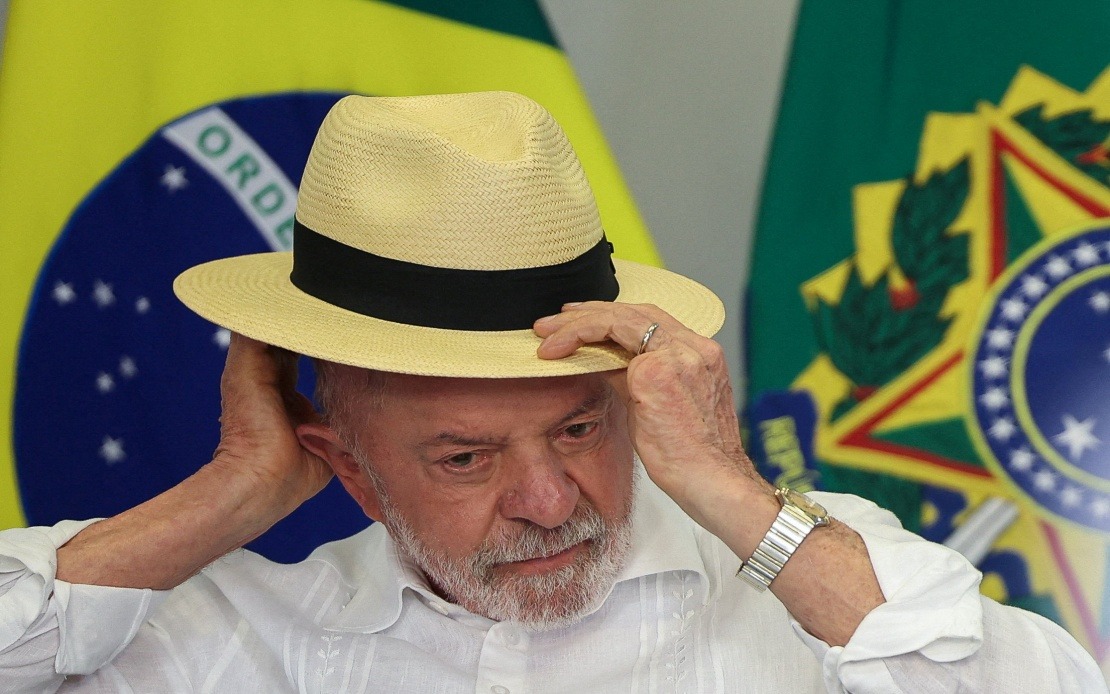
Brazilian President Luiz Inacio Lula da Silva maintains a narrow advantage over Senator Flavio Bolsonaro in his bid for re-election, though the margin has narrowed sufficiently to be considered statistically equivalent, according to fresh polling data released this week. The Quaest survey, commissioned by media conglomerate Globo and conducted between August 10 and 13 among 2,004 respondents, captured Lula securing 43 per cent support against Bolsonaro's 40 per cent in a simulated runoff scenario—a lead within the poll's two-point margin of error.
The tightening contest reflects shifting political dynamics in Latin America's largest nation as the election approaches in October. Just five days earlier, a similar Quaest poll had shown Lula with a marginally stronger position at 44 per cent compared to Bolsonaro's 39 per cent, suggesting momentum may be moving toward the challenger from the Brazilian right. When considering a first-round balloting scenario where multiple candidates compete simultaneously, Lula's advantage becomes more pronounced, drawing 38 per cent of likely voters while Bolsonaro trails at 31 per cent, with other conservative figures including Renan Santos and Ronaldo Caiado each capturing four per cent of support and Romeu Zema managing two per cent.
Brazilian electoral architecture mandates a runoff between the top two vote-getters if no candidate achieves an outright majority of valid votes cast, effectively shaping campaign strategy and messaging during the critical final months. Flavio Bolsonaro's emergence as the right's standardbearer represents a significant shift in Brazilian politics, with the eldest son of former President Jair Bolsonaro consolidating conservative backing after his father became constitutionally barred from seeking office. The elder Bolsonaro's disqualification stemmed from an electoral court determination that he abused state power while in office, compounded by a subsequent conviction related to an alleged conspiracy to reverse his 2022 electoral defeat at Lula's hands.
Lula's campaign strategy has centered on themes of national sovereignty and protection of Brazilian interests against external pressure, particularly from the Trump administration in Washington. At his formal campaign launch on August 2 during the Workers' Party convention in São Paulo, the incumbent president articulated concerns about foreign intervention in Brazilian affairs and pledged vigilant stewardship of the nation's strategic resources. The president specifically highlighted Brazil's substantial rare earth mineral deposits and other critical raw materials as requiring domestic protection from international control, signaling that resource nationalism would feature prominently in his re-election messaging.
The incumbent's nationalist framing directly addresses anxieties about foreign economic influence that resonate among significant voter constituencies. Lula's rhetoric during the campaign kick-off emphasized Brazil's right to determine its own trajectory without outside interference, stating unequivocally that Brazil would not tolerate foreign powers attempting to meddle in national affairs. He extended this principle to specific resource categories, declaring that China, the United States, and France would not access Brazil's mineral wealth without respecting Brazilian sovereignty and adhering to Brazilian terms and conditions.
This messaging carries particular significance given established relationships between the Bolsonaro family and the Trump administration, which has maintained close political and personal ties across multiple years. In June, Lula had already publicly cautioned Trump against attempting to influence Brazilian electoral outcomes, drawing a sharp distinction between Brazil's internal democratic processes and American electoral affairs. The president framed interference as inappropriate boundary-crossing, using distinctly colloquial language to convey the depth of Brazilian resistance to external involvement in its political destiny.
The polling snapshot arrives at a pivotal juncture, with approximately two months remaining before voters go to the polls. While the surveys indicate Lula retains his advantage, the numerical narrowing of the gap suggests the race remains competitive and susceptible to movement in either direction during the campaign's concluding phase. For regional observers in Southeast Asia, the Brazilian contest offers instructive parallels regarding how developing nations navigate relationships with established powers while asserting economic sovereignty, particularly concerning critical mineral resources and technological independence.
The significance of this election extends beyond Brazil's borders, as the outcome will shape Latin American geopolitics and influence how the region's largest economy positions itself within global trading relationships and strategic partnerships. A Lula victory would likely reinforce emphasis on South-South cooperation and regional integration through mechanisms like MERCOSUR, whereas a Bolsonaro-backed candidate triumph might signal reorientation toward closer North American ties. Malaysian policymakers monitoring commodity markets and critical mineral supply chains have particular interest in Brazil's political trajectory, given the country's substantial reserves of lithium, cobalt, and rare earth elements increasingly vital to Southeast Asian manufacturing and technology sectors.
The campaign's focus on resource nationalism and resistance to foreign economic pressure also reflects broader global trends as middle-income nations increasingly demand greater agency in determining how their natural endowments are exploited and distributed. Lula's emphasis on protecting Brazilian sovereignty while ensuring that resource extraction benefits Brazilian citizens represents a populist-nationalist positioning that distinguishes his campaign from alternatives that might prioritize foreign investment and market liberalization. This ideological positioning could prove decisive among working-class and lower-middle-class voters who form Lula's traditional electoral base and who have experienced economic pressures in recent years.

