The fashion industry has entered a peculiar new phase where the fundamental principles of high-end tailoring—pristine construction, flawless finishing and immaculate presentation—are being deliberately inverted by the world's most prestigious design houses. What once represented the antithesis of luxury craftsmanship has become a defining aesthetic for spring and summer collections across the globe, challenging assumptions about what consumers will pay for and why they covet these pieces.
For generations, the markers of quality couture centred on technical excellence: perfectly aligned seams, impeccable hems, and fabrics unmarred by even the smallest blemish or stain. A designer bag or garment was valued precisely because it appeared untouched by time or wear. Yet today's most coveted items deliberately mimic the appearance of objects retrieved from storage, pulled from dusty closets, or subjected to years of casual abuse. Chanel's reimagined 2.55 handbag arrives with a deliberately distorted silhouette, as though genuinely stomped upon by careless handling. Prada introduces clothing marked with what resemble age spots or discolouration, suggesting they have languished unworn for years. Coach's "Loved Leather" collection—essentially leather that has been pre-scuffed and pre-worn during manufacturing—sold out so successfully that the brand has returned this season with additional colourways of the same lived-in aesthetic.
The commercial success of this counterintuitive approach raises fundamental questions about contemporary consumer psychology and status signalling within affluent demographics. These deliberately damaged items command such demand that waiting lists continue expanding, suggesting that buyers perceive authentic value in the aesthetic of imperfection. For consumers with disposable income, the ability to purchase intentionally deteriorated luxury goods carries its own paradoxical prestige. Unlike previous luxury markers that emphasised timelessness and preservation, this trend celebrates transience, entropy and the visible passage of time as desirable qualities.
From a practical standpoint, this shift offers an unexpected advantage for ordinary consumers. Wardrobe pieces that have genuinely aged through years of wear and occasional accidents—a faded favourite shirt, jeans softened by washing, handbags bearing the marks of daily use—are no longer relics to discard. The trend validates worn clothing as fashionable without requiring replacement, effectively giving permission for people to continue wearing beloved items. A curry stain once represented a wardrobe failure; today it could be repositioned as authenticity. This democratisation of distressed aesthetics means that accidental damage or natural ageing can align with current style preferences rather than contradict them.
Designers across the industry have embraced this philosophy with varying creative approaches. Ralph Lauren pairs deliberately ripped jeans with traditionally formal elements—proper dress shirts, neckties, waistcoats and blazers—for spring 2027, creating deliberate juxtaposition through garment contrast rather than matching aesthetic cohesion. The ensemble is completed with pristine white-and-green penny loafers and a tailored tan tote, suggesting that aggressive casualness becomes acceptable only when anchored by structured, expensive accessories. This formula implies that the wearer's financial status remains evident even when clothing itself appears neglected.
Burberry approaches the trend through stonewashed pink denim styled as a complete ensemble, pairing a worn-appearance jacket with matching jeans and layering in a V-neck argyle sweater for what the brand describes as "prep-punk"—a deliberate collision of codes traditionally kept separate. Sandro's spring 2026 offering presents cropped distressed denim decorated with rustic gold and silver studs, subverting the roughness through precious metal ornamentation. The juxtaposition suggests that distressed fabrication matters less than the materials and embellishments that frame it; luxury status persists through the accessories that accompany apparent carelessness.
Other houses foreground the muddy, genuinely grimy aesthetic as bold design direction. Louis Vuitton's spring 2027 denim jacket features artfully applied earth-toned smudges and sandy texturing, suggesting exposure to elements rather than deliberate laboratory-created distressing. Acne Studios layers its mud-slicked denim patina with a slim-fit crumpled jacket, pursuing an aesthetic of genuine disarray. These interpretations push further than simple fading or tearing, embracing visible dirt and discoloration as primary design elements rather than incidental side effects of wearing.
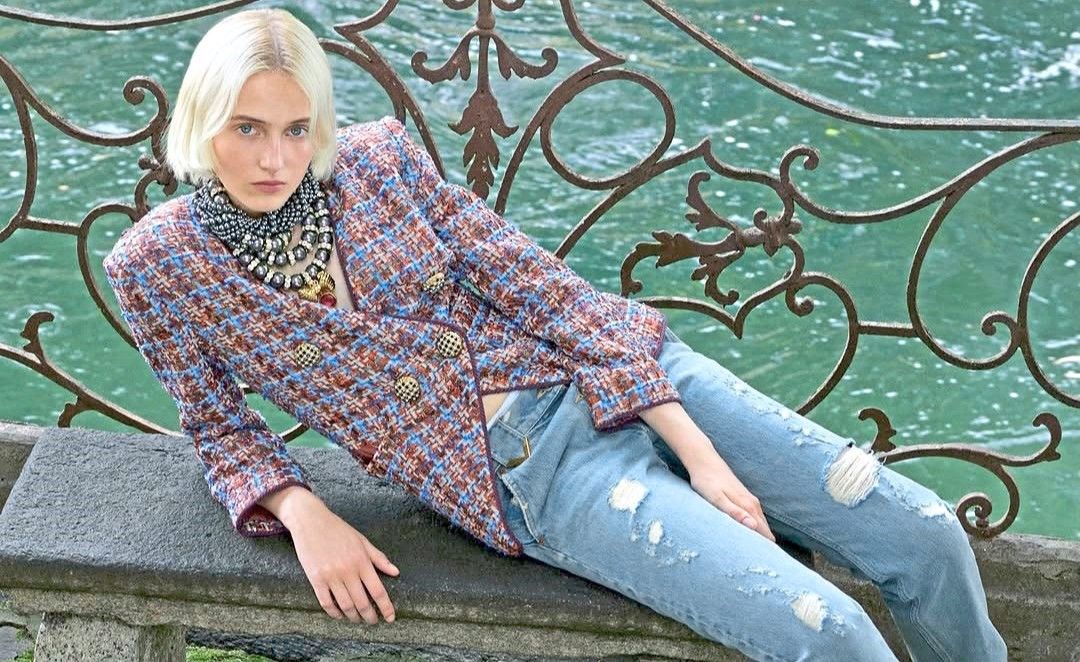
Valentino presents perhaps the most paradoxical statement within this trend: a tweed jacket in classic gold buttons—signifiers of buttoned-up Italian elegance—paired with shredded jeans for the cruise 2027 collection. When accessorised with multi-strand black pearl necklaces and golden studded heels, the outfit becomes a deliberate argument that wealth permits aesthetic contradiction. Money, the styling suggests, can purchase the luxury of appearing careless. The contradiction itself becomes the marker of elite status; only those with sufficient financial security can afford to dress in ways that appear neither carefully curated nor consciously styled.
For Malaysian and Southeast Asian consumers, this trend presents complex implications. Regional markets have historically valued durability, practicality and preservation of clothing investment, particularly given tropical climates that accelerate fabric deterioration. The concept of deliberately purchasing compromised garments requires a significant psychological shift away from pragmatic consumption values. Yet the trend's underlying logic—that worn items possess authentic character and merit preservation—aligns interestingly with cultural appreciation for vintage textiles and heirloom clothing practices across the region.
The trend also reveals shifting priorities within global luxury consumption away from ostentation toward irony and intellectual engagement. Rather than displaying wealth through obvious newness or pristine condition, contemporary luxury consumers increasingly signal status through appreciation of subtlety, contradiction and conceptual sophistication. Understanding that a garment is intentionally damaged, recognising the designer perspective behind that damage, and appreciating the juxtaposition of premium price with compromised appearance requires cultural literacy that itself functions as a status marker among wealthy, educated consumers.
As these collections reach regional markets and affluent Southeast Asian consumers increasingly engage with global fashion conversations, the aesthetic of deliberate distress will likely influence local interpretations of luxury and fashion direction. The phenomenon ultimately suggests that luxury's future may depend less on perfect craftsmanship and timeless preservation than on cultural conversation, conceptual boldness and the ability to transform apparent flaws into sophisticated statements about authenticity, impermanence and the paradoxical nature of contemporary wealth.

