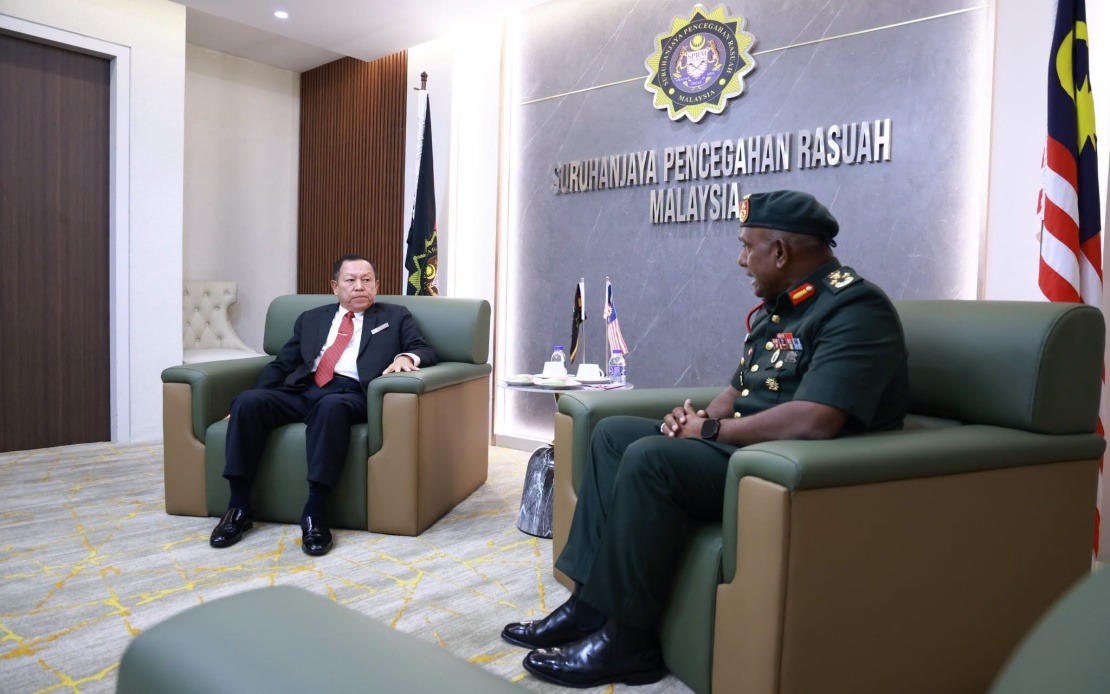
The Malaysian Anti-Corruption Commission and the Malaysian Armed Forces have reaffirmed their commitment to a deeper working relationship aimed at combating corruption more effectively across the defence establishment. The partnership, formalised during a courtesy call at MACC headquarters in Putrajaya on July 7, reflects growing recognition that institutional integrity within the military structure requires sustained collaboration between enforcement agencies and military leadership.
MACC Chief Commissioner Datuk Seri Abd Halim Aman emphasised that the commission places considerable weight on its established ties with the armed forces, viewing the relationship as essential to addressing corruption vulnerabilities within defence operations. He articulated hope that the synergy would expand, particularly through structured mechanisms for intelligence dissemination, data exchange, and administrative enhancement. This forward-looking stance suggests the MACC perceives ongoing potential for institutional strengthening across military ranks and procurement systems where corruption risks historically persist.
The visit marked the official reception of Lt Gen Datuk Fazal Abdul Rahman following his appointment as director-general of the Malaysian Defence Intelligence Organisation, effective May 21. This timing indicates that leadership transitions within military intelligence units provide strategic moments to reset cooperative arrangements and establish fresh protocols between defence and anti-corruption authorities. The appointment of a new intelligence chief signals potential momentum for implementing enhanced oversight mechanisms and whistleblower protections within defence circles.
Abd Halim's remarks highlighted three specific collaborative domains: intelligence sharing, information exchange, and governance enhancement. Intelligence sharing represents perhaps the most operationally significant element, as it enables the MACC to access military-held data regarding personnel conduct, procurement irregularities, and asset management. Information exchange extends beyond raw intelligence to include professional insights, audit findings, and best-practice guidance that can inform both agencies' strategic planning. Governance enhancement suggests institutional capacity-building, training programmes, and framework refinement to embed corruption-prevention principles throughout military structures.
The strategic nature of this cooperation carries particular significance for Malaysia given defence procurement's historical vulnerability to graft. Military contracts frequently involve substantial sums with complex supply chains, foreign partnerships, and classified operational considerations that create opportunities for misconduct. By institutionalising intelligence channels between the MACC and armed forces leadership, the two organisations position themselves to identify suspicious patterns earlier and intervene before large-scale losses materialise. This preventive orientation complements the MACC's traditional investigative mandate.
Lt Gen Fazal responded by reaffirming the armed forces' commitment to maintaining rigorous governance standards and emphasising discipline as foundational to all operational activities. His statement underscores a shift within military leadership toward embracing anti-corruption frameworks not as external impositions but as integral to institutional credibility and operational effectiveness. This rhetorical alignment—framing integrity as essential to military professionalism rather than as bureaucratic constraint—facilitates smoother cooperation and encourages mid-level officers to view the MACC partnership positively.
The practical dimensions of this cooperation will likely extend to joint training initiatives, cross-agency task forces investigating specific allegations, and harmonised reporting standards for suspicious activities. Military personnel increasingly encounter MACC representatives not as external investigators but as partner institutions working toward shared objectives of institutional health. Such normalisation of cooperation can shift organisational cultures toward greater transparency and reduce defensive attitudes that historically hindered investigations into defence-sector irregularities.
For Malaysian citizens and regional observers, this deepened alliance carries broader implications for governance quality across Southeast Asia's security establishments. Malaysia's defence sector manages substantial budgets and interfaces with international arms suppliers, creating exposure to transnational corruption networks. Robust domestic cooperation between military and anti-corruption authorities reduces vulnerability to foreign influence and demonstrates institutional self-regulation capacity to development partners and international bodies monitoring governance standards.
The involvement of MACC Intelligence Division senior director Datuk Saiful Ezral Arifin and MAF Security and Counter Intelligence Directorate director Lt Col Muhamad Zainol Md Yusof in the courtesy call suggests that cooperation extends beyond ceremonial statements to operational planning levels. Intelligence and security specialists from both agencies typically drive substantive collaborative work, developing protocols for evidence-sharing, investigation coordination, and personnel management. Their presence indicates that the institutional infrastructure for cooperation continues maturing beyond previous arrangements.
Sustained success of this partnership depends upon structural embedding of cooperative mechanisms beyond leadership-level commitments. Establishing permanent liaison officers, regular coordination meetings, and formalised information-sharing protocols would convert rhetorical commitments into durable institutional practices. The MACC and armed forces must develop clear procedures for reporting suspected corruption, protecting sources, and managing investigations that span both organisations' jurisdictions without compromising operational security or investigative integrity.
Regional implications merit consideration as well, particularly for other Southeast Asian militaries grappling with comparable corruption challenges. Malaysia's model of institutionalised cooperation between defence and anti-corruption authorities could offer instructive lessons for countries strengthening governance frameworks. The approach balances security imperatives with accountability demands, suggesting that military institutions need not view integrity mechanisms as threats to operational capability when collaboration is structured thoughtfully and led by committed leadership.
Looking forward, this renewed partnership provides a foundation for addressing emerging corruption vulnerabilities within defence operations, from cyber procurement to advanced weapons systems. As military modernisation accelerates and defence budgets expand, the risk landscape shifts continuously. Maintaining aligned, proactive cooperation between the MACC and armed forces leadership ensures that anti-corruption capacity evolves alongside new operational complexities, protecting national resources and preserving institutional legitimacy.

