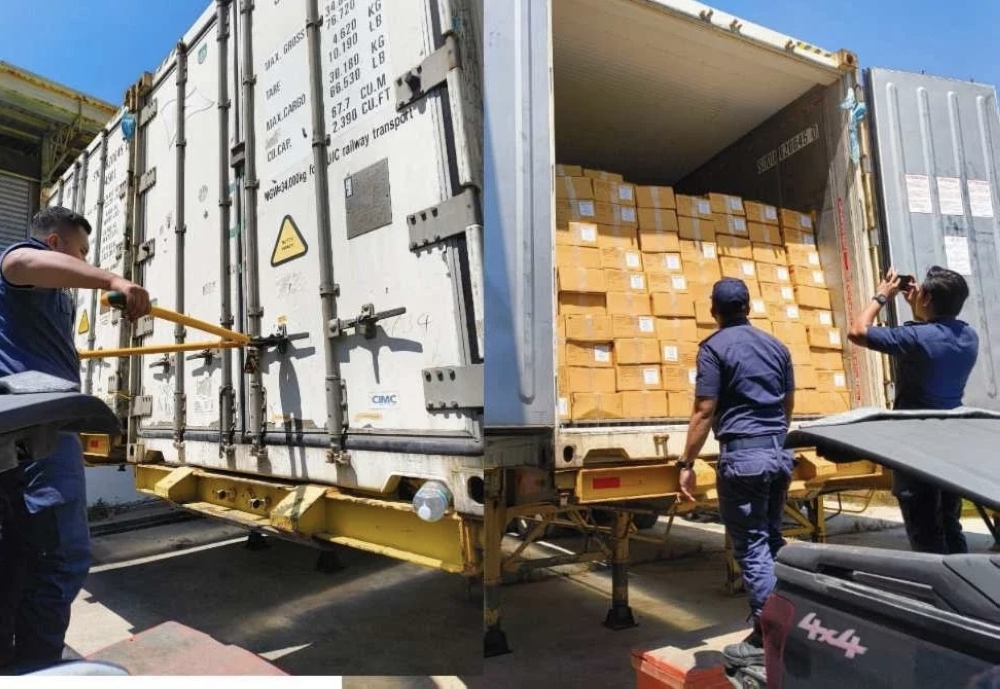
The Malaysian Anti-Corruption Commission (MACC) has successfully dismantled an organized syndicate involved in the clandestine importation of frozen poultry products from China into Sabah, marking a significant enforcement action against illegal food trafficking networks. The operation, dubbed Op Chick, culminated in the arrest of three individuals suspected of orchestrating the contraband scheme, which had evaded regulatory detection through sophisticated evasion tactics. The breakthrough represents an escalating effort by Malaysian authorities to tighten control over the nation's food import mechanisms, particularly in a region where geographical remoteness and porous supply chains have historically enabled illicit trade.
The illicit importation of frozen chicken products represents a multifaceted concern for Malaysian food authorities and public health officials. Unlike legitimate commercial imports subject to stringent biosecurity protocols and quality assessments, clandestine shipments bypass mandatory veterinary inspections and food safety certifications that protect domestic consumers from potential contamination and disease vectors. Such contraband goods frequently originate from facilities operating outside international health standards, creating substantial risks for foodborne pathogens and harmful residues. The proliferation of illegal poultry imports also undermines the economic viability of Malaysia's domestic chicken farming industry, which relies on regulated market access and consumer confidence in certified supply chains.
Sabah's vulnerability to such smuggling operations reflects broader structural challenges facing the state's regulatory infrastructure. As the nation's second-largest state by land area but with a relatively dispersed population and extensive maritime borders, Sabah presents enforcement complexities that sophisticated criminal syndicates routinely exploit. The state's geographic isolation from peninsular regulatory hubs, combined with its substantial informal trading networks with neighboring regions, creates enforcement gaps that criminal enterprises capitalize upon. Previous years have witnessed repeated seizures of contraband goods across Sabah's borders, suggesting that individual enforcement operations, while welcome, require systemic fortification of border security mechanisms and inter-agency coordination.
The MACC's involvement in this particular case underscores the corruption dimension embedded within food smuggling networks. While surface-level smuggling involves logistics and concealment, underground operations of this scale typically require complicity from officials positioned within customs, port authorities, or food safety agencies. The commission's intervention suggests investigation into potential bribery, abuse of authority, or facilitation by public servants who overlooked or expedited the passage of prohibited goods. Such institutional rot erodes the credibility of Malaysia's food governance structures and necessitates concurrent reforms addressing both criminal prosecution and internal accountability mechanisms within border agencies.
The frozen chicken smuggling phenomenon extends beyond isolated criminality into organized syndicate operations with established supply chains, distribution networks, and financial infrastructure. Successful dismantlement requires identifying not merely the three arrested individuals but the broader ecosystem sustaining illegal importation, including source facilities in China, maritime transportation coordinators, port-level facilitators, and domestic distribution channels. Intelligence indicating the scope of the operation—volumes smuggled, duration of activity, geographic reach within Sabah and potentially beyond—remains crucial for assessing whether Op Chick represents a singular breakthrough or a limited incision into a much larger problem.
Malaysia's regulatory framework governing poultry imports operates through multiple agencies with overlapping jurisdictions, including the Department of Veterinary Services, Malaysian Customs Department, and state-level agricultural authorities. This institutional architecture, while theoretically comprehensive, frequently generates coordination failures and intelligence gaps that smugglers systematically exploit. The MACC's success in this instance may catalyze inter-agency reviews of information-sharing protocols, risk assessment methodologies, and joint enforcement mechanisms. Equally important are technological investments in port monitoring, cold chain tracking, and real-time customs data analysis that could detect anomalies indicative of illicit consignments.
Regional context matters considerably for understanding Malaysia's specific vulnerabilities to food smuggling. China's substantial poultry production capacity and price competitiveness mean frozen chicken products entering regional markets illicitly undercut domestically produced alternatives, creating profit incentives for smuggling. Southeast Asian neighbors including Indonesia and the Philippines have encountered comparable illicit importation networks, suggesting coordinated regional criminal enterprises leveraging shared geographic proximity and supply chain integration. Addressing this challenge effectively requires not merely domestic enforcement intensification but bilateral and multilateral cooperation with source countries and transit states to disrupt supply pathways upstream.
The broader implications for Malaysian consumers extend beyond immediate food safety considerations into market integrity and price dynamics. Unregulated illicit imports artificially depress market prices while circumventing tax obligations, creating unfair competition against legitimate importers and domestic producers who bear full compliance costs. Consumer awareness of such problems remains limited, partly because illicit products entering informal retail channels lack transparent origin labeling. Public communication strategies explaining the health and economic rationales for enforcing import controls could strengthen social compliance and reporting mechanisms.
Future enforcement sustainability depends on institutional capacity expansion and resource allocation within food security agencies. The MACC's investigative capabilities prove valuable but constitute a reactive mechanism activated after crimes occur. Proactive border security improvements, including advanced screening technologies at ports of entry, enhanced intelligence networks monitoring transnational smuggling actors, and incentive structures encouraging whistleblower participation, would strengthen the overall deterrent environment. Investment in post-arrest prosecution mechanisms ensuring swift and credible legal consequences remains equally critical for undermining the economic calculus attracting organized crime into food smuggling operations.
The Op Chick operation delivers a symbolic signal that Malaysian authorities recognize food security as a legitimate law enforcement priority warranting investigative resources and inter-agency coordination. However, sustained effectiveness requires political commitment transcending individual operations, institutional reforms addressing systemic vulnerabilities, and regional cooperation mechanisms addressing the transnational nature of contemporary food smuggling networks. Without these structural foundations, enforcement gains risk remaining episodic rather than transformative, leaving Malaysia's food systems perpetually vulnerable to sophisticated criminal exploitation.

