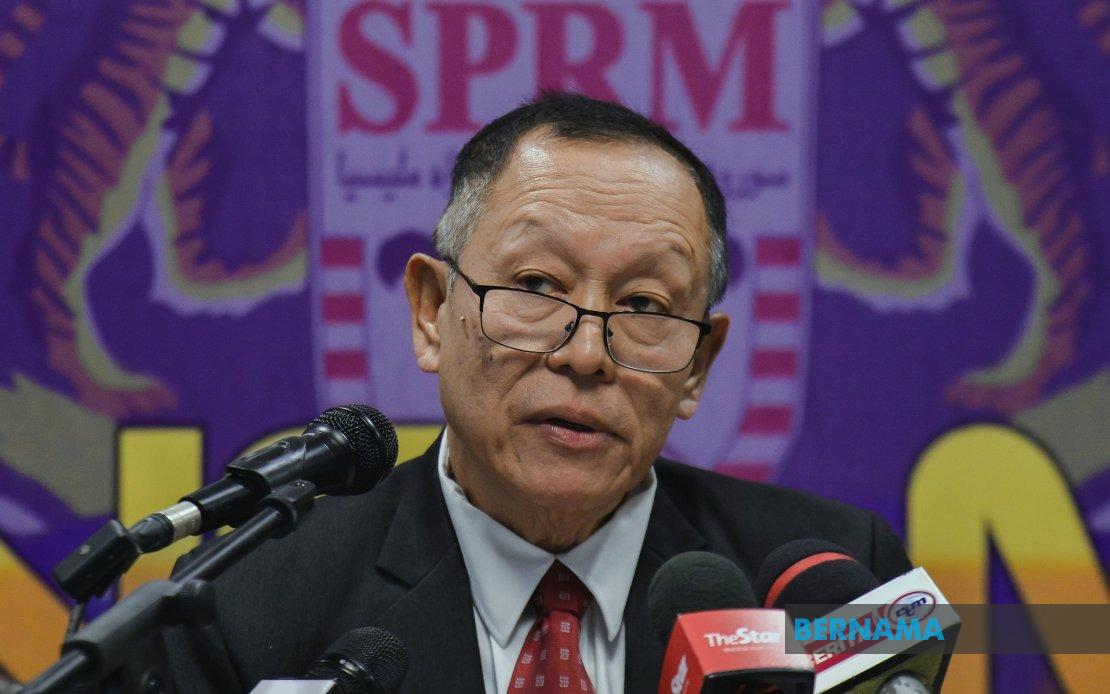
The Malaysian Anti-Corruption Commission has launched investigations into three separate corruption allegations connected to the 16th Johor state election, with at least one complaint directly targeting an election candidate, the agency's chief commissioner revealed on Tuesday. The disclosures come just days before Saturday's polling day, when an estimated 2.7 million registered voters across Johor will elect 56 state assembly representatives to form the next government.
Datuk Seri Abd Halim Aman, heading the MACC, confirmed that the anti-corruption body has so far received a formal complaint from the Election Campaign Enforcement Team in Batu Pahat, while two additional reports have come directly from members of the general public. All three matters are currently undergoing assessment and formal investigation under applicable anti-corruption legislation, though the agency has withheld specific details about the nature and scope of the allegations beyond acknowledging that one involves a candidate. The MACC chief's restrained approach to public commentary reflects standard investigative protocol, though his explicit mention of candidate involvement signals the seriousness with which authorities view the complaint.
Abd Halim's statement that "corruption is corruption" regardless of political affiliation or the status of those implicated represents a deliberate assertion of institutional impartiality. This message carries particular weight in Malaysian electoral contexts, where public perception of equal treatment across party lines remains essential to maintaining confidence in the integrity of democratic processes. The remark appears designed to pre-empt accusations of selective prosecution, a perennial concern in competitive political environments where losing candidates and their supporters frequently allege bias.
To manage public complaints more effectively during the election period, the MACC has established dedicated operations rooms across five key locations: Johor Bahru, Segamat, Kluang, Batu Pahat and Mersing. These facilities serve as accessible reporting centres for citizens wishing to lodge allegations of abuse of power or corrupt conduct by any party, candidate, supporter or voter. The geographic distribution of these offices reflects awareness that not all communities have equal proximity to centralised complaint mechanisms, potentially excluding voices from more remote or less urbanised areas without such local infrastructure.
The activation of these operations rooms underscores a broader institutional commitment the MACC has articulated regarding election-related misconduct. Officials have pledged that the commission will pursue cases with rigour and impartiality, taking what they characterise as "firm action" against anyone found to have violated election regulations, irrespective of their political standing or influence. This emphasis on zero tolerance, while consistent with international best practices for election monitoring, also reflects domestic political pressures and the elevated expectations Malaysian voters have placed on institutional independence following various corruption scandals in preceding years.
Beyond the three active investigations, the MACC chief has broadened his messaging to encompass all participants in the electoral process. He has called on candidates, political parties, their supporters and voters themselves to maintain strict compliance with electoral law throughout both the campaign period and on polling day itself. This multi-stakeholder appeal suggests recognition that election integrity depends not merely on institutional oversight but equally on the voluntary cooperation and ethical conduct of participants at all levels. The reminder carries implicit acknowledgment that monitoring mechanisms, however robust, cannot prevent all violations without grassroots compliance.
Abd Halim has framed clean elections as instrumental to broader democratic health, arguing that the integrity of the electoral process directly influences public confidence in national institutions. This reasoning connects election probity to systemic legitimacy in ways that resonate beyond technical compliance with campaign finance rules or candidate conduct standards. In Malaysian contexts where institutional trust has weathered various controversies, the connection between tangible electoral cleanliness and citizen faith in democratic systems represents a high-stakes concern for both authorities and political leaders.
The Johor election itself carries wider significance within Malaysia's complex federal structure. As one of the nation's most developed and strategically important states, Johor's political complexion influences regional dynamics and federal coalition calculations. A disputed or tainted electoral outcome could therefore reverberate across state boundaries and potentially affect relationships between federal and state governments. The MACC's public emphasis on its commitment to preventing and investigating graft thus serves both local accountability purposes and broader stabilisation interests.
The timing of these allegations, emerging in the final days before polling, raises questions about whether such complaints emerge more frequently during heated campaign periods or whether reporting mechanisms themselves become more visible and accessible as election day approaches. Either interpretation carries implications for how electoral authorities might structure oversight mechanisms in future contests. The fact that one complaint originated from the formal Election Campaign Enforcement Team while others came through public channels suggests multiple pathways through which potential violations reach investigative bodies.
For Malaysian voters and regional observers, the MACC's public handling of these three allegations offers early indicators of how the commission will balance its mandate to maintain electoral integrity against pressures to demonstrate impartiality and avoid appearing to favour particular political contestants. The commission's willingness to publicly acknowledge ongoing investigations while declining to prejudge outcomes or identify the specific candidate involved represents one approach to this balance, though critics might argue either that transparency requires fuller disclosure or that even acknowledging candidate involvement before trial constitutes prejudicial comment.

