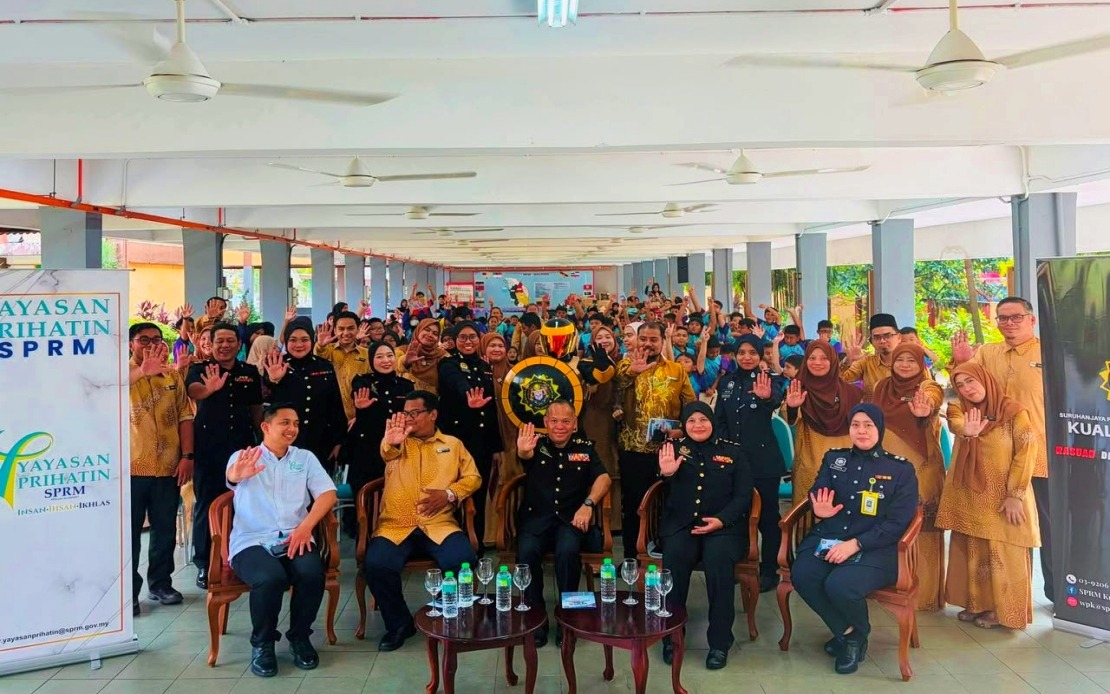
The Malaysian Anti-Corruption Commission's Kuala Lumpur office is intensifying its push to root out corruption from the ground up, launching the Wira Antirasuah (WAR) programme at Sekolah Kebangsaan Jalan Pasar 1 as part of a broader strategy to develop integrity consciousness among primary school children. The initiative reflects a growing recognition within Malaysia's anti-corruption establishment that tackling graft requires cultural change beginning in the classroom, not just enforcement action in government agencies and boardrooms.
According to Mohamad Zakkuan Talib, who heads the Kuala Lumpur MACC office, sowing seeds of ethical behaviour in young minds represents a strategic long-term investment. Rather than waiting until children enter the workforce where patterns of misconduct become entrenched, the programme targets formative years when values are still malleable and children possess natural inclinations toward fairness. Talib's approach reflects international best practice in anti-corruption work, where prevention through education increasingly takes precedence over reactive prosecution alone.
The conceptual foundation of the WAR programme rests on a deceptively simple but powerful premise: integrity is not the domain of heroes performing dramatic acts of resistance, but rather ordinary individuals making principled choices in everyday situations. This reframing is particularly significant for the Malaysian context, where corruption often manifests not through grand embezzlement schemes but through normalised petty misconduct—small bribes, nepotistic hiring practices, and casual rule-bending that collectively corrode institutional effectiveness. By teaching students to recognise integrity in mundane daily choices—resisting the temptation to cheat on exams, respecting others' property, honouring commitments, and maintaining trustworthiness—the MACC grounds anti-corruption values in tangible, relatable behaviours.
The launch event combined educational content with interactive engagement designed to sustain children's interest and participation. The MACC's Community Education Branch (PenMas) delivered briefings structured for young audiences, moving beyond abstract lectures to create participatory learning experiences. Equally significant was the deployment of Kapten MACC, the commission's mascot, transforming anti-corruption messaging into an approachable, non-threatening format that resonates with primary school-age children. This multimedia approach recognises that sustained attitude change requires multiple reinforcement channels rather than one-off lectures that fade from memory.
The establishment of an Anti-Corruption Corner at Sekolah Kebangsaan Jalan Pasar 1 creates an ongoing institutional mechanism for spreading integrity awareness. Rather than treating the WAR programme launch as a discrete event, the corner functions as a dedicated space where both staff and students can access resources, discussion materials, and reference points on ethical conduct. This embedding within the school's physical and organisational landscape signals that anti-corruption is not a peripheral concern but central to the institution's mission and identity.
Beyond the core anti-corruption education component, the programme extended to address students' material welfare through tangible support. Yayasan Prihatin SPRM's donation of a smart television enhanced the school's capacity to deliver multimedia educational content, while targeted aid to twenty-nine pupils from lower-income families acknowledged the reality that effective character education cannot occur in isolation from basic material security. Students struggling with poverty and instability are less able to absorb lessons about integrity when fundamental needs remain unmet, making the welfare component integral rather than supplementary to the programme's educational objectives.
The timing and symbolic dimensions of the launch deserve careful attention. Coordinating the WAR programme with the Keep Malaysia Clean (KMC) campaign and National Month celebrations connected anti-corruption to broader national narratives about collective responsibility and shared identity. The involvement of special education pupils in planting hibiscus—Malaysia's national flower—further symbolised inclusivity and the principle that building an ethical society requires engaging all segments of the student population. This carefully orchestrated messaging communicates that integrity is not just an institutional concern but a national aspiration reflecting Malaysian values and aspirations.
For policymakers across Southeast Asia, the MACC's grassroots approach offers instructive lessons. While the region has invested heavily in institutional anti-corruption infrastructure—specialised agencies, legislative frameworks, and prosecutorial capacity—progress in actually reducing corruption remains patchy. The underlying challenge is cultural: deeply rooted social norms that normalise transactional relationships, patron-client networks, and result-oriented pragmatism that places effectiveness above adherence to formal rules. Addressing these patterns requires cultural intervention beginning in schools, where behavioural foundations are still being formed and alternative value systems can compete for internalization before corruption becomes habitual.
The programme also reflects evolving thinking about the MACC's role and reach. Rather than positioning itself solely as an investigative and prosecutorial body, the commission increasingly emphasises preventive education and cultural advocacy. This expansion reflects international experience suggesting that societies achieving sustained reductions in corruption combine robust enforcement with broad-based cultural change. The MACC's commitment to school-based programmes represents an acknowledgment that institutional design and legal frameworks, while necessary, remain insufficient without corresponding shifts in how citizens internalise and practice ethical behaviour.
Looking forward, the success of initiatives like WAR will ultimately depend on scaling and institutionalisation. A single school programme, however well-designed, produces limited systemic impact without multiplication across schools and integration into formal curricula. The MACC would need to work with the Ministry of Education to embed anti-corruption education as a standard component across all primary schools, ensuring consistency and reach. Additionally, connecting school-based programmes to community engagement and family involvement multiplies reinforcement and creates supportive environments where integrity lessons are reinforced beyond classroom walls.
The WAR programme also highlights the importance of ensuring that anti-corruption education translates into behavioural change rather than merely raising awareness. Students may comprehend the conceptual arguments for integrity without experiencing the social and institutional pressures that test these commitments when they enter work environments characterised by systemic corruption. Future programme refinement should therefore extend to mentoring relationships, workplace internships, and graduated exposure to ethical dilemmas, allowing students to develop practical decision-making skills and resilience in contexts where pressure to compromise integrity becomes real.
Ultimately, the MACC's investment in school-based integrity education reflects faith that Malaysia's corruption challenge is not immutable, and that systematic cultural intervention can shift norms and create constituencies of citizens committed to principled conduct. Whether this optimism proves justified will become apparent over years and decades as students exposed to programmes like WAR progress through education and into professional life, where the true test of early character development occurs. For now, the programme represents a promising recognition that combating corruption requires planting ethical seeds early and nurturing them consistently through childhood and into adulthood.

