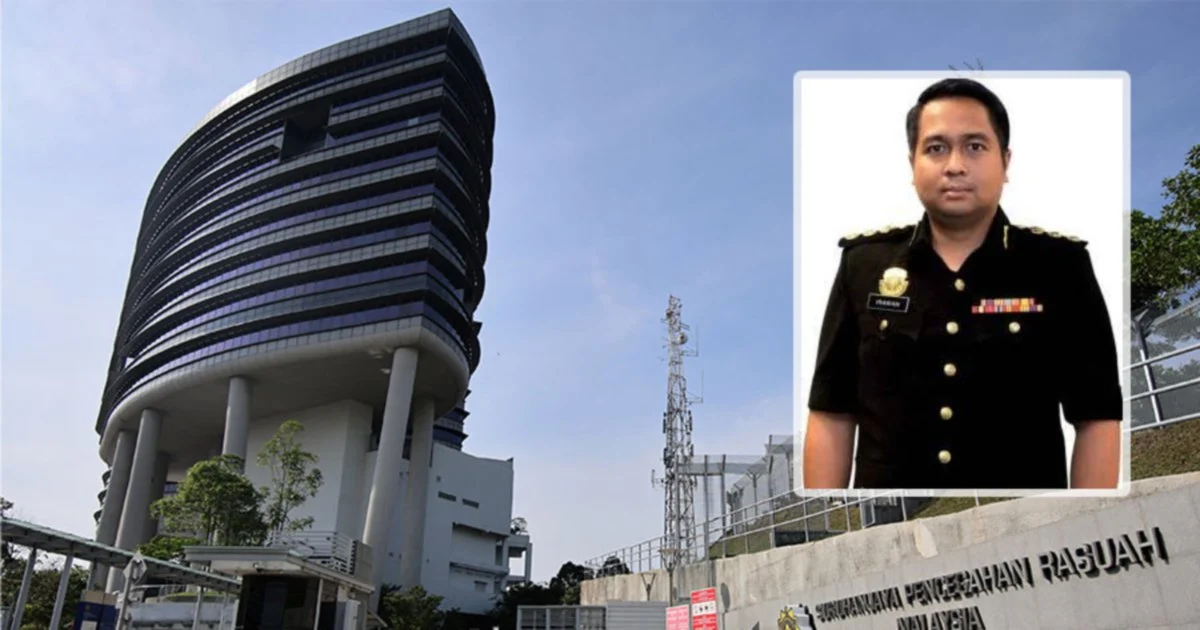
A high-ranking Malaysian Anti-Corruption Commission (MACC) officer has secured a place at the Federal Bureau of Investigation's prestigious National Academy training programme in the United States, underscoring Malaysia's commitment to strengthening its law enforcement capabilities through international partnerships.
The selection marks a significant achievement for the MACC, which has positioned itself as a frontline agency in the nation's fight against corruption. Participation in the 299th session of the FBI National Academy represents more than individual professional development; it signals Malaysia's willingness to engage with the world's leading anti-corruption practitioners and to adopt proven investigative methodologies that can be brought back to enhance domestic enforcement operations.
The FBI National Academy is one of the most selective and rigorous law enforcement training programmes globally, accepting only a small number of candidates from international agencies each year. Completion of the academy typically enhances an officer's technical skills in financial investigation, cybercrime detection, leadership, and advanced interrogation techniques—areas critical to modern anti-corruption work. The intensive curriculum, delivered over several weeks, exposes participants to cutting-edge practices and emerging threats that transcend national borders.
For Malaysia specifically, this opportunity arrives at a time when the nation has been intensifying efforts to recover stolen assets and dismantle organised corruption networks. The techniques and knowledge acquired at the FBI National Academy could prove invaluable in handling increasingly sophisticated financial crimes and cross-border money laundering schemes that often involve shell companies, cryptocurrency transfers, and complex trade-based money laundering mechanisms.
The MACC's selection of this officer reflects internal confidence in the agency's personnel and a deliberate strategy to build institutional capacity. When trained officers return to their home countries following the FBI Academy, they typically introduce improved operational standards, contribute to curriculum development in their own training facilities, and mentor junior staff. This multiplier effect extends the benefits of a single officer's training across entire organisational structures.
Bilateral law enforcement cooperation between Malaysia and the United States has expanded considerably over recent years, particularly through mechanisms like the Joint Commission on Bilateral Cooperation and targeted intelligence-sharing agreements. The FBI maintains a presence in Kuala Lumpur and regularly engages with Malaysian counterparts on terrorism financing, transnational organised crime, and corrupt officials. The National Academy placement demonstrates the depth of this relationship and the confidence the FBI places in Malaysian law enforcement institutions.
Southeast Asia faces distinct corruption challenges that differ from those in developed nations. Officials frequently exploit weak regulatory frameworks, informal financial systems, and political connections to facilitate illicit transfers. Understanding how American and other international agencies detect and prosecute such crimes—particularly those spanning multiple jurisdictions—equips Malaysian investigators to anticipate and counter evolving tactics used by corrupt networks throughout the region.
The programme also provides networking opportunities with law enforcement officials from dozens of other countries. These relationships often prove instrumental in subsequent years when cases require international coordination or the extradition of suspects. A MACC officer returning with a network of contacts across global law enforcement agencies becomes a valuable asset for handling complex transnational investigations that increasingly characterise modern corruption cases.
From a broader regional perspective, Malaysia's investment in developing anti-corruption expertise contributes to Southeast Asia's overall capacity to combat financial crimes that threaten economic stability and investor confidence. Corrupt capital flows destabilise neighbouring economies and distort market competition. When the MACC strengthens its investigative prowess through international training, it helps create a more hostile environment for corrupt actors operating across the region.
The selection also reflects MACC's evolution from an agency sometimes perceived as politically influenced to one increasingly recognised for professional standards and technical competence. Participation in elite international training programmes reinforces this institutional transformation and attracts additional international cooperation offers from other law enforcement bodies and multilateral organisations.
Looking forward, the officer's experience at the 299th session will likely inform discussions within the MACC about modernising certain investigation procedures, upgrading technology infrastructure, and refining training protocols for the agency's broader workforce. The knowledge transfer that follows such international placements often catalyses organisational improvements that benefit Malaysia's anti-corruption efforts for years to come.

