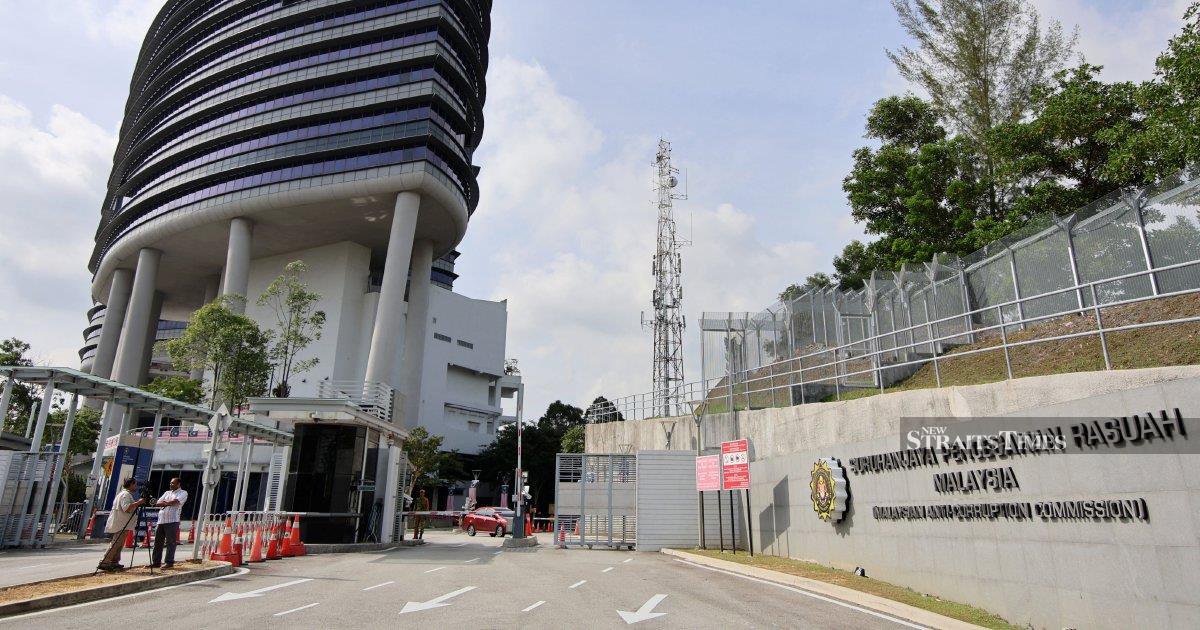
The Malaysian Anti-Corruption Commission has launched a strategic appeal to top-ranking government administrators, asking ministry secretaries-general and department directors-general to place whistleblower protection at the centre of their governance agendas. This institutional push reflects MACC's assessment that robust safeguards for those reporting misconduct are essential to Malaysia's broader anti-corruption strategy, particularly as the nation seeks measurable improvement in its Corruption Perceptions Index standing by 2030.
Whistleblower protection mechanisms have become increasingly recognised internationally as foundational to effective anti-corruption frameworks. When individuals within organisations can report wrongdoing without fear of retaliation, investigation and prosecution of corruption cases becomes more efficient, evidence gathering improves, and systemic vulnerabilities surface earlier. The MACC's intervention signals an acknowledgment that Malaysia's current infrastructure in this area may not be optimally serving these functions across all public agencies.
The commission's directive targets the highest levels of the federal bureaucracy—those officials who wield significant budgetary and policy authority over their respective ministries and departments. By positioning secretaries-general and directors-general as champions of whistleblower protection, MACC is attempting to cascade protective standards downward through the administrative hierarchy, ensuring that implementation becomes embedded in standard operating procedures rather than remaining a peripheral concern.
Malaysia's CPI ranking carries substantial diplomatic and economic implications. The index, compiled annually by Transparency International, influences investor confidence, corporate lending decisions, and international perceptions of institutional reliability. A higher ranking signals to global markets that Malaysia operates with transparent governance standards and accountability mechanisms. Conversely, stagnation or decline in the ranking can deter foreign direct investment and elevate borrowing costs for public and private entities alike. The 2030 timeframe suggests MACC has identified specific targets within a decade-long improvement trajectory.
Whistleblower protection encompasses multiple dimensions beyond simple legal immunity. Effective frameworks include confidentiality guarantees, protection from dismissal or demotion, secure reporting channels independent of direct supervisors, and psychological support services. Many developing economies struggle with implementation gaps where laws exist on paper but institutional culture remains hostile to dissent. MACC's outreach to permanent secretaries indicates recognition that legislative provisions alone are insufficient without cultural and procedural change at the administrative level.
The timing of this appeal reflects international pressure and benchmarking dynamics. Regional peers including Singapore and brunei consistently outrank Malaysia on the CPI, creating competitive pressure for institutional reform. The ASEAN context amplifies these dynamics, as investors evaluating the region's governance standards often compare individual nations' anti-corruption credentials. Malaysia's positioning as a middle-income economy with aspirations toward upper-income status makes CPI performance particularly salient for attracting high-value sectors.
Successful whistleblower ecosystems require trust in institutional mechanisms designed to receive and investigate reports. Scepticism about whether reports will be acted upon, or conversely, whether revealing misconduct will trigger subtle punishment disguised as routine administrative action, significantly reduces reporting rates. MACC's emphasis on formal policy prioritisation serves a signalling function—demonstrating that whistleblower protection is not negotiable within government agencies but rather mandated from the commission's authority.
The private sector dimensions also merit consideration. Malaysia's ongoing corporate governance reforms have increasingly emphasised whistleblower channels within companies, particularly in sectors like banking and energy. Government adoption of parallel standards creates regulatory consistency and reinforces cultural norms around accountability, potentially influencing private sector compliance more effectively than enforcement alone.
Implementation challenges will likely surface as this directive moves through bureaucratic channels. Resource allocation for anonymous reporting infrastructure, training for officials on handling disclosures without inadvertently compromising confidentiality, and establishing investigative protocols that maintain independent scrutiny all require substantial institutional investment. MACC's role may include providing guidance documentation, audit mechanisms to verify compliance, and sanctions for agencies failing to establish adequate systems.
The linkage between whistleblower protection and CPI improvement reflects evidence-based understanding of corruption's mechanics. High-corruption environments often succeed because wrongdoing remains hidden; those who know about misconduct stay silent due to retaliation fears. Breaking this cycle requires both structural change and assurance to potential reporters that revelation carries manageable personal cost. MACC appears to be signalling that this specific lever remains underutilised in Malaysia's anti-corruption architecture.
For Malaysian organisations navigating these developments, compliance frameworks will need updating to reflect MACC's priorities. Multinational enterprises operating in Malaysia already maintain comprehensive whistleblower protections to meet global standards; domestic companies now face implicit pressure to match these benchmarks. The cascade effect through government is likely to influence private sector peer dynamics, particularly in regulated industries where government procurement and licensing decisions intersect with governance perceptions.
Looking forward, MACC's strategy positions whistleblower protection as measurable and monitored. Unlike vague governance improvements, the presence or absence of formal protection mechanisms can be audited and verified. This creates accountability for the officials receiving MACC's directive, transforming the call from aspirational guidance into enforceable expectation. Whether this translates into tangible CPI improvement depends on consistent implementation and genuine institutional culture shift toward protecting rather than punishing dissent.

