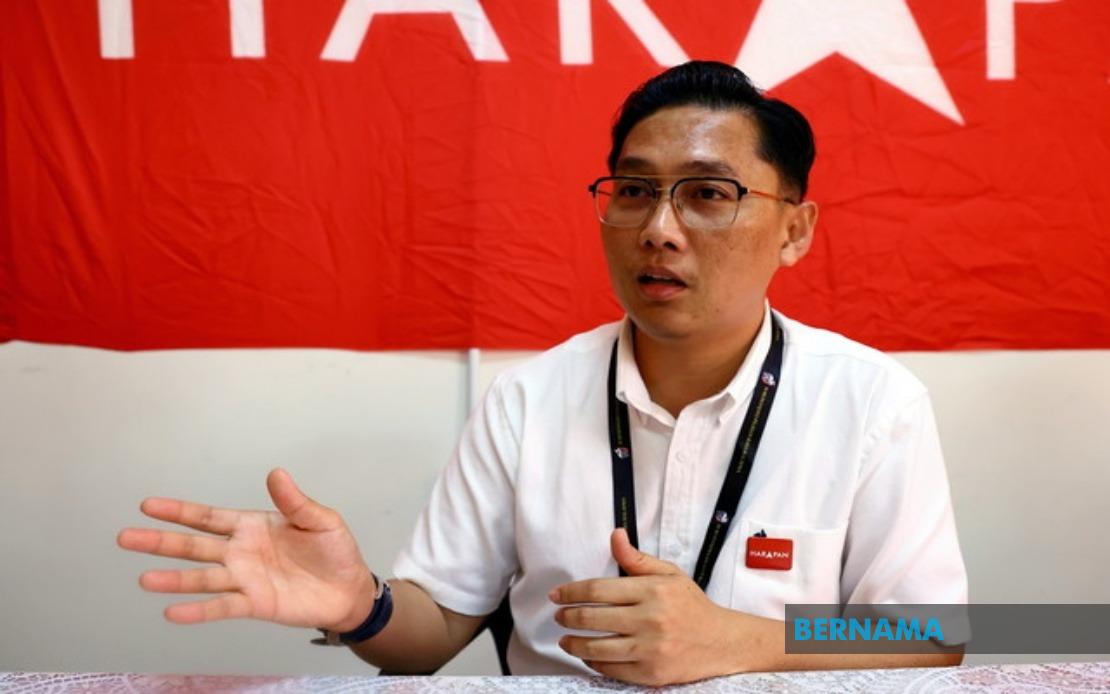
Nur Hafiz Roslan, the Pakatan Harapan candidate contesting the Machap state seat, has declared his readiness to challenge the ruling Barisan Nasional's incumbent, Johor Menteri Besar Datuk Onn Hafiz Ghazi, in the upcoming Johor election. Speaking at the PH campaign headquarters in Simpang Renggam, the legal professional expressed confidence that his 18 years of experience in law would equip him to address constituent concerns effectively, despite Machap's reputation as a stronghold for the ruling coalition.
The contest represents a significant symbolic clash in the broader Johor political landscape. Datuk Onn Hafiz secured the seat in 2022 with a commanding majority of 6,543 votes, cementing BN's grip on what has historically been a safe constituency. For PH, mounting a credible challenge in such terrain requires both organisational discipline and a compelling alternative narrative—two elements Nur Hafiz stressed are now in place.
Nur Hafiz's confidence partly rests on political precedent. He invoked the careers of former Johor Menteri Besars Tan Sri Abdul Ghani Othman and Datuk Seri Khaled Nordin, both of whom experienced electoral defeats despite holding the state's top office. His argument carries weight: Malaysian politics has repeatedly demonstrated that incumbency, however strong, is not insurmountable. The 2022 general election saw the toppling of several BN strongholds nationwide, and the 2023 Johor election itself resulted in a shift in state governance dynamics, though the ruling coalition retained overall control.
More striking than his tactical optimism is Nur Hafiz's framing of the campaign around substantive governance rather than identity politics. He articulated a deliberate rejection of what he termed the "3R sentiments"—race, religion and royalty—as the foundation for political competition. This positioning reflects a broader tension within Malaysian politics, where communal appeals remain powerful but increasing segments of the electorate, particularly younger and urban voters, express fatigue with such messaging. His emphasis on "mature politics that prioritises policies and solutions to the people's daily concerns" suggests PH is banking on a shift in voter priorities toward bread-and-butter issues.
The Machap campaign thus becomes a microcosm of a larger strategic pivot within PH. Rather than seeking to out-mobilise BN through identity-driven messaging—terrain on which the ruling coalition historically dominates—Nur Hafiz is attempting to reframe political competition around competence, service delivery, and solutions to everyday economic pressures. For Malaysian voters confronting rising living costs, employment uncertainty, and infrastructure gaps, such an appeal potentially resonates more directly than appeals to communal sentiment.
Nur Hafiz's stated objective to serve as a bridge between state and federal governments reflects another dimension of PH's strategic positioning. With PH controlling the federal government and BN retaining the Johor state government, the region exists in divided administration. This division can produce either political deadlock or productive cooperation depending on elected representatives' willingness to transcend partisan boundaries. By emphasising constituent representation "regardless of background," Nur Hafiz is essentially proposing to deprioritise partisan conflict in favour of functional governance—a message with particular appeal in constituencies frustrated by inter-governmental coordination failures.
The timing of the campaign intersects with shifting economic pressures across Malaysia and Southeast Asia. Post-pandemic inflation, currency volatility, and sectoral employment challenges have made immediate economic relief a central concern for voters across communal lines. Machap, an agricultural and semi-rural constituency, likely feels these pressures acutely. A candidate emphasising practical solutions and policy competence positions himself as addressing these material concerns directly, contrasting with campaigns centred on identity affirmation.
PH's campaign machinery in Machap appears operationally consolidated, which Nur Hafiz attributed to the absence of internal factional tensions since the nomination phase. This organisational coherence matters considerably in state elections, where victory margins often hinge on ground-level mobilisation efficiency rather than national narrative dominance. The 2022 margin of 6,543 votes, substantial but not insurmountable, suggests that improved voter turnout among PH-sympathetic communities or persuasion of swing voters could theoretically alter the outcome.
However, structural challenges persist for PH in Machap. Johor's historical demographics and the constituency's composition still favour BN-aligned voters. Datuk Onn Hafiz brings both the incumbent's administrative machinery and the prestige of the Menteri Besar position to his campaign. Voter perception of who is best positioned to deliver state-level benefits often tilts toward the ruling state government. Nur Hafiz's legal background, while respectable, lacks the executive experience that Menteri Besar incumbency provides.
The election itself occurs on 11 July, with early voting scheduled for 7 July. This compressed timeframe means campaigns must crystallise their messaging quickly and efficiently. For Nur Hafiz and PH, the strategic gambit remains clear: attempt to shift electoral competition toward policy substance and away from identity affirmation, mobilise their base effectively, and persuade enough swing voters that competent governance and constituent-responsive representation warrant a change. Whether this approach succeeds in a Barisan-leaning constituency will offer instructive evidence about the trajectory of Malaysian electoral politics beyond the Johor context.

