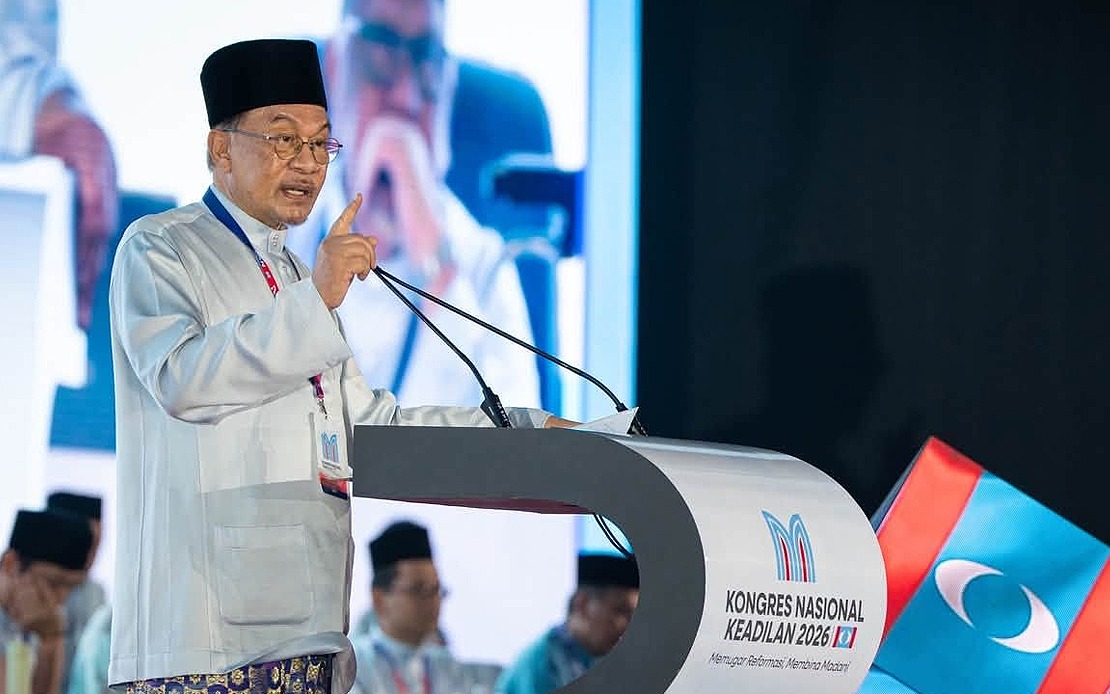
The MADANI Government faces a critical challenge in bridging the gap between policy implementation and public perception, according to Prime Minister's Senior Political Advisor Tengku Datuk Seri Zafrul Tengku Abdul Aziz. Speaking at the 2026 PKR National Congress in Melaka, he emphasized that reform initiatives must move beyond statistical achievements to deliver measurable improvements in citizens' daily lives. The government's credibility ultimately depends not merely on announcing ambitious programmes, but on ensuring these translate into outcomes that resonate with ordinary Malaysians across different income levels and regions.
The congress, held at the Melaka International Trade Centre under the theme "Reviving Reform, Building MADANI", provided a platform to assess progress made since PKR and its coalition partners took office. Tengku Zafrul noted that while various initiatives have been rolled out, substantially greater effort is required to guarantee that their positive effects permeate throughout all layers of society. This acknowledgement reveals an underlying tension within the government's approach—the existence of programmes does not automatically ensure their impact reaches intended beneficiaries, particularly those in rural and lower-income communities who may lack awareness or easy access to these schemes.
The advisor pointed to Malaysia's six per cent economic growth as a case study in this disconnect. While the figure exceeded forecasts and signals overall macroeconomic health, he stressed that growth statistics alone mean little if ordinary households do not experience improved purchasing power, job security, or living standards. The "spillover effects" he referenced represent the crucial moment when headline economic data must convert into wage increases, better services, lower costs of living, or enhanced employment opportunities. Without this translation, even impressive growth numbers risk becoming isolated achievements divorced from the lived experience of the population.
A significant portion of Tengku Zafrul's remarks focused on the government's communication deficit. He candidly acknowledged that the extensive list of MADANI achievements presented by PKR President Datuk Seri Anwar Ibrahim simply does not register with the public because messaging efforts remain inadequate. This represents a fundamental strategic weakness—if citizens remain unaware of government initiatives, they cannot benefit from them or credit the administration for positive changes. The advisor framed this as an institutional shortcoming rather than public apathy, arguing that communicating accomplishments is as essential to governance as designing them in the first place.
Among the key initiatives highlighted during the congress were the abolition of the Universities and University Colleges Act, a move designed to restore academic freedom and institutional autonomy to Malaysia's higher education sector. The government has also prioritized rehabilitating critical statutory bodies such as the Federal Land Development Authority, recognizing that these institutions require structural reform to effectively serve their mandates. Additionally, PKR signalled its commitment to economic initiatives that would feature in the upcoming Budget, though specific details remained reserved for formal presentation. These measures collectively demonstrate the administration's broad reform ambitions spanning education, rural development, and economic policy.
The emphasis on FELDA rehabilitation carries particular weight for Malaysian observers, given that organisation's historical significance in rural development and its recent operational challenges. Restoring institutional credibility and effectiveness at FELDA would directly impact hundreds of thousands of smallholder farmers and their families, making it emblematic of the type of reform that can produce tangible societal benefits. Similarly, dismantling AUKU constraints on university governance addresses longstanding concerns from the academic community and student activists, though implementation challenges remain substantial and will require sustained commitment.
Tengku Zafrul underscored that PKR's electoral prospects and the broader success of the MADANI coalition hinge on demonstrable delivery rather than rhetorical promises. He called for strengthened party machinery, improved internal listening mechanisms, and enhanced solidarity among coalition members. These organisational imperatives reflect recognition that the government must function with greater efficiency and unity to accomplish its transformation agenda. Fragmentation, poor coordination, or persistence of outdated administrative practices could undermine even well-intentioned policy initiatives.
The reference to winning back public trust through fresh agendas suggests the administration recognizes current satisfaction levels may be insufficient to guarantee continued electoral support. In Malaysian politics, where memory of past administrations remains vivid and voter preferences can shift rapidly, maintaining momentum through visible achievements becomes strategically vital. The implicit acknowledgement that more effort is required signals humility about how much remains unfinished, though it also raises questions about realistic timelines for meaningful impact on ordinary Malaysians' circumstances.
For Southeast Asia broadly, the MADANI Government's experience offers lessons about the challenges of translating reform agendas into public-facing outcomes. Across the region, governments have launched ambitious programmes to modernise institutions, improve governance, and foster inclusive growth. Yet the gap between policy design and effective implementation—particularly in reaching marginalised populations—remains a persistent obstacle. Malaysia's approach, which explicitly identifies communication and grassroots delivery as critical weaknesses, provides a valuable case study in honest institutional self-assessment.
The congress discussions indicate that PKR views the reform struggle as far from concluded, positioning future work as equally challenging as past achievements. This framing helps set realistic expectations while also laying groundwork for sustained mobilisation of party cadres and coalition partners. It acknowledges that quick fixes remain unlikely for deeply entrenched institutional problems. Simultaneously, it commits the administration to the patient, sustained effort necessary to embed reform across multiple government agencies and delivery mechanisms.
Moving forward, the government's credibility will increasingly depend on specific, measurable improvements in service delivery, economic opportunity, and institutional performance. Generic claims of reform activity will no longer suffice if citizens cannot identify concrete benefits in their own lives. The MADANI administration appears to recognise this reality, though translating such recognition into effective governance remains the true test ahead.

