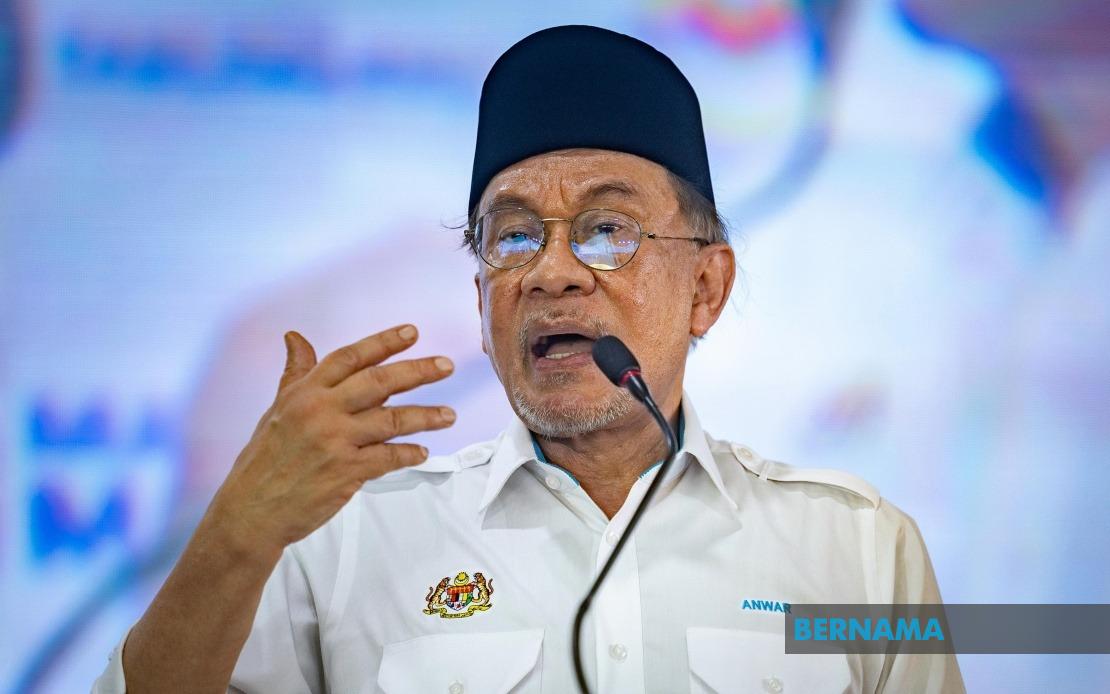
Prime Minister Datuk Seri Anwar Ibrahim has pledged that the MADANI Government will maintain its push to improve religious institutions and pondok schools throughout the country, addressing the need to modernise these traditional educational establishments while preserving their core Islamic teachings. Speaking at the 2026 Perak Pondok and Religious Schools Gathering in Ipoh on July 19, Anwar underscored the government's determination to ensure these institutions remain relevant and competitive in an increasingly technology-driven world.
Historically, pondok schools have served as vital centres of learning in Malaysian communities, particularly in rural and traditional areas. However, Anwar acknowledged that these institutions have struggled to keep pace with broader economic and technological transformations, losing ground as the knowledge landscape shifted dramatically over recent decades. This widening gap between their traditional curriculum and contemporary skill requirements has posed a significant challenge to their sustainability and appeal to younger generations seeking practical qualifications.
The Prime Minister expressed considerable respect for religious educators, pondok school administrators, and senior Islamic scholars who have managed to balance their commitment to preserving classical Islamic texts and religious traditions with a willingness to adopt emerging fields of study. This dual approach represents a pragmatic response to modernisation pressures, allowing institutions to remain anchored in their foundational mission while simultaneously equipping students with competencies demanded by today's job market, including digital literacy, computer technology, and artificial intelligence applications.
Recognising the complexity of this transition, the government has mobilised institutional support from key agencies. Anwar specifically acknowledged the contributions of Malaysia Digital Economy Corporation (MDEC) and the Implementation Coordination Unit (ICU) within the Prime Minister's Department, both of which have collaborated on initiatives to strengthen the capacity of religious schools. These partnerships reflect a coordinated governmental effort to inject resources and expertise into institutional reform rather than leaving these schools to navigate modernisation alone.
The Prime Minister's remarks carried particular weight given their articulation before an audience of religious school leaders and stakeholders gathered in Perak, one of Malaysia's significant centres of Islamic learning. By choosing this venue and these participants as his intended audience, Anwar sought to communicate directly with institutional leaders whose cooperation remains essential for implementing any modernisation agenda. His reference to discussions with Sheikh Wazir Che Awang Al-Makki, a respected Kelantan-based religious scholar, further underscored the government's engagement with influential figures within the Islamic education ecosystem.
Anwar's commitment came with a conditional assurance framed around economic stability and national health. He indicated that as long as Malaysia's economy performs adequately and the nation maintains good health, the government would prioritise funding enhancements to pondok and religious schools. This formulation, while expressing genuine intent, also highlights the government's view that institutional improvements remain contingent upon macroeconomic conditions—a reality familiar to Malaysian policymakers operating within fiscal constraints.
The attendance of senior government figures at the gathering underscored the initiative's political salience. Perak Menteri Besar Datuk Seri Saarani Mohamad, Minister in the Prime Minister's Department (Religious Affairs) Dr Zulkifli Hasan, and Chief Secretary to the Government Tan Sri Shamsul Azri Abu Bakar all participated, signalling coordination across state and federal levels. Dr Zulkifli Hasan's presence was particularly significant, given his portfolio's direct oversight of religious affairs and his ability to translate the Prime Minister's vision into concrete policy measures.
For Malaysian policymakers and Islamic educators, this announcement reflects broader recognition that pondok schools serve not merely as religious institutions but as social infrastructure embedded within communities. Their decline or stagnation could have ripple effects beyond education, potentially affecting cultural preservation and social cohesion in regions where they maintain strong roots. The government's commitment therefore extends beyond educational policy into dimensions of social stability and national identity.
The emphasis on integrating artificial intelligence and computer technology represents a particularly noteworthy aspect of the initiative. Rather than positioning these modern disciplines as threats to Islamic learning, the Prime Minister's framing suggests they should be viewed as tools that religious educators can leverage to enhance teaching, reach broader audiences, and prepare students for knowledge economies where technical competence increasingly determines economic mobility. This integration approach contrasts with approaches that treat traditional and modern learning as mutually exclusive.
The challenge ahead lies in translating these commitments into sustained funding, curriculum development, and teacher training programmes. Many pondok schools operate with limited resources and ageing infrastructure, and meaningful transformation requires not merely symbolic government endorsement but substantial institutional investment. The involvement of MDEC and ICU suggests technical and coordination support, yet the durability of such partnerships beyond political cycles remains uncertain.
For Southeast Asian readers beyond Malaysia, this case illustrates how nations are grappling with preserving indigenous educational traditions whilst adapting to global technological change. The MADANI Government's approach—attempting integration rather than replacement—mirrors challenges facing Islamic and traditional institutions across the region, from Indonesia to Brunei. How successfully Malaysia navigates this balance could offer instructive lessons for neighbouring countries pursuing similar goals.
The government's explicit recognition of pondok schools' historical importance whilst frankly acknowledging their contemporary limitations reflects pragmatic policymaking. Rather than dismissing these institutions as relics or attempting wholesale transformation that might erode their identity, the approach seeks evolutionary change that preserves core strengths whilst building new capabilities. Whether this measured strategy proves effective will depend substantially on how religious communities themselves engage with modernisation opportunities and how government agencies maintain consistent support beyond the current political moment.

