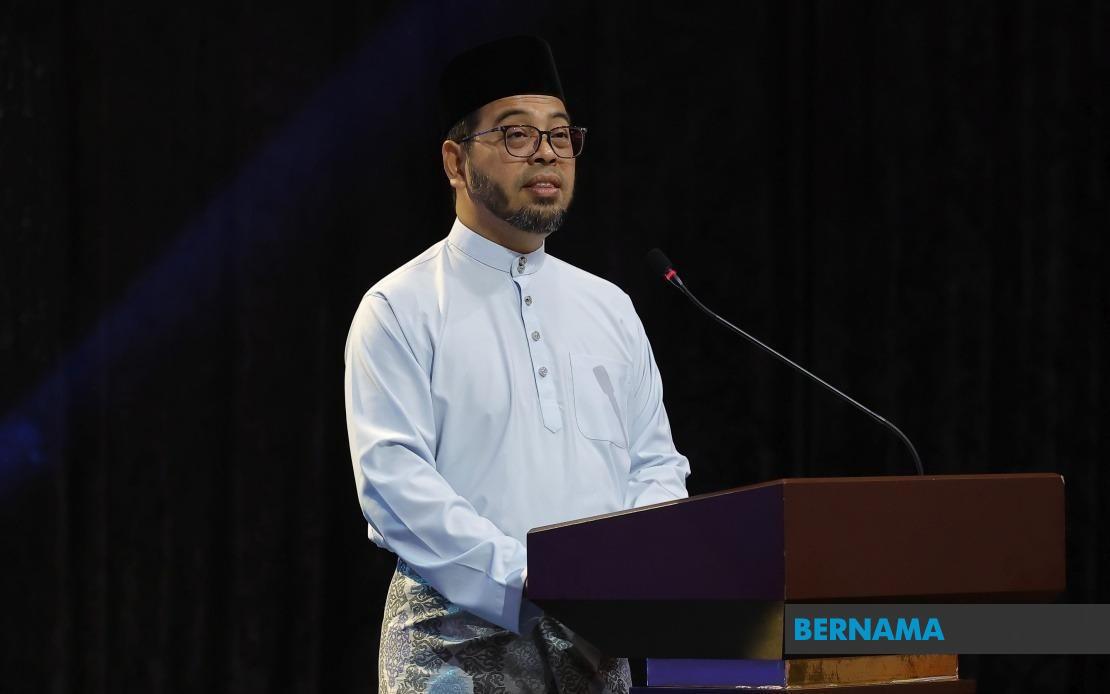
The MADANI Government intends to position tahfiz education as a complementary pillar within Malaysia's educational landscape rather than as an isolated system, according to Dr Zulkifli Hasan, Minister in the Prime Minister's Department (Religious Affairs). Speaking at the 34th Darul Quran JAKIM convocation ceremony, Zulkifli outlined a vision wherein religious education develops in tandem with conventional schooling, creating pathways for graduates to thrive across diverse professional sectors and contribute meaningfully to national progress.
The minister's statement reflects a deliberate reframing of tahfiz education's purpose and scope. Rather than positioning these institutions solely as repositories for Quranic memorisation, the government envisions them as centres of holistic development. This approach acknowledges that huffaz—those who have memorised the Quran—require not only religious knowledge but also practical competencies, ethical grounding, and adaptability to function effectively in contemporary Malaysia's complex job market and civic institutions.
Darul Quran JAKIM, which observes its 60th anniversary this year, exemplifies this institutional model in practice. Established in 1966, the institution has graduated 12,633 huffaz who have dispersed across education, Islamic judiciary, religious outreach, academic research, public administration, and the professions. This distribution demonstrates that tahfiz graduates are no longer confined to religious vocations but have integrated into the broader civil and professional apparatus, validating the government's emphasis on comprehensive skill development alongside religious training.
The Diamond Jubilee milestone carries symbolic weight in Zulkifli's remarks, functioning as both retrospective acknowledgment and forward-looking mandate. Rather than treating the 60-year span as a complete achievement warranting satisfaction, the minister framed it as the foundation upon which the next era must be constructed with heightened ambition and rigour. This rhetorical move signals that the government perceives tahfiz education not as a settled, mature system requiring minimal adjustment, but as an evolving sector capable of sustained transformation and relevance.
The 700 graduates who received certificates at the 34th convocation represent the institutional diversity now characterising tahfiz education in Malaysia. The ceremony witnessed the commissioning of Bachelor's degree holders—37 in number—produced through partnership with Universiti Sains Islam Malaysia, alongside 454 diploma-level graduates in Quranic studies and recitation, 204 participants completing the tahfiz certification programme, and five recipients of basic tahfiz credentials. This stratification reflects deliberate curricular differentiation, enabling institutions to accommodate students with varying academic profiles and educational aspirations whilst maintaining rigorous standards in Quranic scholarship.
The collaborative framework involving USIM proves particularly instructive for understanding how tahfiz education has adapted to modern governance and credentialing structures. By embedding bachelor's-level programmes within a traditional Islamic institution, the system creates formal pathways whereby hafiz graduates can pursue tertiary qualifications recognised by Malaysia's higher education ecosystem. This integration removes structural barriers that once prevented religious scholars from accessing university credentials and the professional advancement such qualifications facilitate.
Zulkifli's emphasis on character formation and knowledge integration addresses persistent tensions within religious education debates across the Muslim world. The minister explicitly rejected any notion that tahfiz programmes should concentrate exclusively on memorisation at the expense of understanding, critical thinking, and ethical development. This position aligns with contemporary Islamic educational philosophy, which increasingly recognises that rote memorisation disconnected from comprehension, contextual awareness, and moral reasoning produces scholars ill-equipped for leadership and meaningful contribution to community challenges.
For Malaysian policymakers and educators, the government's articulated commitment implies several practical implications. First, tahfiz institutions require sustained funding and administrative support to implement curricula balancing traditional religious instruction with modern pedagogical approaches. Second, coordination mechanisms between tahfiz centres and mainstream educational authorities must be strengthened to ensure graduate competencies transfer seamlessly across sectors. Third, career pathways for tahfiz graduates require deliberate expansion and promotion to counteract occupational limitations that may discourage talented students from pursuing religious education.
The Singapore and broader Southeast Asian context adds further dimensionality to Malaysia's tahfiz development trajectory. As other Muslim-majority and Muslim-minority societies in the region navigate questions regarding Islamic education's role and structure, Malaysia's explicit integration of tahfiz programmes within national educational frameworks offers a potential model. The approach demonstrates that Islamic and secular educational objectives need not be mutually exclusive, potentially informing regional discussions about educational pluralism and religious institutional positioning within secular governance systems.
Institutional leadership and staff commitment, which Zulkifli acknowledged, represents an often-overlooked factor in educational success. Tahfiz programmes depend substantially on instructor dedication, mentorship quality, and administrative competence—factors less visible than curricular design or facility investment yet equally consequential for educational outcomes. The minister's specific recognition of these human elements suggests the government appreciates that institutional excellence emerges through both systemic support and individual commitment.
Looking forward, the MADANI Government's stated trajectory for tahfiz education positions these institutions as strategic assets for national development rather than peripheral religious spaces. This repositioning carries implications for resource allocation, regulatory oversight, graduate recruitment, and public perception. By articulating tahfiz education's contributions across education, judiciary, research, and administration, policymakers create intellectual and political justification for sustained investment, whilst simultaneously setting expectations that graduating huffaz will demonstrate professional competencies alongside religious knowledge. The next 60 years of Darul Quran JAKIM's development will likely reflect how effectively Malaysia implements this integrated vision.

