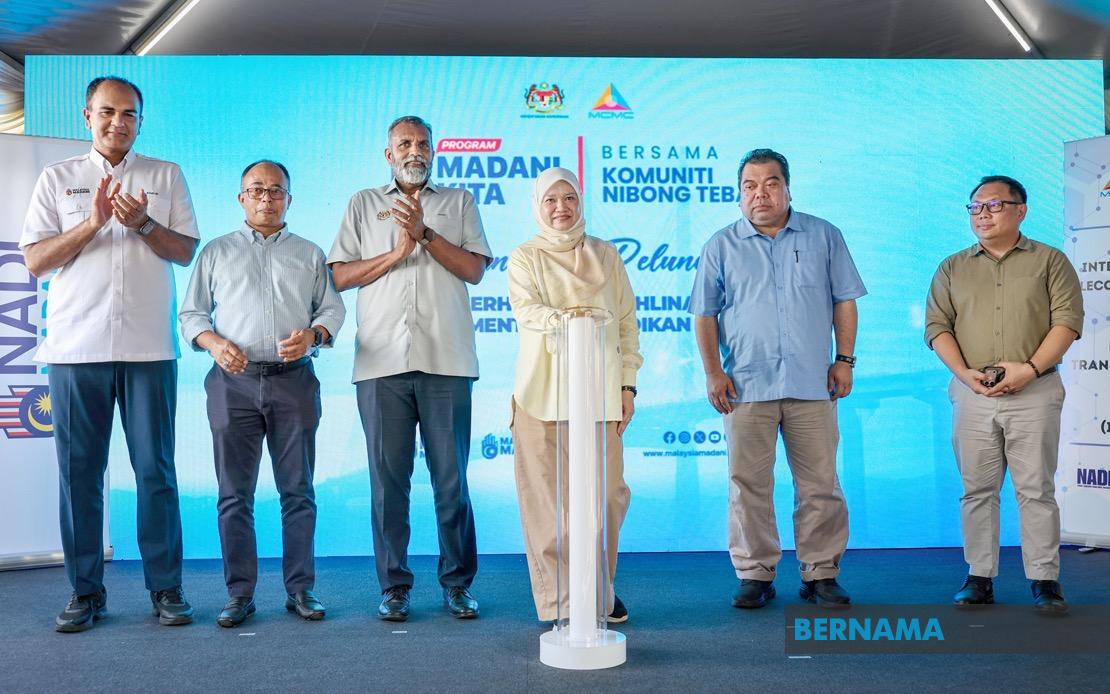
The Malaysian government is intensifying efforts to bring its services and decision-making processes closer to ordinary citizens through an expanding series of community engagement programmes. The Communications Ministry has now successfully implemented 41 MADANI Kita initiatives, positioning itself as a bridge between federal and state-level government agencies and the people they serve. These programmes represent a significant shift towards decentralised service delivery, moving government interactions out of formal bureaucratic settings and into community spaces where residents feel more comfortable participating.
At the core of this initiative lies a partnership between three major organisations: the Community Communications Department (J-KOM), the Malaysian Information Department (JaPen), and the Malaysian Communications and Multimedia Commission (MCMC), all operating under the coordination framework provided by the National Information Dissemination Centre (NADI). According to Mano Verabathran, deputy secretary-general at the Communications Ministry with responsibility for telecommunications infrastructure, this collaborative model ensures that multiple government entities can participate simultaneously, amplifying the reach and relevance of each programme. Rather than citizens having to navigate different government departments separately, the MADANI Kita model consolidates services and information into single, accessible events.
The fundamental philosophy underpinning MADANI Kita recognises a critical gap in traditional government communication. Verabathran noted that citizens increasingly expect more than passive reception of policy announcements—they want to see tangible evidence of how government programmes benefit their daily lives. This expectation reflects broader global trends in public sector accountability and citizen engagement. By hosting these programmes in local communities, the government creates opportunities for people to ask questions, seek clarification on policies, and express concerns or suggestions directly to officials who can implement feedback. The programmes essentially function as mobile customer service centres for government administration.
Activities featured within MADANI Kita events span multiple dimensions of community development. Programmes incorporate components focused on technology literacy, formal and informal education opportunities, practical skills training, and initiatives promoting community health and welfare. Rather than restricting activities to dry policy lectures, organisers have deliberately incorporated entertainment and competitive elements designed to engage younger demographics. This approach acknowledges that government communication cannot rely solely on information dissemination—it must also create experiences that build trust and demonstrate government commitment to community improvement.
The integration of e-sports into MADANI Kita programming represents a particularly innovative approach to youth engagement. E-sports has developed a substantial following across Malaysia and Southeast Asia, especially among younger citizens who might otherwise feel disconnected from government initiatives. By incorporating gaming competitions alongside community services and policy information, the programmes attract participants who might not voluntarily attend traditional government events. These competitive platforms also provide opportunities to develop talent, foster teamwork, and encourage disciplined participation among youth populations who often feel overlooked by conventional government engagement strategies.
A recent high-profile example of programme success occurred in Permatang Pauh, where the MADANI Kita initiative attracted over 17,000 participants when held alongside the Penang International Halal Expo 2026 during late July. This convergence of government engagement with major commercial and cultural events demonstrates strategic planning to maximise visibility and participation. By linking MADANI Kita programmes to existing community gathering points, organisers achieve significantly higher attendance while exposing government services to broader demographics. For attendees at the halal expo who may not have specifically sought government engagement, the proximity of MADANI Kita services created spontaneous learning opportunities.
The launching of the MADANI Kita Nibong Tebal programme, officiated by Education Minister Fadhlina Sidek who also represents the constituency as its Member of Parliament, reflects the political importance government leadership assigns to these initiatives. Having cabinet-level ministers participate in local programme launches signals that citizen engagement is not delegated to junior officials but receives sustained attention from decision-makers. This high-level involvement may also facilitate faster implementation of citizen feedback and ensure that local concerns reach the highest levels of government consideration.
For Malaysian citizens, particularly those in less urbanised areas or communities with limited direct access to government offices, MADANI Kita programmes address significant practical barriers to service utilisation. Rather than requiring trips to federal or state capitals, residents can access multiple government services within their own districts or municipalities. This decentralisation of government service delivery reduces transaction costs for citizens and increases the likelihood that those with limited mobility, financial constraints, or competing time pressures can engage with government initiatives.
The programmes also serve an important function in closing information asymmetries that often disadvantage ordinary citizens. Government policies, while publicly announced, frequently remain poorly understood among target populations due to complex language, limited distribution of materials, or restricted dissemination channels. MADANI Kita creates opportunities for direct dialogue where citizens can ask clarifying questions and receive immediate responses from informed government representatives. This accessibility helps ensure that government programmes achieve their intended impact by reaching those who need them most but might otherwise remain unaware of available support or services.
Beyond immediate service delivery, MADANI Kita represents a broader strategic initiative to rebuild public confidence in government institutions. At a time when many democracies face declining trust in official channels, Malaysia's deliberate effort to create accessible, interactive government engagement spaces demonstrates commitment to participatory governance. Citizens who experience responsive and respectful treatment during these programmes are more likely to view government agencies favourably and engage constructively in future policy discussions. Over time, this accumulated positive interaction between citizens and officials may generate stronger social cohesion and more effective policy implementation.
The expansion to 41 programmes across Malaysia indicates that initial results have justified continued investment in this engagement model. Government planners appear satisfied that the investment of resources required to organise, staff, and execute these programmes generates returns in terms of citizen satisfaction, service accessibility, and feedback collection. As these programmes continue expanding, Malaysian government agencies will accumulate increasingly rich data about citizen priorities, service gaps, and policy concerns, enabling more responsive and targeted future governance.

