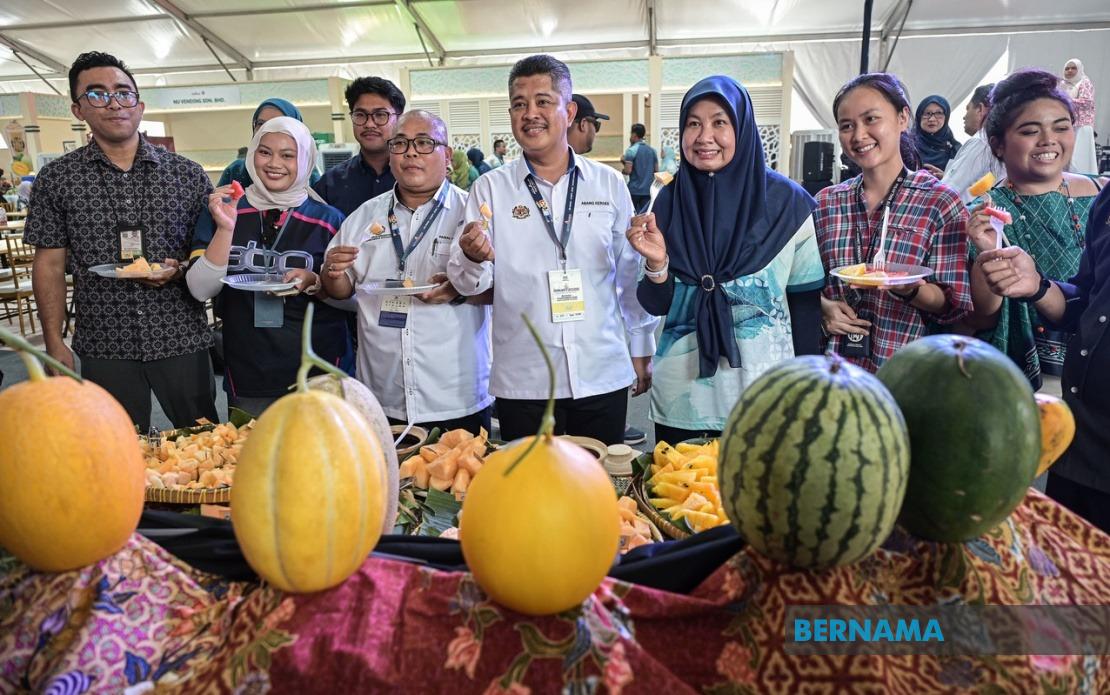
Malaysia's horticulture sector is poised to gain a significant new player as the country prepares to unveil a specially developed melon variety at the opening of MAHA 2026, the Malaysia Agriculture, Horticulture and Agrotourism Exhibition, which commences this week at the Malaysia Agricultural Expo Park Serdang. The introduction of this fruit marks a notable milestone in domestic agricultural innovation, having undergone three years of intensive research and development through a partnership between the Federal Agricultural Marketing Authority and local farming entrepreneurs.
The melon has been designated as the symbolic fruit for this year's edition of MAHA, underscoring its significance as both a commercial product and a representation of the nation's horticultural progress. Minister of Agriculture and Food Security Datuk Seri Mohamad Sabu will officiate the formal launch and announce the official name of the variety during tomorrow evening's opening ceremony. FAMA chairman Abang Ahmad Kerdee Abang Masagus emphasised the importance of this moment for the event, noting that every MAHA requires a defining fruit symbol to anchor its identity and messaging to visitors and industry stakeholders alike.
The new variety distinguishes itself through carefully calibrated characteristics tailored specifically to domestic consumer preferences and market conditions. Most notably, it achieves a Brix sweetness concentration level of 18, a metric that directly measures the sugar content and flavour intensity of the fruit. This elevated sweetness profile is complemented by flesh that delivers a notably crunchy texture, a quality that differentiates it from existing melon varieties currently stocked in Malaysian supermarkets and traditional markets. These organoleptic improvements represent the culmination of systematic breeding and testing protocols developed by FAMA's research teams.
Beyond internal quality metrics, the melon's physical attributes have been engineered to align with evolving consumer shopping patterns and household dynamics. The fruit weighs approximately 1.3 kilogrammes, positioning it firmly in the mini or personal-sized category rather than the larger whole melons traditionally associated with family meals or commercial kitchen purchases. Its skin displays a netting pattern typical of premium melon varieties, enhancing visual appeal at point-of-sale. Most significantly for price-conscious Malaysian households, the expected retail price hovers around RM15 per unit, making it accessible to middle-income consumers while maintaining healthy margins for growers and retailers.
FAMA director-general Faisal Sulaiman contextualised the product development strategy within broader consumer behaviour trends. Modern Malaysian households, he explained, increasingly seek smaller portion sizes suited to nuclear family configurations and urban living spaces where storage capacity is constrained. The three-year research period allowed FAMA and its entrepreneurial partners to systematically monitor purchasing patterns, conduct consumer surveys, and test multiple breeding lines to ensure the final product matched these shifting market demands. This data-driven approach to agricultural innovation reflects a maturation of Malaysia's horticultural sector beyond traditional commodity production toward consumer-centric product design.
The practical advantages of the mini-melon extend beyond kitchen convenience. Faisal highlighted the ease of transportation, suggesting that consumers can incorporate the fruit into regular shopping trips without requiring specialised handling or vehicle arrangements. The compact sizing also facilitates retailers' merchandising efforts, allowing supermarkets and wet markets to stock greater variety without excessive shelf or floor space allocation. Critically, the smaller volume-to-surface-area ratio means the fruit's internal moisture content and sweetness remain stable for longer periods post-harvest, addressing a persistent quality challenge with larger melons that deteriorate rapidly once cut.
The broader commercial strategy surrounding MAHA 2026 encompasses far more than a single new product. FAMA has committed to supplying over 150,000 individual melon units throughout the ten-day exhibition period, representing nearly 100 distinct domestic and international varieties. This ambitious sourcing effort involves coordinated logistics with approximately 100 local and international horticultural enterprises, from small family farms to larger agribusiness operations. The exhibition therefore functions simultaneously as a showcase for Malaysia's horticultural diversity, a direct sales channel circumventing traditional middlemen, and a networking hub where producers can establish relationships with bulk purchasers and retail chains.
From an economic policy perspective, this initiative aligns with Malaysia's broader vision for agricultural value-chain development and farmer empowerment. Rather than producing commodity melons destined for export or bulk commodity markets where price competition is fierce, FAMA's strategy emphasises premium positioning, direct-to-consumer sales channels, and cultivated brand identity. By hosting large exhibitions and securing ministerial endorsement for new varieties, the authority signals to potential investors and entrepreneurs that there is substantial domestic demand for innovatively positioned agricultural products. This approach offers particular promise for smallholder farmers seeking to escape price-taker dynamics in commodity markets.
The timing of MAHA 2026's focus on horticultural innovation reflects Malaysia's recognition that the agriculture sector must evolve beyond traditional commodities to remain economically viable. Land pressures, rising labour costs, and competition from lower-cost Southeast Asian producers mean that Malaysian farms cannot compete primarily on volume or cost. Instead, the strategic imperative involves differentiating through quality, specialisation, and convenience-oriented packaging. The mini-melon embodies this shift: it commands a premium price point relative to larger melons, appeals to affluent urban consumers, and positions local farmers as innovation leaders rather than mere production units.
The exhibition itself, running for ten days through next Sunday at the sprawling MAEPS facility, has established itself as Malaysia's premier biennial platform for showcasing agricultural achievements and technological advancement. Beyond individual product launches, MAHA demonstrates Malaysia's commitment to modernising its agri-food sector through agrotech exhibitions, state-level pavilions emphasising regional agricultural identities, and farm-direct sales models that forge direct relationships between producers and consumers. The event attracts hundreds of exhibitors spanning domestic operations and international agricultural technology providers, effectively functioning as a laboratory for testing new business models and consumer engagement strategies within the Malaysian agricultural ecosystem.

