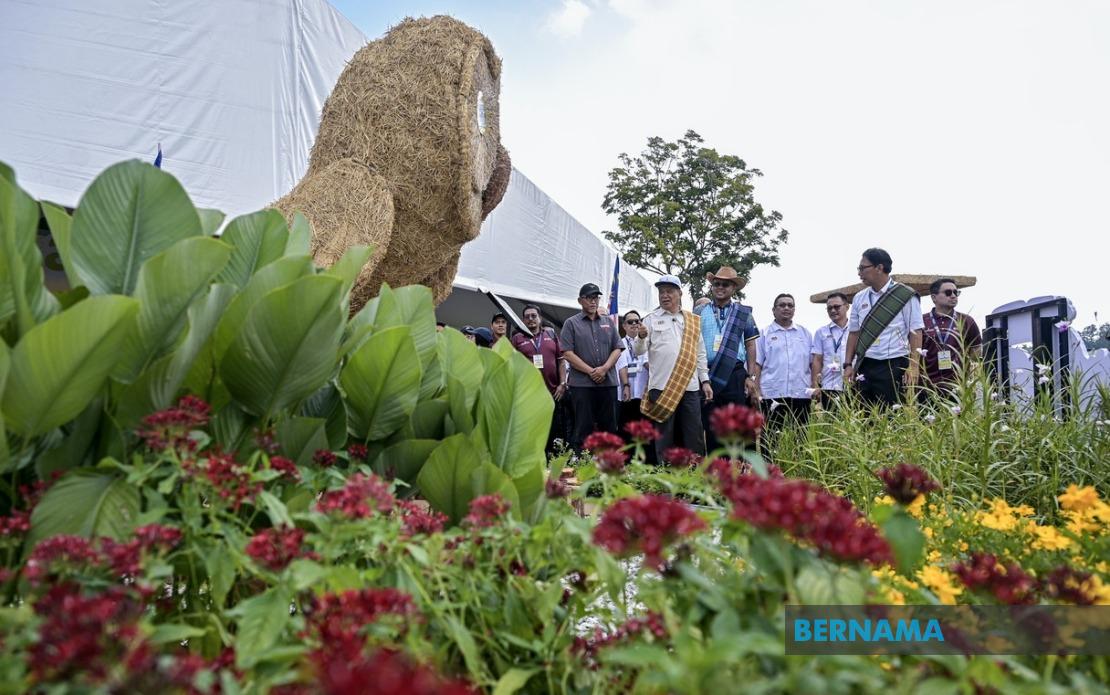
The Malaysia Agriculture, Horticulture and Agrotourism Exhibition (MAHA) 2026 has demonstrated impressive early momentum, drawing 1.8 million visitors and generating nearly RM6 million in sales within its first three days of operation. Agriculture and Food Security Minister Datuk Seri Mohamad Sabu disclosed the figures while speaking to media at the Malaysia Agro Exposition Park Serdang (MAEPS) on August 31, underscoring the substantial public enthusiasm for Malaysia's premier agricultural showcase. The scale of attendance has created considerable logistical challenges, with 184,000 vehicles recorded entering and exiting the exhibition grounds during the same period, creating heavy congestion across the venue and surrounding areas.
The strong opening performance positions MAHA 2026 favourably towards its ambitious sales target of at least RM58 million over the entire event duration, which runs from August 28 to September 6. Early transactions have focused substantially on agricultural commodities, with crop seeds and related agricultural inputs comprising a significant portion of the initial sales figures. This pattern reflects the exhibition's core function as a commercial platform connecting farmers, agricultural businesses, and consumers, while simultaneously promoting Malaysia's capabilities in food production and agrotourism. The rapid accumulation of sales revenue in just three days suggests that consumer demand for locally-produced agricultural products and farming solutions remains robust.
Transport coordination has emerged as a critical operational concern given the volume of daily visitors. The Ministry has responded by expanding shuttle services and implementing daily coordination meetings to address emerging issues and complaints. Mohamad acknowledged the intense queuing conditions observed at state pavilions and the additional strain imposed by Malaysia's tropical climate, noting that elevated temperatures have exacerbated visitor discomfort during peak hours. Management has been directed to expedite visitor movement and improve crowd flow, particularly through enhanced transportation solutions that move people more swiftly between exhibition zones. These logistical refinements are essential for maintaining visitor satisfaction across the nine-day event window.
The remarkably high turnout has been substantially boosted by supplementary programming designed to broaden appeal beyond the agricultural trade community. MAHA Merdeka, held on August 29 in conjunction with Malaysia's National Day celebrations, featured spectacular fireworks displays and drone shows that attracted large crowds seeking both entertainment and engagement with agricultural content. This strategic integration of national commemorations with commercial exhibition activities has proven effective in drawing diverse demographic segments, extending the event's reach beyond conventional farming and agricultural business audiences. The celebration programming creates a festive atmosphere that transforms MAHA from a purely commercial endeavour into a community-oriented national event.
The exhibition encompasses approximately 2,000 exhibitors spread across the MAEPS facility, creating one of Southeast Asia's largest agricultural marketplaces. This scale of participation reflects confidence among agricultural enterprises, input suppliers, technology providers, and tourism operators that MAHA 2026 represents a worthwhile investment of resources and personnel. The diversity of exhibitors, spanning from seed producers to agrotourism operators, positions the event as a comprehensive platform addressing multiple dimensions of Malaysia's agricultural ecosystem. The overall visitor projection exceeds four million across the full event period, suggesting that early traffic patterns will be sustained throughout the remaining days.
For Malaysian consumers and farming communities, MAHA 2026 offers direct engagement with producers and access to agricultural products at source. The exhibition provides opportunities to evaluate crop varieties, farming technologies, and agricultural innovations that have practical implications for both commercial farmers and home gardeners. The prominence of crop seed sales during the opening period indicates that visitors are actively making purchasing decisions rather than merely browsing, suggesting genuine interest in upgrading agricultural practices. This commercial engagement supports the broader government objective of strengthening domestic food security by encouraging investment in local agricultural production.
The event carries significant implications for Malaysia's regional position within Southeast Asian agriculture. MAHA 2026 demonstrates Malaysia's capacity to convene agricultural stakeholders at scale and showcase technological capabilities and product diversity to domestic and regional participants. The exhibition serves as a barometer of sector health and market sentiment, with strong attendance and sales indicating confidence in agricultural investment and innovation. Regional participants from neighbouring countries may also attend, using MAHA as a platform to assess market opportunities and establish commercial relationships within Malaysia's agricultural networks.
The Ministry's focus on daily problem-solving and iterative improvements reflects recognition that large-scale public events require adaptive management. Rather than adopting static operational frameworks, the coordination committee structure enables rapid response to emerging congestion, service gaps, and visitor feedback. This approach has proven effective in other major Malaysian events and demonstrates institutional learning from past exhibitions. The commitment to addressing complaints in real-time, combined with weather-responsive measures such as enhanced crowd management during peak heat periods, illustrates government responsiveness to practical visitor concerns.
Looking beyond the immediate sales figures and visitor metrics, MAHA 2026 serves broader policy objectives related to agricultural transformation and food security. The exhibition platform enables the government to showcase policy achievements in agricultural development, highlight farmer success stories, and promote awareness of modern farming methodologies among Malaysian consumers. By connecting producers directly with buyers and consumers, MAHA reduces intermediary layers within agricultural supply chains and strengthens relationships between stakeholders. The presence of young farmers and technology-driven enterprises alongside traditional agricultural participants reflects Malaysia's trajectory towards modernised, innovation-driven food production systems.
The first-week performance of MAHA 2026 establishes a strong baseline for evaluating overall event success. The combination of visitor volume, transaction velocity, and logistical challenges navigated thus far indicates that the exhibition has achieved its fundamental objective of creating a dynamic marketplace where agricultural commerce flourishes. Whether the subsequent week maintains these momentum patterns will depend on sustaining transport solutions, managing crowd congestion effectively, and continuing to deliver complementary programming that maintains visitor interest. The event's trajectory through early September will provide valuable insights for organisers planning future iterations and for policymakers assessing agricultural sector health and consumer engagement with domestic food production.

