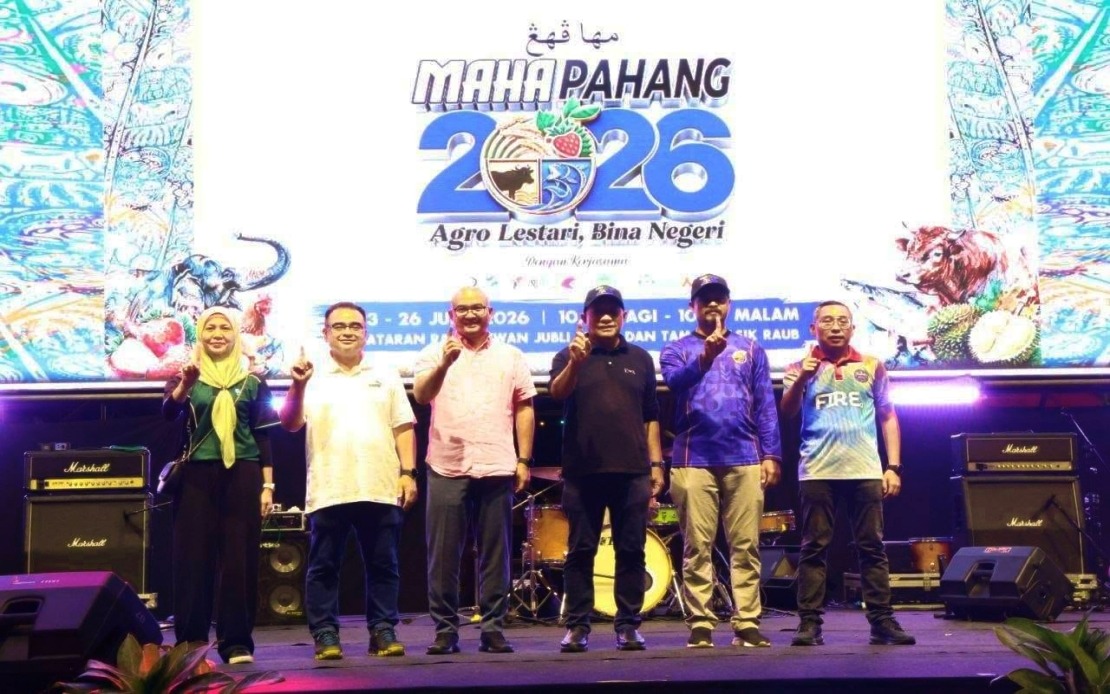
The MAHA Pahang 2026 agricultural exhibition has delivered a remarkable performance, drawing more than double its targeted attendance during its four-day showcase at Dataran Raub. The event welcomed 212,374 visitors—far exceeding the initial projection of 100,000—while simultaneously generating RM2.33 million in commercial sales, nearly double the anticipated RM1.3 million benchmark. Such results underscore the substantial appetite among Malaysian consumers for direct engagement with farming operations, agri-businesses, and value-added agricultural products, particularly in the East Coast region where primary industries remain economically significant.
The participation level also demonstrated unexpected industry enthusiasm. Rather than the projected 100 entrepreneur participants, the exhibition attracted 220 businesses representing various agricultural subsectors. This surge indicates growing confidence among agribusiness operators regarding market opportunities in Pahang and the broader East Coast corridor. The diversity of participants—encompassing farmers, livestock producers, fishermen, and agro-processing enterprises—reflected the multi-layered nature of contemporary agricultural commerce, extending well beyond traditional cultivation into biotechnology, value addition, and specialized farming methods.
Datak Seri Mohd Soffi Abd Razak, the Pahang Agriculture, Agro-based Industry, Biotechnology and Education Committee chairman, framed the outcome as validation of public backing for the state's farming sector. His remarks highlighted how direct-to-consumer events serve as crucial barometers for sectoral health and market sentiment. The scale of attendance and commercial turnover suggest Pahang residents and visitors from neighbouring states view agricultural products and services as worthy investment areas, contrary to assumptions about declining rural engagement in urbanised Malaysia.
The financial performance carries particular weight for state economic strategists. The RM2.33 million in recorded sales translates to meaningful revenue circulation within agricultural value chains—whether through equipment purchases, seed and input sales, or livestock transactions. For smallholder farmers and cottage agribusinesses, such concentrated trading events provide essential direct-access channels to consumers, circumventing middlemen and improving margins. The multiplication effect across supplier networks, logistics, and ancillary services likely generated considerably more economic activity than the headline sales figure alone suggests.
From a policy perspective, the exhibition's success validates Pahang's emphasis on agriculture as a development pillar. The state has positioned itself as a significant contributor to Malaysia's food security ambitions, particularly regarding livestock, aquaculture, and commodity crops. Events like MAHA Pahang 2026 operationalise this vision by creating tangible market demonstrations and networking opportunities. They also generate valuable data about consumer preferences, emerging product categories, and seasonal demand patterns—intelligence that can inform future agricultural planning and subsidy allocation decisions.
The scope of public engagement also reflects broader regional dynamics. Pahang's geographical position as a gateway between the Klang Valley and the East Coast means its agricultural sector serves both local consumption needs and broader peninsular markets. Exhibition visitors from Kuala Lumpur, Selangor, and Terengganu represent substantial purchasing power and diverse consumer bases, enabling participating enterprises to test products, gather market feedback, and establish distribution relationships. For many smallholders, such exposure remains their primary avenue into wider commercial networks.
Biotechnology integration within the event framework signals forward-thinking agricultural development. The inclusion of agro-biotech innovations alongside traditional farming demonstrates recognition that Malaysia's agricultural future depends on technological adoption—improved crop varieties, disease management systems, and efficiency-enhancing practices. By featuring these elements prominently, Pahang signals alignment with national agricultural modernisation agendas and positions itself competitively relative to other agricultural states competing for research investment and enterprise development support.
The logistical coordination required to accommodate 212,000 visitors across four days represents substantial organisational achievement. Security personnel, departmental staff, agency representatives, and the event secretariat operated under considerable pressure to maintain safety, crowd management, and operational continuity. The successful execution reflects institutional capacity within Pahang's bureaucratic and commercial ecosystem—a prerequisite for scaling similar initiatives or attracting larger events that generate economic multiplier effects.
For Malaysian stakeholders in agricultural development, the MAHA Pahang 2026 results carry encouraging implications. They demonstrate persistent rural sector vibrancy and consumer interest despite structural economic shifts toward services and manufacturing. They also suggest that well-organised, properly-marketed direct-engagement platforms can catalyse commercial activity and strengthen producer-consumer connections that benefit both parties. As Malaysia navigates agricultural labour shortages, climate variability, and competing land uses, such evidence of sustained sectoral relevance provides momentum for continued investment in farming infrastructure, training, and market-facilitating mechanisms.

