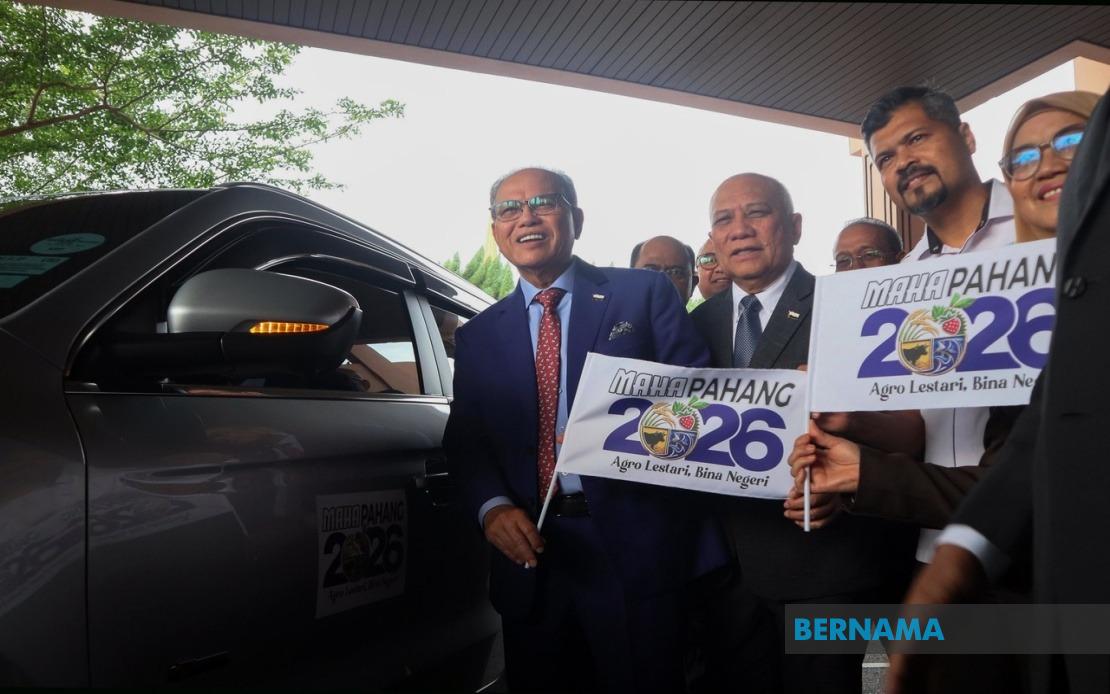
The Pahang state government is gearing up for MAHA Pahang 2026, an ambitious four-day agricultural showcase that aims to position itself as a major economic stimulus for rural communities and agribusiness entrepreneurs. Menteri Besar Datuk Seri Wan Rosdy Wan Ismail outlined the event's ambitious targets during a launch ceremony in Bera, where he revealed expectations of attracting more than 100,000 visitors and securing RM1.3 million in total sales from participating vendors.
Running from July 30 to August 2 at Dataran Raub, the event will feature approximately 100 agricultural entrepreneurs showcasing their products and services across various sectors. The venue selection reflects the state government's commitment to decentralising major events beyond urban centres, bringing economic opportunities directly to rural constituencies where agricultural production remains a cornerstone of livelihoods. This strategic placement is intended to strengthen the agricultural value chain while fostering direct connections between producers and consumers.
To stimulate visitor engagement and boost sales during the four-day period, the Pahang administration has designed an attractive lucky draw programme that reflects contemporary consumer preferences. The grand prize lineup includes a Wagyu cow, positioning Pahang's livestock industry as premium and competitive, alongside a Perodua Bezza vehicle that underscores the practical appeal of attendance. These incentives are calculated to draw families and serious agricultural stakeholders alike, creating multi-generational participation opportunities.
The convoy flagging-off ceremony witnessed the mobilisation of 20 vehicles from various government departments and agencies, symbolising a whole-of-government approach to MAHA Pahang 2026's success. This inter-agency coordination reflects recognition that agricultural development requires integrated support spanning regulatory bodies, extension services, marketing channels, and financial institutions. The visibility exercise also serves as a public announcement mechanism, particularly valuable in reaching rural and semi-urban populations through traditional community networks.
Wan Rosdy publicly acknowledged the contributions of Agriculture and Food Security Minister Datuk Seri Mohamad Sabu and the event's committee chairman, framing their involvement as instrumental to the exhibition's ambitious scope. This acknowledgment reflects both genuine inter-governmental collaboration and the political dynamics of major state-level economic events, where alignment between federal and state authorities enhances resource mobilisation and regulatory facilitation.
Beyond commercial transactions, MAHA Pahang 2026 positions itself as an educational platform for agricultural sector advancement. Visitors gain access to comprehensive information regarding emerging crop varieties, cultivation techniques, and innovation in farming practices. This knowledge-transfer dimension is particularly significant for smallholder farmers and younger individuals considering agricultural entrepreneurship, who benefit from direct interaction with established producers and agricultural specialists operating display stands.
For Malaysian readers monitoring regional development, MAHA Pahang 2026 exemplifies a broader trend of state governments leveraging flagship agricultural events to stimulate rural economies while maintaining traditional sectors' contemporary relevance. Given Malaysia's ongoing agricultural modernisation agenda and the sector's importance to food security, such exhibitions provide visible commitment to sustaining farmer livelihoods whilst connecting rural production systems to expanding consumer markets.
The event occurs within Pahang's broader economic diversification strategy, where agricultural value addition and agritourism increasingly complement traditional primary production. The ambitious visitor and sales targets suggest confidence in market demand for agricultural products and the state's capacity to attract visitor footfall through attractive programming. Success metrics will likely influence future state-level event planning and private sector investment decisions affecting rural development trajectories.
Participating entrepreneurs benefit from unprecedented market access, customer interaction opportunities, and networking possibilities with government officials overseeing agricultural policy. For smaller producers operating outside established distribution channels, such platforms offer crucial market visibility that typically requires expensive commercial marketing campaigns. The structured environment also reduces transaction costs compared to independent retail expansion or direct-to-consumer models.
From a consumer perspective, concentrated agricultural exhibitions like MAHA Pahang 2026 offer quality assurance through vendor curation, price transparency through competitive positioning, and product diversity within accessible physical spaces. Urban and suburban shoppers increasingly seek authentic agricultural experiences and direct farmer engagement, sentiments that such exhibitions strategically capitalise upon whilst supporting rural producer incomes.
The four-day timeframe balances operational feasibility with extended audience reach, accommodating weekend leisure visits and weekday consumer shopping patterns. Dataran Raub's capacity to accommodate concurrent activities, parking, and foot traffic without overwhelming existing infrastructure suggests careful venue selection informed by previous event experience. Success in 2026 will likely establish MAHA Pahang as a recurring fixture in the state's economic calendar, potentially expanding future editions' scope and attracting increased private sector sponsorship and vendor participation.

