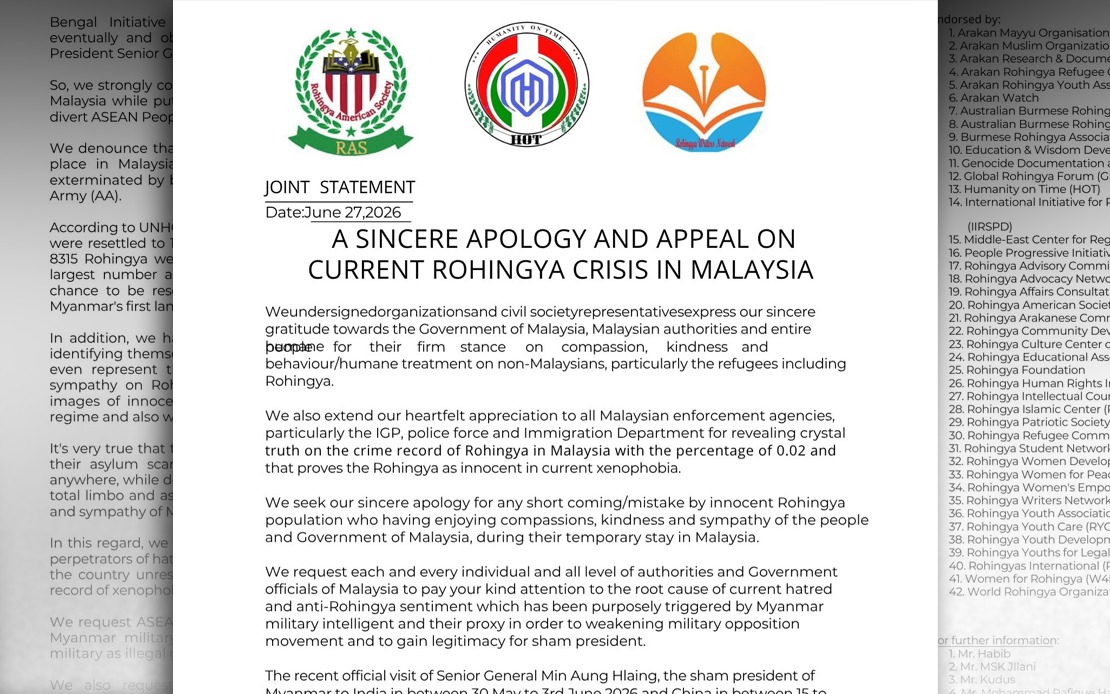
Malaysian Humanitarian Aid and Relief (MAHAR) has publicly embraced an apology issued by 40 Rohingya non-governmental organisations, characterizing the move as a constructive step that reflects accountability within the refugee community. The humanitarian body's measured response underscores the delicate balance it seeks to maintain between supporting vulnerable populations and addressing the legitimate concerns of Malaysian society at large.
Beyond simply welcoming the apology, MAHAR has outlined a more expansive vision for how refugee-focused NGOs should operate within Malaysia's borders. The organization contends that meaningful humanitarian intervention cannot remain confined to the distribution of food packages and emergency shelter. Instead, MAHAR argues that true social responsibility demands that refugee organisations become active partners in fostering understanding and compliance with Malaysian legal frameworks, cultural norms, and community expectations. This perspective reflects growing recognition that sustainable refugee integration requires engagement on multiple fronts simultaneously.
Central to MAHAR's position is the conviction that refugee NGOs bear responsibility for promoting respect among their constituents for the host nation's laws, traditions, and social values. By positioning cultural and legal education as core components of humanitarian work, MAHAR suggests that failing to invest in this dimension leaves refugee communities isolated and vulnerable to misunderstanding. The framing implies that organizations serving Rohingya populations have both the capacity and the moral obligation to serve as bridges between vulnerable groups and the broader Malaysian society.
The humanitarian body has also prioritized sustained international pressure on the Myanmar government regarding the persecution of the Rohingya people. MAHAR contends that genuinely transformative humanitarian action cannot stop at providing immediate relief within Malaysia; instead, organisations must simultaneously pursue systemic change that addresses the underlying political and security conditions driving displacement. This two-pronged approach acknowledges that while Malaysia hosts a significant refugee population, long-term solutions ultimately require action within Myanmar itself.
Jismi Johari, MAHAR's president, has articulated the organization's commitment to safeguarding both refugee populations and Malaysian communities alike. His comments reflect the political sensitivity surrounding the refugee issue in Malaysia, where public opinion remains divided regarding the presence of large numbers of Rohingya and other refugee groups. Johari's emphasis on dual responsibility suggests that humanitarian principles need not conflict with legitimate host-country security concerns.
Johari specifically addressed concerns raised by some Malaysians regarding local safety and crime, rejecting the notion that such apprehensions should be dismissed or minimized. By validating these concerns as worthy of serious consideration, MAHAR attempts to position itself as a body that takes Malaysian communities' lived experiences seriously rather than dismissing them as xenophobia. This acknowledgment is particularly significant in Malaysia's current social context, where demographic anxieties and crime concerns periodically surface in public discourse regarding refugee populations.
Simultaneously, Johari cautioned against stereotyping entire communities based on the criminal conduct of individuals. He noted that deviant behavior exists across all societies and that attributing the actions of a few to the broader group would be fundamentally unjust. This nuanced position seeks to chart a middle course between two extremes: acknowledging genuine community safety issues while resisting sweeping generalizations that could fuel prejudice and discrimination against Rohingya populations.
The MAHAR president emphasized that resolving tensions between refugee communities and host societies demands more than political rhetoric or defensive posturing. Rather, sustained progress depends on empathy from all stakeholders—refugees must demonstrate commitment to Malaysian norms, while Malaysians must avoid collective blame and maintain recognition of refugees' shared humanity. This call for mutual respect and constructive dialogue reflects an understanding that social cohesion cannot be imposed through regulations alone.
MAHAR has reaffirmed its fundamental commitment to humanitarian work that serves justice, security, and human dignity in equal measure. The organization's positioning suggests that these principles need not be mutually exclusive; rather, effective humanitarianism requires that practitioners simultaneously address refugee vulnerability and host-community concerns. This approach potentially offers a framework for other Southeast Asian nations grappling with similar displacement challenges to consider how humanitarian principles can be operationalized without fracturing social unity. For Malaysia specifically, MAHAR's statement signals that the refugee question will increasingly demand sophisticated integration strategies that move beyond traditional charity models.

