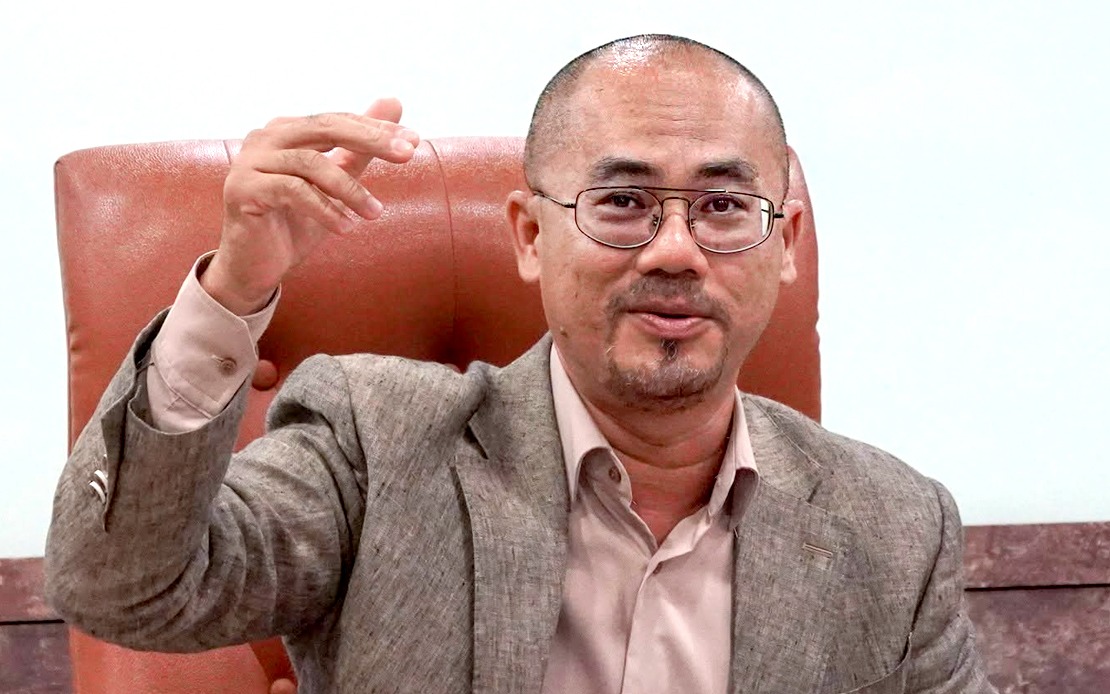
The Perak Islamic Religious and Malay Customs Council (MAIPk) has moved to quash widespread claims circulating on social media that it had forcibly removed traders from a commercial site in Ipoh, instead characterising the situation as a property management challenge involving infrastructure inherited from previous ownership. At a press conference in Ipoh on August 15, MAIPk chief executive officer Syamsul Hazeman Md Salleh outlined the circumstances surrounding a notice issued to traders at Jalan Panglima Bukit Gantang Wahab, which had sparked allegations of unauthorised evictions across online platforms.
The core dispute centres on a defective main water pipeline and an accumulated debt totalling approximately RM100,000 in unpaid utility charges. According to Syamsul Hazeman, MAIPk acquired the property only in 2024 and subsequently discovered that the infrastructure problems and financial arrears had plagued the premises for years before the council's tenure. Rather than a matter of trader delinquency, the outstanding balance reflects systemic issues with the water distribution network serving the entire site—a distinction the council views as crucial to understanding its position.
During an engagement session held on July 14, MAIPk informed the traders operating at the location about the necessity of temporarily severing water connections to enable repair work on the compromised pipeline. Syamsul Hazeman emphasised that this temporary disconnection was a prerequisite for addressing the infrastructure fault, not a precursor to removing businesses from the premises. The council framed its clarifying notice as a defensive measure, intended to correct the record and shield MAIPk from accusations of overstepping its administrative authority without due process.
A critical aspect of MAIPk's account involves the distinction between individual trader consumption and systemic debt. The council contends that traders have fulfilled their payment obligations based on their personal water usage patterns, and that the arrears do not stem from unpaid consumer bills but rather from deeper problems affecting the main pipeline infrastructure. This interpretation places the responsibility for the outstanding charges beyond the merchants' control and instead implicates previous property stewardship or municipal service delivery gaps.
The challenge of resolving the debt presents a genuine operational constraint for MAIPk. Syamsul Hazeman acknowledged that Islamic councils lack the financial mechanisms to address such arrears through conventional channels, noting specifically that neither zakat (alms tax) nor waqf (endowment) funds—the traditional revenue streams for Islamic religious institutions in Malaysia—can be legally deployed to settle utility debts. This regulatory barrier has forced MAIPk to seek alternative solutions through dialogue with the Perak Water Board and state government intervention.
Negotiations with the Perak Water Board are currently underway, though officials have signalled that a resolution may require considerable time given the scale and complexity of the accumulated charges. MAIPk's strategy involves securing either a debt restructuring arrangement, a subsidy from state coffers, or some form of administrative forgiveness that acknowledges the council's status as a recent inheritor of an existing problem rather than its creator. The protracted nature of these discussions underscores the practical limitations of religious institutions when confronted with commercial-scale infrastructure failures.
Once the financial obstacle is surmounted, MAIPk intends to proceed with comprehensive repair work and subsequently establish new commercial arrangements with traders through updated rental agreements. This staged approach suggests the council's intention to maintain the site as an active commercial hub rather than pursue wholesale replacement of the business community. However, the medium-term future of the location remains uncertain due to state government plans for the Perak Islamic Religious Department Complex at the same venue.
The proposed construction of the departmental complex introduces an additional layer of complexity to the situation. Syamsul Hazeman indicated that if development moves forward, traders would be obligated to vacate to accommodate the project—a potential outcome entirely separate from the current water supply controversy but indicative of the evolving plans for the property. The council emphasised that the timing and approval for this development rests with the state government rather than MAIPk's discretion, introducing a measure of uncertainty into traders' medium-term prospects at the location.
For Malaysia's Islamic religious councils, this case illustrates the friction that can emerge when institutions assume responsibility for properties burdened by substantial liabilities and decaying infrastructure. The episode also demonstrates how rumours propagated through social media can rapidly misconstrue institutional actions, particularly when traders face service disruptions without comprehensive communication of underlying circumstances. MAIPk's public clarification reflects a broader need for religious authorities in Malaysia to engage more transparently with affected stakeholders when navigating complex property and utility matters.
The resolution of this dispute carries implications beyond the immediate traders affected, touching on broader questions of how Islamic institutions should manage substantial debt legacies and coordinate with both utility providers and state governments to find equitable solutions. Syamsul Hazeman's confidence that a pathway forward exists suggests that negotiation and administrative flexibility remain viable even in situations where initial conditions appear intractable. For traders and businesses operating on religiously administered land throughout Malaysia, the Ipoh case serves as both a cautionary tale about infrastructure vulnerabilities and a demonstration that institutional willingness to engage can help mitigate worst-case scenarios.

