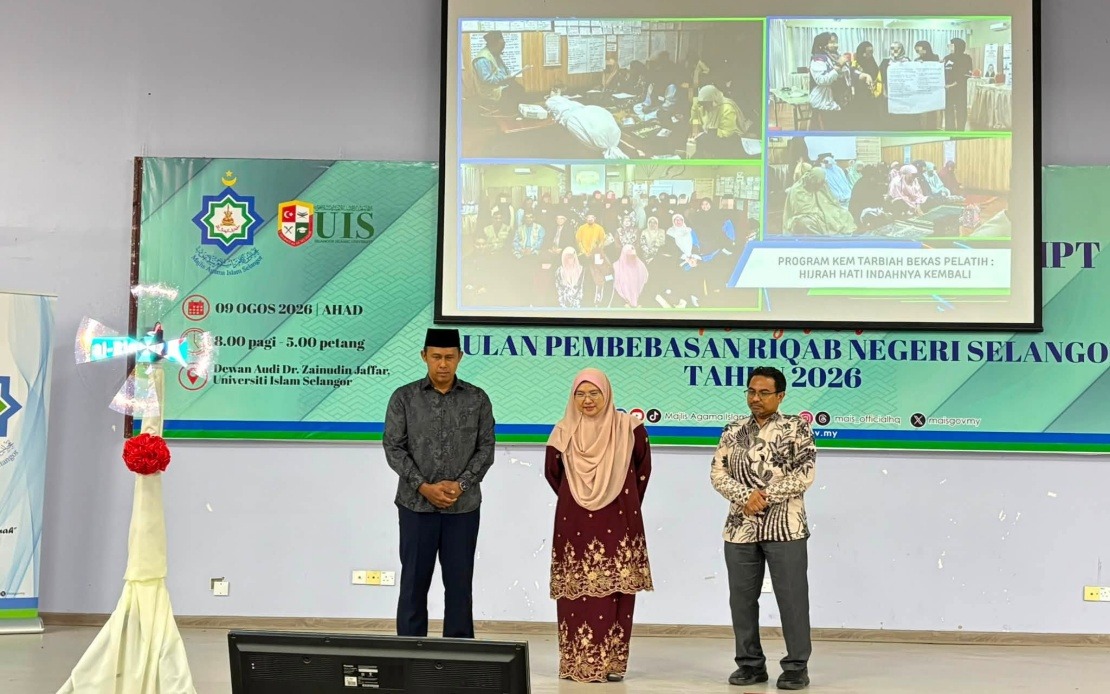
The Selangor Islamic Religious Council (MAIS) has significantly expanded its social welfare efforts by channelling more than RM17 million in zakat allocations last year to support 13,945 individuals classified as asnaf riqab, a designation encompassing those facing serious social and faith-related difficulties. This substantial investment reflects the council's commitment to addressing complex societal challenges through structured rehabilitation, counselling, and welfare interventions across its network of facilities throughout Selangor.
The distribution of these zakat funds represents a strategic approach to tackling vulnerability through multiple intervention points. MAIS operates three dedicated rehabilitation homes alongside 24 additional riqab rehabilitation facilities, creating a comprehensive support infrastructure designed to accommodate individuals at varying stages of recovery and reintegration. The financial allocation supports diverse programme streams including residential rehabilitation, educational and skills training initiatives, professional counselling services, and direct welfare assistance, recognising that effective social support requires multifaceted responses rather than single-point interventions.
During the first half of 2026, MAIS has already assisted 1,656 asnaf riqab individuals with RM4.1 million in zakat distributions, maintaining momentum toward exceeding the previous year's impact figures. This interim performance suggests annualised spending patterns may surpass the RM17 million threshold, indicating either increased demand for services or expanded capacity within MAIS's service delivery model. The council's deployment of 213 Al Riqab guides represents a critical human resource component, positioning trained mentors as direct bridges between institutional support systems and individuals navigating complex pathways toward behavioural and spiritual reorientation.
The term asnaf riqab, formally established through a 2012 fatwa, encompasses a broad spectrum of individuals experiencing profound disconnection from Islamic principles and social functioning. This category includes persons struggling with substance dependency, individuals identifying as lesbian, gay, bisexual, or transgender, and Muslims considered to have substantially deviated from religious observance and practice. The classification reflects Malaysian Islamic governance's attempt to systematise charitable obligations toward vulnerable populations whose circumstances require both compassionate intervention and structured guidance aligned with Islamic teachings and contemporary social realities.
MAIS has initiated the Riqab Liberation Month Campaign 2026, operating throughout August as a coordinated public awareness initiative aimed at shifting societal perceptions and mobilising collaborative engagement with this vulnerable demographic. The campaign framework encompasses multiple educational and engagement activities including specialised forums examining riqab-related issues, public information seminars, structured guidance programmes, community information stations, and a seminar series specifically addressing riqab rehabilitation within the Selangor context. This month-long activation strategy seeks to normalise discussion around social rehabilitation and reduce stigma that frequently isolates vulnerable individuals from productive support systems.
The decision to establish dedicated observance periods for specific social causes reflects broader Malaysian Islamic institutional practice of using ceremonial frameworks to elevate public consciousness regarding particular welfare priorities. By designating August for focused riqab attention, MAIS signals that support for marginalised individuals constitutes a fundamental Islamic obligation requiring ongoing communal commitment rather than peripheral concern. The integration of information counters, the Ihtifal Amal Islami event at rehabilitation homes, and the Selangor Riqab Seminar creates multiple entry points for public participation and information gathering, accommodating varying levels of existing awareness and engagement.
For Malaysian policymakers and civil society observers, MAIS's spending patterns and programmatic expansion carry significance beyond Selangor's boundaries. The council's experience managing large-scale rehabilitation operations and social integration challenges within an Islamic governance framework offers instructive lessons for other states developing or refining their approach to vulnerable populations. The apparent success in deploying over 200 trained mentors suggests that structured human resource development addressing behavioural support and spiritual guidance can meaningfully complement institutional infrastructure.
The emphasis on rehabilitation grants for facility operations and training programme development indicates MAIS's conviction that durable social transformation requires sustained institutional capacity building rather than episodic assistance. By investing in the physical and human infrastructure of rehabilitation homes and training facilities, the council creates permanent mechanisms for repeated social intervention cycles, reducing reliance on circumstantial funding fluctuations. This capital-intensive approach to social welfare represents a long-term commitment to structural resilience within Selangor's charitable ecosystem.
Public accessibility to campaign information through MAIS's digital platforms and official website reflects contemporary governance practices integrating traditional social work with digital communication infrastructure. By curating social media updates and centralising campaign details on official channels, MAIS extends reach beyond individuals actively seeking services, enabling passive awareness accumulation among broader populations. This digital accessibility becomes particularly significant for younger cohorts navigating social challenges who may possess greater digital facility than comfort with traditional institutional engagement pathways.
The concentration of RM17 million annual zakat allocation toward asnaf riqab specifically illustrates deliberate prioritisation within MAIS's broader charitable distribution mandate. Given the expansive scope of potential zakat recipients across Selangor's Muslim population, this substantial categorical investment signals institutional recognition that social rehabilitation demands concentrated resource commitment relative to other welfare categories. The decision to sustain and potentially expand this commitment through 2026 reflects institutional confidence that such focused investment generates measurable social returns justifying continued resource dedication.
Regional observers within Southeast Asia's Muslim-majority contexts may find MAIS's systematised approach to institutional zakat deployment instructive for their own charitable governance frameworks. The integration of formal fatwa-based definitions, dedicated facility networks, trained human resources, and coordinated public awareness campaigns demonstrates mature charitable institutional practice potentially replicable across different jurisdictional contexts. As regional Islamic organisations increasingly coordinate social welfare responses to contemporary challenges, MAIS's model offers evidence that combining traditional Islamic charitable principles with modern programme management and data-driven resource allocation can effectively mobilise zakat toward vulnerable populations historically marginalised from mainstream social support systems.

