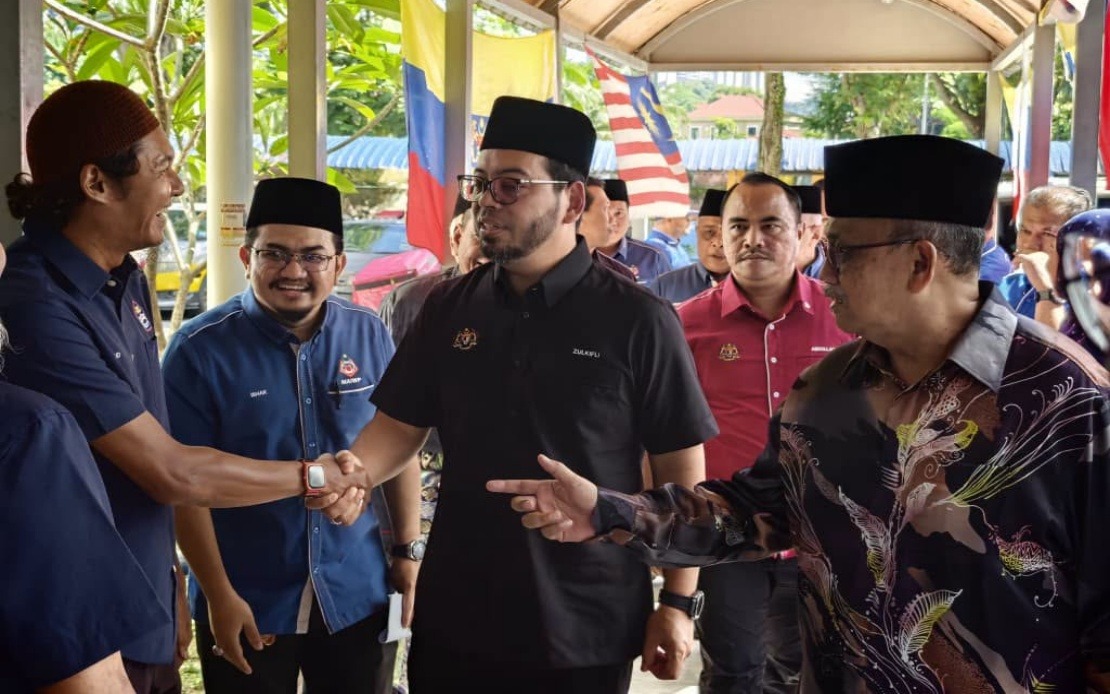
The Federal Territories Islamic Religious Council (MAIWP) has marked a significant milestone in modernising its social welfare infrastructure with the launch of the Zakat Distribution Centre (PAZA) Batu branch in Taman Pelangi on June 25. Located at Jalan Pelangi 10, the facility represents a substantial investment in improving how Islamic charitable contributions reach vulnerable residents across Kuala Lumpur's urban and semi-urban areas. The opening ceremony underscores MAIWP's strategic pivot towards decentralising services and meeting communities where they live, rather than requiring beneficiaries to navigate centralised administrative hubs.
According to Minister in the Prime Minister's Department (Religious Affairs) Senator Dr Zulkifli Hasan, the centre transcends conventional counter-based service delivery by functioning as a comprehensive community engagement hub. The facility has been purposefully designed to expedite the zakat distribution workflow whilst simultaneously offering a dignified, comfortable environment for recipients. This dual mandate reflects a broader recognition within Malaysia's Islamic institutional framework that welfare assistance operates most effectively when paired with community outreach and human interaction, rather than treated as a purely transactional exercise.
The significance of the Batu branch extends beyond logistics. Dr Zulkifli emphasised that PAZA Batu serves as a node for community-based welfare initiatives and engagement programmes tailored to the specific demographics and needs of residents in this parliamentary constituency. This localised approach allows MAIWP to move beyond one-size-fits-all assistance models and instead develop targeted interventions that address contextual vulnerabilities affecting households in working-class neighbourhoods and public housing schemes within the Batu area.
The financial scale of MAIWP's zakat operations provides crucial context for understanding the importance of expanded infrastructure. As of June 23, the council had channelled RM505.6 million in zakat funds through 38 distinct assistance schemes and human capital development programmes. These figures illustrate the magnitude of resources mobilised through Islamic charitable mechanisms in the Federal Territories, and the corresponding operational challenges in ensuring equitable, efficient distribution across diverse recipient populations. The opening of the Batu branch addresses capacity constraints that can impede timely assistance to those most in need.
Immediate tangible outcomes accompanied the centre's inauguration. MAIWP distributed 50 food baskets valued at RM100 each to recipients requiring emergency assistance, providing immediate relief whilst simultaneously demonstrating the facility's service capacity. This symbolic distribution underscores the bridge between ceremonial opening protocols and substantive welfare delivery—a distinction that matters considerably to communities dependent on reliable access to assistance.
Complementing the initial distribution, MAIWP launched a "Ziarah Kasih" courtesy visit programme targeting zakat recipients' households within the Batu parliamentary constituency, with particular focus on residents of the Pekan Batu People's Housing Scheme (PPR). This outreach strategy reflects a deliberate effort to personalise welfare administration and gather intelligence about recipient circumstances that might inform future assistance design. The PPR component is especially significant, as public housing schemes often concentrate populations facing compounded vulnerabilities—including employment precarity, limited access to social services, and inadequate household financial buffers.
For Malaysian policymakers and civil society observers, the Batu centre exemplifies how decentralised service delivery can strengthen institutional responsiveness. Rather than concentrating zakat administration in downtown offices accessible primarily to those with transportation flexibility and navigational familiarity with bureaucratic systems, MAIWP has positioned this facility within a residential area, substantially reducing barriers for elderly recipients, caregivers, and individuals with mobility constraints. This practical accessibility consideration often receives insufficient policy attention despite its direct impact on whether intended beneficiaries actually access programmes designed for their benefit.
The expansion also carries implications for how Malaysia's Islamic institutions adapt to urbanisation patterns and demographic shifts. Kuala Lumpur's rapid growth has created pockets of concentrated poverty and vulnerability even within relatively developed urban areas. Traditional welfare infrastructure designed for earlier demographic configurations may prove inadequate for addressing contemporary poverty characteristics. PAZA Batu represents institutional learning—a recognition that modern cities require correspondingly modern, geographically distributed welfare systems.
From a Southeast Asian perspective, MAIWP's investment in zakat distribution infrastructure offers instructive lessons. Several neighbouring countries grapple with similar challenges: how to utilise religious giving mechanisms for poverty alleviation whilst maintaining administrative efficiency, preventing fraud, and ensuring dignified service delivery. Malaysia's institutional experience, particularly through councils like MAIWP, provides a case study in combining traditional Islamic charitable principles with contemporary professional management standards.
The Batu branch also reflects evolving understandings of poverty assistance within Malaysian Islam. Rather than treating zakat purely as individual charity, the integrated approach—combining immediate material assistance with community engagement and human capital development—acknowledges that sustainable poverty reduction requires multifaceted interventions. The 38 assistance schemes under MAIWP's portfolio likely span categories from emergency relief to education support to livelihood development, suggesting a comprehensive theory of change rather than emergency-only responses.
Looking forward, the success of PAZA Batu will likely influence MAIWP's expansion strategy across other Federal Territories constituencies. Similar population density, demographic composition, and socioeconomic profiles in areas like Kuala Lumpur Utara, Putrajaya, and Labuan might justify comparable investments. Furthermore, the operational models tested at Batu could inform best-practice standards for other state zakat institutions nationwide, contributing to overall improvements in Malaysia's Islamic welfare infrastructure.
Ultimately, the opening of PAZA Batu represents incremental but meaningful progress in translating Islamic charitable obligations into accessible, professional welfare services. Whilst a single community centre cannot resolve systemic poverty or unemployment, it demonstrates institutional commitment to meeting recipients on equitable terms—physically accessible, professionally administered, and embedded within community knowledge rather than imposed from bureaucratic distance. For residents of Batu, particularly those in the PPR, the centre symbolises institutional recognition of their circumstances and agency in addressing shared community challenges.

