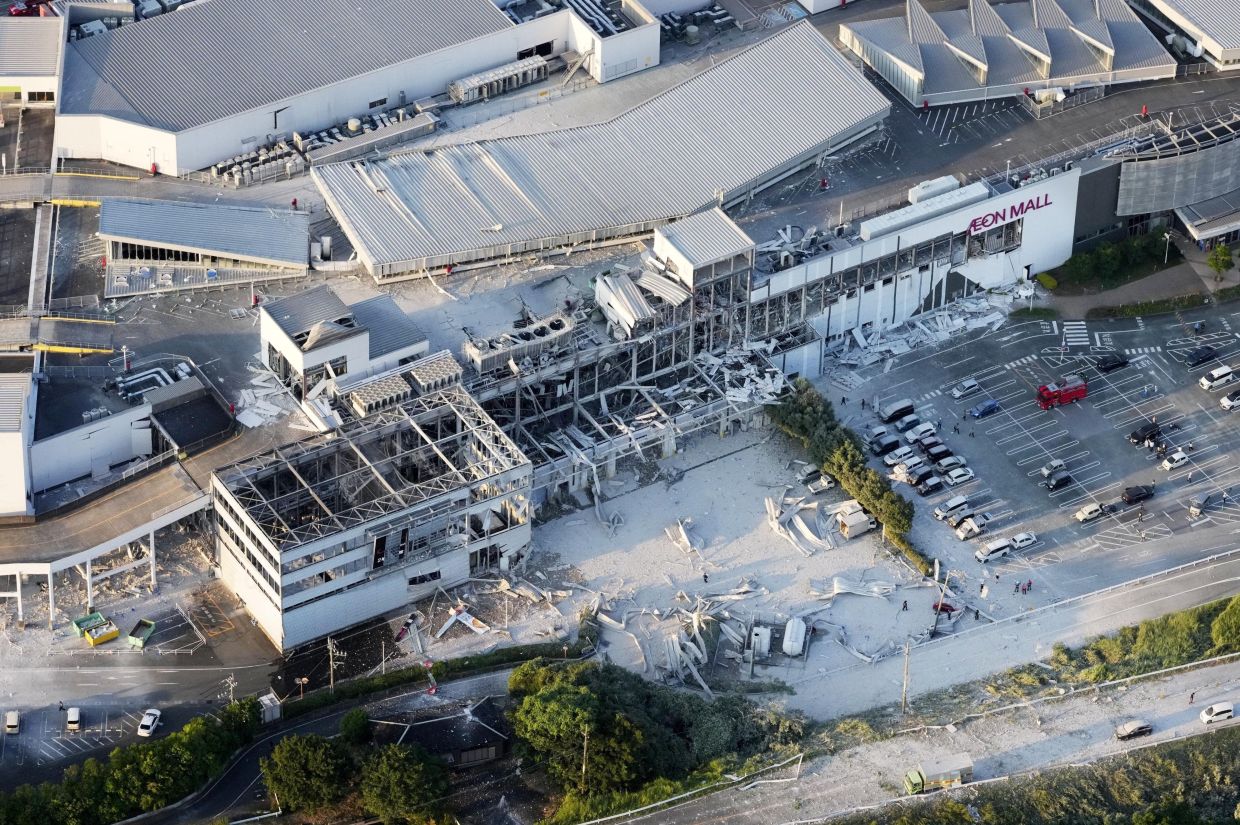
A powerful earthquake measuring 7.1 in preliminary magnitude shook southwestern Japan on Tuesday afternoon, with authorities confirming multiple casualties as emergency services rushed to assess damage across the affected region. The tremor, which struck at 4.27 pm local time, was centred in Kumamoto Prefecture at a relatively shallow depth of approximately 10 kilometres, according to data from the Japan Meteorological Agency. The event marks the most significant seismic activity in the region in recent months and has prompted immediate safety alerts across several prefectures.
The earthquake registered the maximum intensity of 7 on Japan's seismic intensity scale in the cities of Uki and Hikawa within Kumamoto Prefecture, with surrounding areas experiencing upper-level 6 intensity readings. To contextualize the severity, the Japan Meteorological Agency defines intensity 7 as the point at which individuals cannot maintain an upright position and may be forcibly lifted off the ground, making it extraordinarily dangerous for structural integrity and public safety. This marking of maximum intensity represents the first occurrence of such a reading since the powerful Noto Peninsula earthquake that devastated central Japan in January 2024, underlining the rarity and significance of Tuesday's event.
Immediate response efforts activated across Kumamoto Prefecture as the Uki Fire Department reported a continuous stream of emergency calls from residents seeking assistance. Firefighters confirmed that multiple individuals had sustained injuries, though exact numbers remained unclear during the initial hours following the tremor. The department simultaneously managed a fire outbreak that ignited in the aftermath of the quake, requiring resources and personnel to be diverted to multiple crisis points. Approximately 48,000 households across the prefecture experienced sudden power loss, complicating rescue operations and emergency communications in the critical hours following the disaster.
Tsunami warnings emerged quickly following the initial tremor, with the Japan Meteorological Agency issuing advisories for both the Ariake and Yatsushiro seas—bodies of water that border the affected region. However, these warnings were subsequently lifted after monitoring stations detected no significant wave activity. Nevertheless, authorities urged all individuals in coastal waters to evacuate immediately and remain at a safe distance from shorelines, reflecting standard precautionary measures when seismic activity threatens marine environments. The absence of observed tsunami waves provided some relief but did not diminish concerns about structural damage from the intense ground movement.
Beyond Kumamoto Prefecture, the earthquake's influence extended across southwestern Japan, with neighbouring Kagoshima Prefecture recording upper-level 5 intensity and both Fukuoka and Saga prefectures experiencing lower-level 5 intensity readings. Such a geographic distribution indicates the substantial energy released by the quake and demonstrates how seismic disturbances propagate across considerable distances through the Earth's crust. The widespread nature of the tremor prompted coordinated responses from multiple prefectural governments and emergency services operating under unified national disaster protocols.
Infrastructure disruption proved immediate and substantial. The Aso Kumamoto Airport ceased runway operations at 4.40 pm, just minutes after the quake, with airport operators providing no timeline for resuming commercial flights. Such closures typically remain in effect until comprehensive structural inspections confirm safety across runways, taxiways, and terminal facilities. Simultaneously, JR Kyushu suspended all operations across its entire service network, halting both the region's celebrated bullet train services and conventional local rail lines. For Malaysia-based readers, this scale of transportation shutdown reflects the severity that Japanese railways typically only implement following significant seismic events, indicating authorities took the immediate aftershock risk extremely seriously.
The Japan Meteorological Agency convened press conferences to brief the public on ongoing risks, emphasizing that building collapses and landslide hazards remained probable in areas of greatest intensity. Officials specifically warned residents to maintain heightened vigilance for subsequent earthquakes potentially matching the primary quake's intensity within the coming days, a common pattern in seismic zones where major quakes frequently trigger substantial aftershock sequences. Such warnings shape public behaviour and determine whether authorities recommend evacuations or shelter-in-place protocols.
Nuclear safety monitoring proved reassuring in the immediate aftermath. Kyushu Electric Power reported that both the Sendai nuclear power plant in Kagoshima Prefecture and the Genkai nuclear power plant in Saga Prefecture had detected no abnormalities following the earthquake. Nuclear facilities in Japan maintain among the world's most stringent automatic shutdown and monitoring systems, designed specifically to detect seismic disturbances and activate protective measures within milliseconds. Nevertheless, such assurances carry substantial weight given Japan's historical sensitivity to nuclear safety concerns following the 2011 Fukushima disaster.
Kumamoto Prefecture carries particular earthquake vulnerability given its seismic history. A decade prior, the region experienced two successive earthquakes with magnitudes measuring 6.5 and 7.3, a sequence that claimed 270 lives and devastated communities across the prefecture. That historical precedent informed the urgency of Tuesday's response, with officials and residents acutely aware that powerful earthquakes could recur in this tectonically active zone. The regional building codes and emergency preparedness infrastructure put in place since those earlier disasters likely provided some mitigation, yet the underlying geological vulnerability remained unchanged.
For Southeast Asian observers monitoring Japan's seismic activity, Tuesday's earthquake serves as a sobering reminder of the region's ongoing tectonic vulnerability and the sophistication of disaster response systems required to manage such events. Malaysia, sitting at lower seismic risk but nevertheless vulnerable to occasional tremors, maintains different preparedness standards, yet Japan's experience continues informing regional thinking about earthquake management. The incident also underscores how rapidly modern infrastructure can be disrupted by natural forces, with implications for supply chain continuity and regional economic activity that extend beyond the immediately affected areas. As rescue operations continued and damage assessments progressed, Japanese authorities focused on preventing cascading disasters and restoring essential services to normalcy within the shortest possible timeframe.

