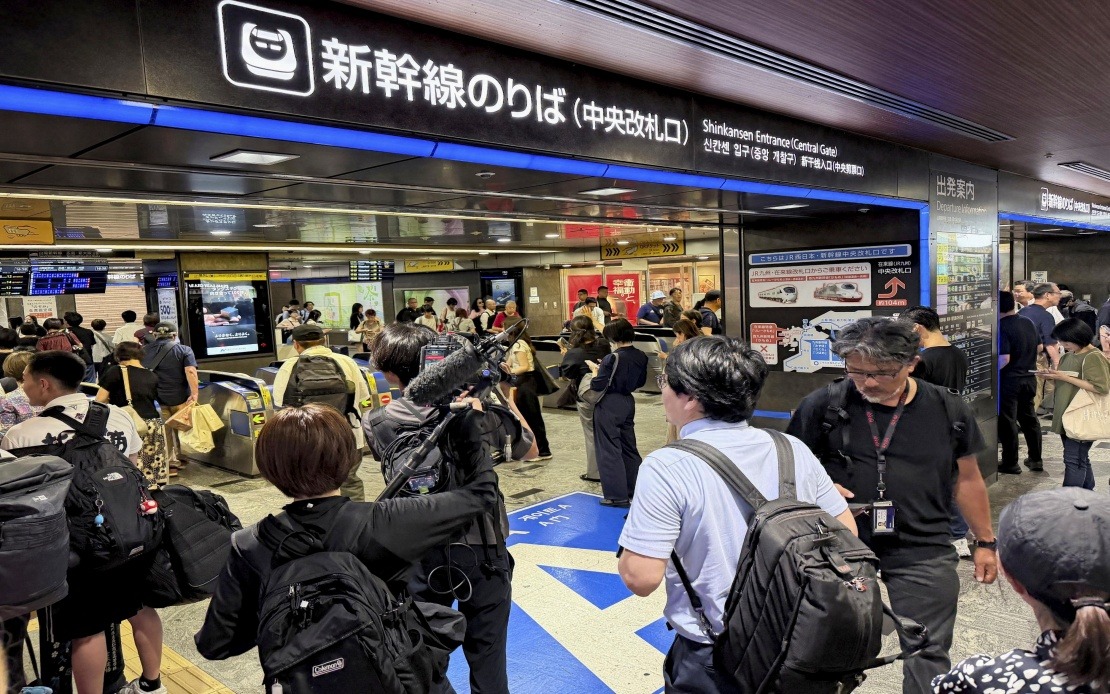
A powerful earthquake with a preliminary magnitude of 7.1 rocked the southwestern region of Japan on Tuesday afternoon, prompting immediate tsunami advisories and exposing the nation's ongoing vulnerability to seismic activity despite decades of preparedness measures. The Japan Meteorological Agency confirmed that the tremor struck at 4:27 p.m. local time with its epicentre located in Kumamoto Prefecture at a depth of approximately 10 kilometres, a relatively shallow rupture that typically generates stronger surface-level shaking than deeper events.
The geographical positioning of this seismic event underscores the inherent risk facing Kyushu island and surrounding regions. Located in the centre of Kyushu, Kumamoto Prefecture sits within one of Japan's most tectonically active zones, where the Philippine, Eurasian, and North American tectonic plates converge and continuously jostle for position. This particular quake registered a maximum intensity of 7 on the Japanese seismic intensity scale—the highest classification—in the municipalities of Uki and Hikawa, where structural damage and significant disruptions to daily life would be anticipated. Surrounding areas experienced upper 6 intensity shaking, still capable of causing considerable damage to buildings and infrastructure.
Neighbouring prefectures across the region also felt considerable effects from the tremor. Kagoshima Prefecture, immediately adjacent to Kumamoto, reported upper 5 intensity readings, while Fukuoka and Saga prefectures, both located further away on Kyushu island, registered lower 5 intensity levels. This wide geographical distribution of shaking demonstrates the powerful nature of the event and its capacity to disrupt normal operations across a substantial portion of southwestern Japan.
The human toll and immediate hardships resulting from the earthquake remain a primary concern. Local fire departments and news agencies reported that several individuals sustained injuries during the violent shaking, though precise casualty figures were still being compiled at the time of initial reports. The disruptions to essential services compounded the challenges facing residents attempting to assess damage and ensure family safety. Approximately 48,000 households across Kumamoto Prefecture lost electrical power due to the quake, creating additional complications for elderly residents and those dependent on medical equipment.
From a regional perspective, this earthquake carries significance for Southeast Asian observers given Japan's position as a major economic and technological hub. The Ariake and Yatsushiro seas, both narrow inland bodies of water bordered by populated coastal regions, received tsunami advisories following the quake, necessitating precautionary evacuations and heightened vigilance among residents in vulnerable areas. While tsunami waves generated by earthquakes of this magnitude striking at this depth can sometimes prove manageable, the combination of shallow rupture, coastal proximity, and accumulated seismic energy demands serious attention to public safety protocols.
Nuclear safety authorities moved swiftly to investigate whether the earthquake posed any risks to regional nuclear facilities. Both the Sendai nuclear power plant located in Kagoshima Prefecture and the Genkai nuclear power plant in Saga Prefecture underwent immediate assessment, with Kyushu Electric Power confirming that no abnormalities were detected at either installation. This rapid confirmation provided reassurance to a public acutely aware of nuclear safety concerns, particularly given Japan's historical experience with seismic-related nuclear incidents.
The response mechanisms activated following this earthquake reflect the sophistication of Japan's disaster management infrastructure, developed through decades of earthquake science and painful lessons from previous catastrophes. The Japanese Meteorological Agency's rapid magnitude determination and intensity mapping, combined with immediate tsunami advisory issuance, represents a coordinated national response designed to minimise casualties and property damage. However, the scale of power disruptions affecting tens of thousands of households illustrates the vulnerability of modern infrastructure to sudden geological shocks, a concern that extends throughout the seismically active Western Pacific region.
For Malaysian and Southeast Asian observers, this event serves as a reminder of the region's shared geological inheritance. While the Philippines and Indonesia experience more frequent and destructive earthquakes, Japan's experience demonstrates both the necessity of rigorous building codes and early warning systems, as well as the practical limitations of human engineering when confronted with the planet's fundamental forces. The coordination between meteorological agencies, power companies, emergency services, and nuclear regulators provides a template for regional disaster response, even as it highlights ongoing challenges in protecting dispersed populations from natural hazards.
The longer-term implications of this earthquake for Japan's infrastructure and economic activity warrant monitoring, particularly regarding any damage to critical facilities or supply chains that might have ripple effects throughout Asia-Pacific trade networks. As investigations continue into the full extent of damage and the precise mechanisms that generated this powerful tremor, this event reinforces fundamental truths about living in seismically active regions: preparedness saves lives, early warning systems remain essential, and the integration of technological safeguards across multiple sectors provides the best defence against natural disasters.

