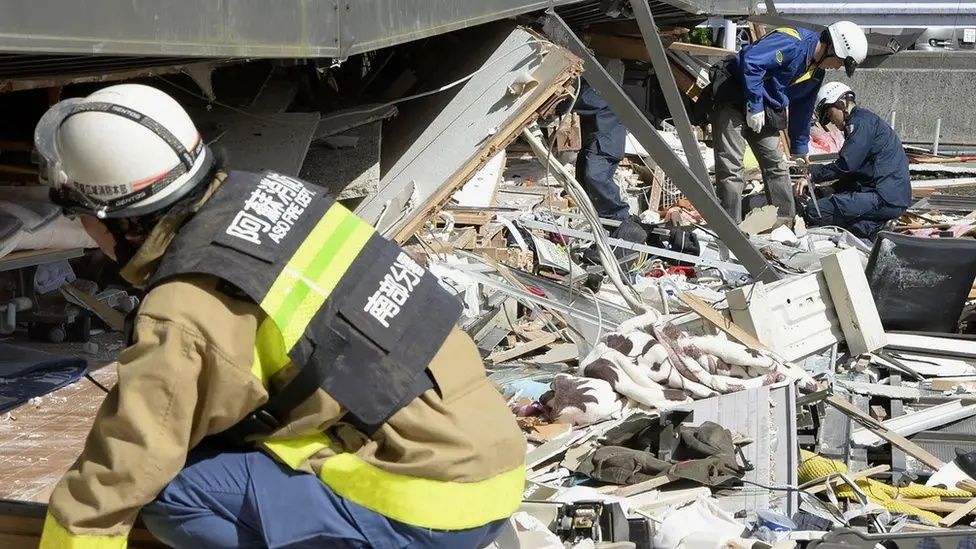
A devastating explosion rocked Aeon Mall Kumamoto in Kashima Town on Tuesday evening, triggering a major emergency response as rescue teams raced to extract people from the damaged structure. Multiple individuals remain trapped within the complex, with confirmed injuries among those evacuated, though authorities have yet to release precise casualty figures or details on the severity of wounds sustained.
The blast struck the shopping centre at approximately 6.00 pm local time, with emergency services receiving numerous distress calls reporting an explosion-like sound accompanied by white smoke billowing from the building. The scale of structural damage became evident within minutes, as footage captured from a Japan Meteorological Agency helicopter at 6.20 pm revealed extensive destruction to the Aeon Mall Kumamoto's physical infrastructure. Significant sections of the exterior facade had been blown away, exposing the underlying steel framework, while substantial portions of the roof appeared to have partially collapsed. A prominent hole was visible penetrating through the rooftop, indicating the force of the initial blast.
According to Japan's Fire and Disaster Management Agency, information relayed by local fire department personnel confirmed that part of the shopping centre's second floor had experienced structural failure, with numerous occupants believed to be trapped in various sections of the building. Firefighting teams immediately mobilised comprehensive rescue operations, conducting systematic assessments of the affected zones to locate and extract trapped individuals. The agency provided limited information regarding injured persons transported to regional medical facilities, with hospital authorities withholding specific casualty counts and injury assessments pending completion of initial triage procedures.
The timing of this industrial accident raises significant questions about potential contributing factors. Notably, Kumamoto Prefecture had been struck by a powerful magnitude 7.1 earthquake earlier on Tuesday, with the epicentre's proximity to the shopping centre resulting in considerable seismic shaking across the region. Official measurements from the Japan Meteorological Agency indicate that Kashima Town experienced ground motion intensity reaching at least the lower 5 category on Japan's seismic intensity scale, though precise readings for the specific location remain preliminary pending further assessment. Such significant earthquake activity could have damaged internal infrastructure, compromised structural integrity, or triggered secondary failures in building systems.
Investigators have not yet publicly identified the precise cause of the explosion, with authorities emphasising the preliminary nature of their assessment. The sequence of events—powerful seismic activity in the afternoon followed by catastrophic structural failure at the shopping complex in the evening—suggests multiple potential explanations requiring thorough examination. Gas line ruptures, electrical system malfunctions exacerbated by earthquake damage, or other utility failures represent likely lines of inquiry for specialist investigators now examining the site.
For Malaysian readers and those across Southeast Asia, this incident underscores the complex hazards facing densely populated commercial zones in earthquake-prone regions. While Malaysia itself experiences relatively modest seismic activity, the vulnerability demonstrated by this major shopping centre reminds regional property developers, municipal authorities, and facility operators of the necessity for rigorous building standards, comprehensive earthquake-resistant design, and emergency preparedness protocols. Many Southeast Asian nations have accelerated construction of large-scale retail centres and commercial complexes without necessarily implementing the most stringent structural safeguards.
Aeon, the Japanese retail conglomerate operating this shopping mall, commands a substantial presence throughout Southeast Asia, including significant operations in Malaysia through Aeon Co. (M) Bhd and associated companies. This incident will likely prompt the corporation to conduct urgent safety audits across its regional portfolio, examining structural vulnerabilities and disaster response capabilities at facilities potentially vulnerable to seismic events or similar industrial accidents.
The emergency response mobilisation in Kumamoto demonstrates the operational sophistication of Japan's disaster management infrastructure. Coordinated activities between fire departments, police forces, medical facilities, and the Fire and Disaster Management Agency illustrate how developed economies manage large-scale civilian emergencies. The contrast with disaster response capabilities in less-resourced jurisdictions highlights persistent gaps in emergency preparedness across the wider region.
As rescue operations continue at Aeon Mall Kumamoto, investigators will likely require substantial time to determine the explosion's origin definitively. Preliminary findings will probably emerge within days, but comprehensive analysis of structural damage and causal factors may extend over weeks. The incident reinforces that commercial safety extends beyond standard operational concerns to encompass natural disaster resilience and infrastructure robustness.

