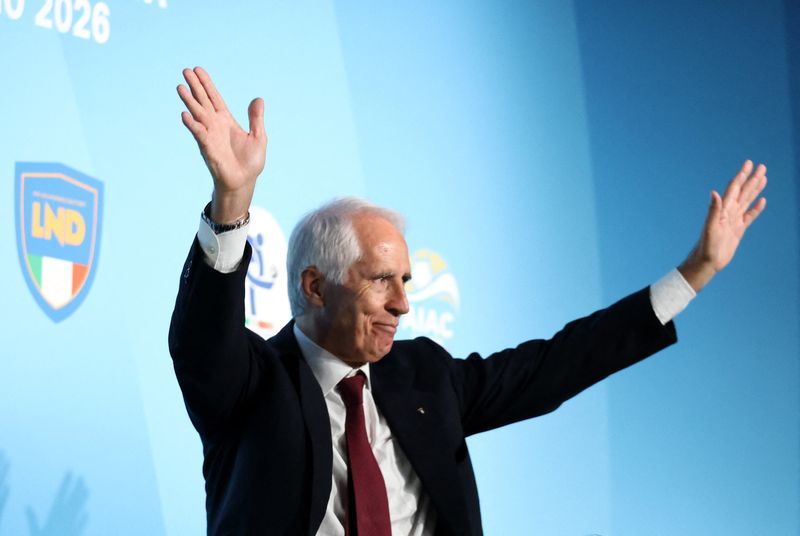
Giovanni Malago, a 67-year-old businessman and former sports administrator, has assumed leadership of Italian football at one of the lowest points in the nation's sporting history. Elected president of the Italian Football Federation (FIGC) on Monday with 68.58% of the vote, Malago takes charge following Italy's shock failure to qualify for the 2022 World Cup in Qatar—a defeat that has now repeated itself for three consecutive tournament cycles, fundamentally shaking confidence in Italian football's structural competence and future direction.
The outgoing president, Gabriele Gravina, stepped down following the April playoff loss to Bosnia & Herzegovina, an outcome that triggered widespread public outcry and political condemnation across Italy. That single match exposed deeper systemic failures within Italian football, problems that had been festering for years but were suddenly impossible to ignore. The federation itself has acknowledged that the consequences extend beyond the national team; Italian clubs have simultaneously crashed out of major European competitions, leaving the country's entire football ecosystem in what observers describe as its worst condition in four decades.
Malago's appointment comes on the back of significant recent administrative experience. He previously led the organising committee for the Milano Cortina Winter Olympics in February, an assignment widely regarded as successfully executed and bringing favourable international attention to Italy's event management capabilities. Before that, he served as president of the Italian National Olympic Committee, providing him with institutional knowledge of how large, complex sporting bodies function. He also spent time as a futsal player, giving him at least firsthand experience of competitive sport, though never at the elite football level now demanded of him.
The incoming federation chief faces multiple urgent challenges that demand simultaneous attention. Finding and appointing a successor to departed coach Gennaro Gattuso represents the most visible and pressing task, as the national team needs consistent leadership and tactical direction. However, Malago has indicated that broader institutional reform takes equal priority. The federation's approach to identifying and developing young talent has been widely criticised by prominent figures including retired striker Roberto Baggio, who publicly warned that Italy's youth academy system no longer produces players capable of competing at the highest international level. This structural problem cannot be solved quickly but requires sustained investment and systematic change.
Malago also inherits responsibility for major infrastructure commitments. Italy will co-host the European Championship in 2032 alongside Turkey, an opportunity that could either restore national pride or become another platform for disappointment if proper preparation does not commence immediately. The federation leader has made clear he understands the symbolic importance of this tournament for Italian football's rehabilitation, framing it as motivation rather than burden.
In his initial statements following the election, Malago struck a tone acknowledging both the gravity of the situation and his determination to approach it methodically. "I am not afraid but I am highly mindful of the responsibilities," he told journalists, before emphasising that the federation must function as more than an administrative body. "The Football Federation must not just administer; it must be a source of inspiration. It is the largest social institution in the country, and not just in terms of numbers," he said, recognising that Italian football occupies a uniquely important place in national life and popular consciousness.
His electoral victory over rival Giancarlo Abete was decisive enough to provide a mandate for change, though it also reflects internal federation acknowledgment that the previous administration's approach had become untenable. Gravina himself appeared resigned to this reality when addressing the assembly, remarking that he recognised he should have departed even earlier, suggesting he understood the depth of the crisis extending beyond any single manager's tenure.
For Malaysian and Southeast Asian football observers, the Italian federation's crisis offers instructive lessons about how quickly institutional reputation can deteriorate when competitive results collapse repeatedly. Italy's experience demonstrates that historical success—four World Cup victories—provides no immunity against prolonged failure, and that structural problems in youth development cannot be masked by senior-level talent indefinitely. The federation's struggles also highlight how interconnected a nation's entire football ecosystem becomes; when the national team fails, domestic club competitions suffer simultaneously, creating a downward spiral that affects sponsorship, broadcast value, and public interest across all levels.
Malago's emphasis on using history as inspiration rather than burden carries particular resonance given Italy's rich football heritage. The challenge now involves channelling that heritage into tangible improvements in player development systems, coaching quality, and tactical innovation. His call for unity—"Alone I can do nothing, together we can do everything"—acknowledges that federation leadership cannot succeed without buy-in from club directors, coaches, and the broader football community.
The next several months will prove defining as Malago assembles his immediate team, particularly the national coach appointment. That decision will signal whether the federation intends radical change or incremental adjustment. Italian football's international standing depends on demonstrating that this period of crisis, while deeply painful, has produced genuine institutional learning and commitment to fundamental reform rather than superficial management adjustments.