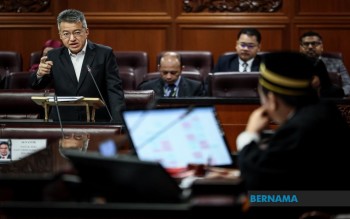
Malaysia's government has accumulated nearly RM5 billion in financial savings through carefully implemented expenditure control measures, Deputy Finance Minister Liew Chin Tong announced during a Senate session on July 29, 2026. The achievement represents substantial progress in the government's efforts to navigate economic pressures stemming from global supply chain disruptions, with the savings accrued as of July 14, 2026.
The comprehensive cost-containment programme emerged from a strategic decision by the Ministry of Finance to reduce operating expenditure allocations across the entire federal administration. On April 29, 2026, the Ministry issued formal directives instructing all government departments and agencies to adjust their spending commitments, with the total reduction targeting RM10 billion for the fiscal year. This represented a significant but carefully calibrated reduction designed to address fiscal pressures without dismantling core government functions.
Following the issuance of these directives, the Ministry conducted extensive engagement sessions throughout the government apparatus to establish clear expenditure control criteria that would govern implementation across different departments and agencies. These sessions proved crucial in ensuring consistent application of the spending restrictions while allowing individual organisations to understand how the guidelines would apply to their specific operational circumstances and budget structures.
Liew's remarks before the Senate emphasised that the government's approach to expenditure reduction has successfully strengthened public financial management without undermining the delivery of essential services that Malaysian citizens depend upon. The measures have also helped maintain broader economic stability despite the persistent challenges posed by disruptions to global supply chains, which have created inflationary pressures and supply constraints affecting economies throughout the region and beyond.
The Deputy Finance Minister stressed that early and decisive action by the government proved instrumental in insulating Malaysia from more severe economic consequences. By implementing restraint measures promptly in the first half of 2026, policymakers avoided the kind of fiscal deterioration that has afflicted some neighbouring economies facing similar global headwinds. This preventive approach has allowed Malaysia to maintain its economic footing and protect its currency and investment reputation during a period of international uncertainty.
In responding to Senator Hussin Ismail's specific inquiry about the scope of budget adjustments and their consequences, Liew outlined the deliberate flexibility that the Ministry built into the expenditure control framework. Rather than imposing uniform across-the-board cuts that might have caused indiscriminate damage to government operations, the Ministry allowed individual ministries and agencies to reorganise their spending priorities according to their unique operational requirements and current strategic needs. This devolved approach acknowledged that different departments face different circumstances and that centralised budget cuts could inadvertently damage critical functions in some areas while leaving less essential spending untouched in others.
The government explicitly protected spending in several key areas deemed essential for public welfare and economic development. Health services, direct subsidies to consumers, social assistance programmes, welfare payments, agricultural sector incentives, educational support, and other government commitments to citizens remained shielded from the expenditure reductions. This protection reflected a deliberate political choice to concentrate the burden of fiscal adjustment on areas less directly affecting vulnerable populations and long-term development capacity.
Major reductions focused on what the Ministry characterised as non-critical expenditure, including restrictions on official travel and postponement of new civil service recruitment and the creation of new positions. These measures targeted administrative costs and operational expenses rather than frontline service delivery or investment in human capital. By deferring new hiring and travel, the government achieved significant savings while minimising immediate disruption to ongoing programmes and public-facing functions that require continuity.
Liew emphasised that the Ministry of Finance remained prepared to review the expenditure restrictions and consider requests from departments for budget relief should genuine operational emergencies or unanticipated requirements emerge. However, any such reviews would occur within the context of Malaysia's overall fiscal position and the government's established expenditure priorities. This language suggested that while the RM10 billion reduction represented a firm target, the allocation process retained some flexibility for exceptional circumstances, preventing the framework from becoming completely rigid and unresponsive to operational realities.
The government's approach reflects broader challenges confronting Southeast Asian economies as they navigate persistent global supply chain disruptions, inflationary pressures, and economic uncertainty. Malaysia's experience demonstrates how countries with existing fiscal capacity and institutional capability can implement meaningful expenditure controls without triggering service delivery failures or provoking widespread public dissatisfaction. The selective nature of the cuts, combined with explicit protection for welfare spending and healthcare, suggests a strategy aimed at maintaining the government's political legitimacy and social contract while addressing fiscal pressures.
For Malaysian businesses and investors, these measures carry several implications. The government's demonstrated ability to manage expenditure without precipitating economic crisis may bolster confidence in macroeconomic stability, potentially supporting longer-term investment decisions. However, the restrictions on government recruitment and the deferrals of new position creation could affect service quality in some areas and may reduce employment opportunities within the civil service sector, an important source of jobs particularly for degree holders in smaller cities and towns throughout Malaysia.
The savings achievement also illustrated the government's commitment to fiscal discipline during a period when spending pressures naturally intensify. Global supply chain disruptions typically trigger political demands for government intervention and support to affected businesses and workers, creating upward pressure on public expenditure. Malaysia's government, by successfully reducing spending while maintaining essential services, has demonstrated that restraint remains possible even during economically challenging periods, a message that may influence investor perceptions of fiscal management credibility.

