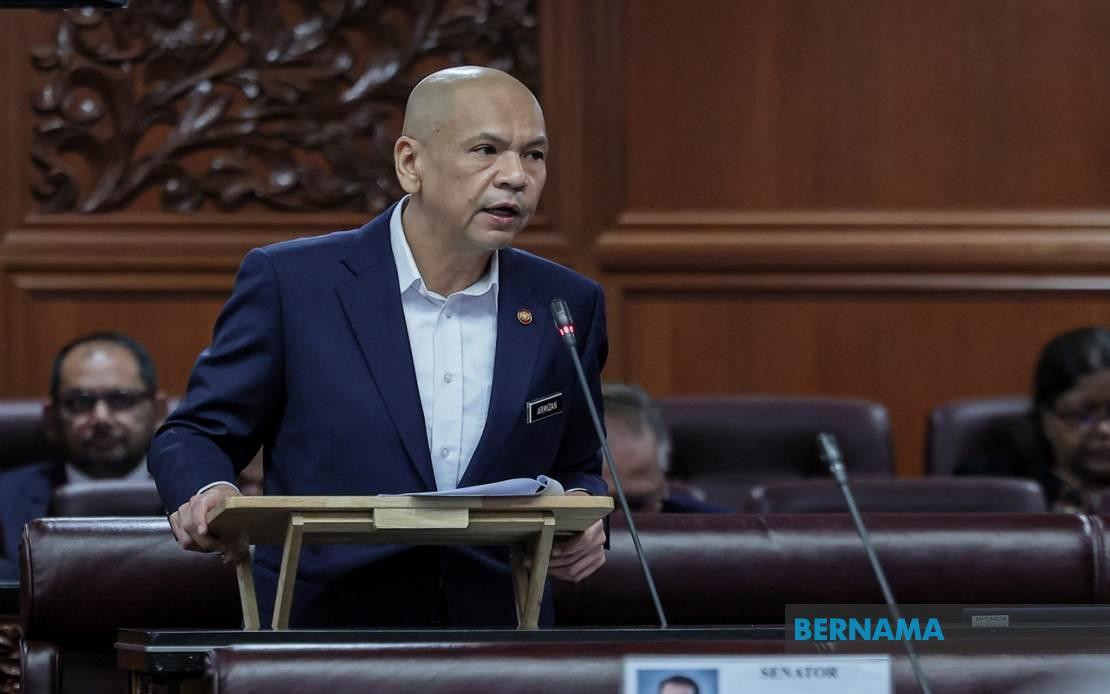
The Domestic Trade and Cost of Living Ministry has advanced a sweeping legislative agenda to strengthen Malaysia's competition framework, with two amendment bills tabled for first reading in the Dewan Rakyat on June 23. Minister Datuk Armizan Mohd Ali introduced both the Competition (Amendment) Bill 2026 and the Competition Commission (Amendment) Bill 2026, signalling the government's commitment to modernising competition law as the economy becomes increasingly complex and interconnected. Both pieces of legislation are expected to move rapidly through Parliament, with second reading scheduled during the current parliamentary session, underscoring their priority status within the legislative programme.
The primary thrust of the Competition (Amendment) Bill 2026 centres on expanding and refining the Malaysia Competition Commission's (MyCC) capacity to investigate potential breaches and enforce compliance across the economic landscape. The current Competition Act 2010 has been in force for more than a decade, and the proposed changes acknowledge the gap between existing investigative tools and the sophistication of modern market conduct. Among the most significant amendments is a broadening of Act 712's scope to encompass all economic activities rather than limiting oversight to those classified strictly as commercial enterprises. This shift has profound implications for sectors previously operating in regulatory grey zones, including government-linked entities and public agencies whose competitive conduct has historically escaped detailed scrutiny.
The expansion of MyCC's investigative apparatus represents a fundamental recalibration of the Commission's operational mandate. Clause 7 of the Bill grants MyCC explicit authority to demand information and documents from any individual or government entity when conducting market reviews mandated under the legislation. Previously, such requests operated within narrower parameters, potentially limiting the Commission's ability to construct comprehensive pictures of market dynamics across sectors where state involvement remained substantial. This enhancement directly addresses concerns raised in competition circles that certain industries—particularly utilities, telecommunications, and state-owned enterprises—had been operating with insufficient competitive scrutiny.
The introduction of criminal penalties for deliberate document destruction or concealment marks a significant toughening of enforcement provisions. Clause 13 creates an offence targeting individuals who intentionally destroy, conceal, deface, or alter data with intent to deceive MyCC or obstruct its investigations. This provision mirrors anti-fraud legislation found in advanced jurisdictions and reflects growing recognition that investigations fail when documentary evidence disappears during the investigative process. For companies in Malaysia, the clause introduces tangible legal jeopardy beyond civil penalties, potentially affecting corporate governance practices and records management protocols across industries.
Complementary amendments to the Competition Commission Act 2010 address the internal governance and operational structure of MyCC itself. Clause 8 provides formal clarification of the Commission's advisory role, explicitly recognising its mandate to counsel the minister, public authorities, and regulatory bodies on competition-related matters spanning policies, procedures, and programmes. This codification reflects the reality that competition considerations increasingly intersect with regulatory decisions across multiple domains, from infrastructure development to sectoral regulation. By formalising MyCC's advisory capacity, the amendment aims to embed competition analysis into government decision-making at earlier stages, potentially preventing regulatory decisions that might inadvertently entrench anti-competitive market structures.
Institutional flexibility emerges as another key reform objective through Clause 10, which permits MyCC to delegate functions and powers to its chairman, committees, officers, and employees. This delegation authority facilitates more responsive and efficient decision-making within the Commission, allowing senior management to distribute authority strategically as investigation and enforcement demands fluctuate. For a growing organisation like MyCC, which has expanded its caseload significantly in recent years, such flexibility proves essential for managing workloads and deploying expertise where most needed without requiring parliamentary amendment each time operational priorities shift.
The amendment governing officer appointments reflects explicit attention to governance transparency and institutional independence. Subclause 12(a) proposes that MyCC itself appoint its officers upon recommendation from the chief executive officer, rather than through ministerial appointment processes. This structural change aims to insulate the Commission's operations from political influence and enhance public confidence in the independence of competition enforcement. International experience demonstrates that competition commissions operating with formal independence from political appointment cycles generate greater credibility with business communities and produce more consistent enforcement patterns over time. Malaysia's move aligns with global standards for competition authority governance.
For Malaysian businesses, particularly those in concentrated industries or those engaged in cross-border commercial activities, these amendments signal a fundamentally more intensive competition regime. The expansion of MyCC's scope to all economic activities means that previously unexamined sectors—from construction to agriculture to services—now face heightened scrutiny. Companies operating across multiple sectors may discover that practices acceptable in one context suddenly require reassessment under more expansive enforcement expectations. The enhanced investigative powers, combined with criminal penalties for obstruction, create incentives for more forthcoming engagement with MyCC investigations and more careful documentation of competitive decision-making.
The regional implications merit consideration given ASEAN's broader trend toward stronger competition enforcement. Several neighbouring jurisdictions have recently upgraded their competition frameworks, and Malaysia's amendments position the country alongside more sophisticated enforcement regimes across Southeast Asia. For multinational enterprises operating across the region, this convergence potentially simplifies compliance by encouraging alignment of competitive conduct standards across markets. However, enforcement intensity variations will persist, requiring companies to understand jurisdiction-specific nuances even as legal frameworks become more harmonised.
Stakeholder responses will likely vary considerably. Consumer advocacy groups will probably welcome the expanded investigative reach, viewing it as enhancing protection against monopolistic conduct. Business organisations may express concerns about compliance costs and the potential for over-enforcement in grey areas. Small and medium enterprises, historically less equipped to navigate complex compliance regimes, may face particular challenges if MyCC enforcement becomes more aggressive across all economic activities without proportionality safeguards. The Ministry's messaging during second reading debate will prove important in clarifying enforcement philosophy and expected compliance expectations.
The parliamentary timeline suggests these amendments could become law within months rather than years, given the government's apparent determination to progress them rapidly. Once enacted, MyCC will require a transition period to implement enhanced investigative procedures, training programmes, and documentation systems aligned with expanded powers. Affected industries would be wise to conduct competition audits during the intervening period, identifying potential vulnerabilities before the new regime fully activates. Companies with pending investigations or matters under MyCC review should carefully consider how the expanded scope and enhanced penalties might affect their positions under the new legal framework.