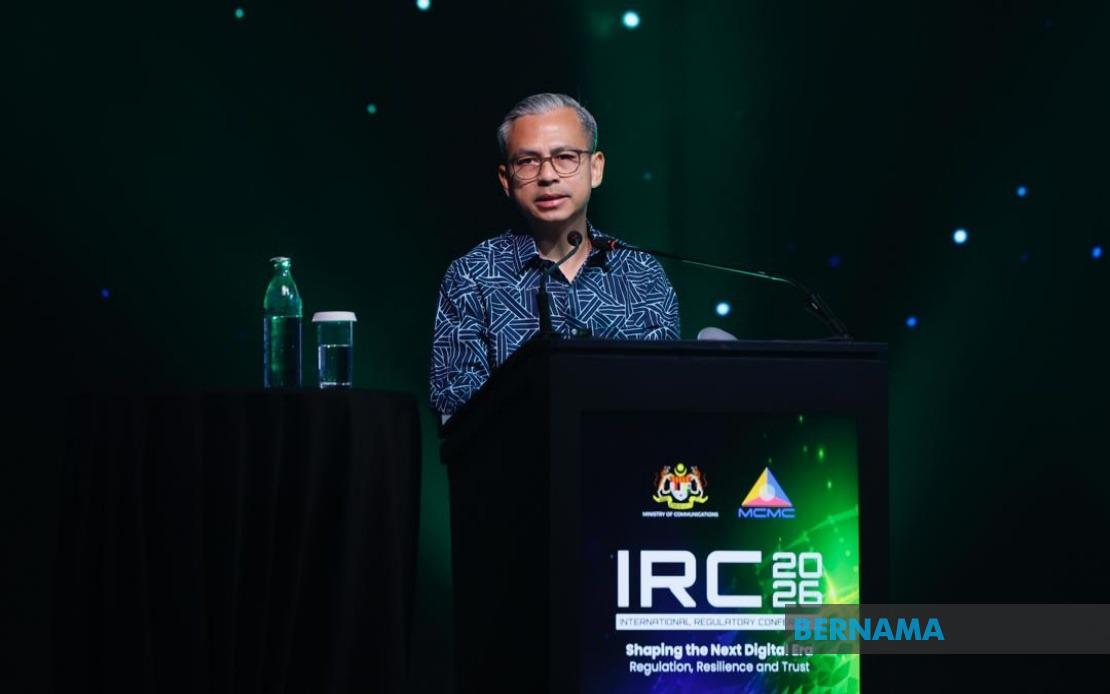
Malaysia is moving decisively to overhaul its digital governance architecture, recognising that technological progress must be anchored in security, accountability and public confidence. Communications Minister Datuk Seri Fahmi Fadzil underscored this priority while opening the International Regulators Conference 2026 in Kuala Lumpur on July 21, signalling that the country views trustworthy digital systems as fundamental to social and economic stability in the coming decade.
The government's comprehensive approach encompasses multiple strategic pillars designed to modernise the regulatory environment while keeping pace with rapid technological change. The National Digital Network Plan (Jendela) continues to drive broadband penetration across rural and underserved areas, while the nationwide 5G rollout represents a critical infrastructure investment that positions Malaysia competitively within Southeast Asia's digital economy. Complementing these connectivity initiatives are substantial investments in submarine cable infrastructure, which enhance the country's data transmission capacity and reduce dependence on foreign routing. Together, these initiatives reflect a coherent vision of digital infrastructure development that treats connectivity as a foundational public good rather than a purely commercial enterprise.
Among the most significant policy developments is the implementation of the Online Safety Act 2025 (ONSA), which represents a philosophical shift in how Malaysia approaches the regulation of digital platforms and online content. Rather than adopting purely reactive measures that address harm after it occurs, ONSA establishes preventative frameworks that hold platforms accountable for the environments they create. This approach is particularly consequential for protecting children and vulnerable population segments, who face disproportionate risks from predatory behaviour, misinformation and exploitative content online. By establishing clear platform responsibilities before problems cascade across the digital ecosystem, the law aims to create conditions where trust can flourish.
Fahmi articulated the central challenge confronting policymakers globally: the accelerating divergence between technological innovation and the regulatory frameworks ostensibly designed to govern it. Technology has evolved at exponential rates over the past two decades, whilst many existing governance structures remain rooted in assumptions and institutional logics from earlier eras. This temporal mismatch creates regulatory gaps where genuine harms can flourish unchecked, undermining public confidence in digital systems. The minister's emphasis on the primacy of trust reflects recognition that technological adoption ultimately depends on citizen perception of safety and reliability, not merely the technical capabilities of platforms themselves.
The governance frameworks Malaysia is implementing must accomplish a delicate balancing act: maintaining sufficient agility to adapt to emerging technological threats while simultaneously providing sufficient clarity and consistency to encourage legitimate innovation and business investment. Overly rigid regulation risks stifling entrepreneurship and driving technology development offshore, whilst excessively permissive approaches invite the very harms that undermine public trust. Malaysian policymakers are attempting to navigate this middle ground through proportionate regulatory responses calibrated to specific risks, rather than blanket prohibitions or laissez-faire indifference.
The International Regulators Conference 2026, now in its third consecutive year, has become an important institutional vehicle for translating these governance principles into coordinated international action. The conference provides a forum where regulators, industry leaders, policymakers and academics can exchange experiences and develop common approaches to challenges that transcend national boundaries. This year's theme—"Shaping the Next Digital Era: Regulation, Resilience and Trust"—reflects the shared global preoccupation with ensuring that digital systems serve public interests rather than undermining them.
The substantive agenda encompasses several areas of critical importance for the Malaysian context and the broader Southeast Asian region. Online safety mechanisms must address the region's specific vulnerabilities, including high rates of mobile-first internet adoption, diverse linguistic communities, and varying levels of digital literacy. Data governance frameworks must balance innovation in analytics and artificial intelligence with individual privacy protections and national data security interests. The emerging field of quantum communications presents both opportunities and risks that regulators have only begun to comprehend, let alone regulate effectively. Autonomous systems raise fundamental questions about accountability and liability when machines make consequential decisions affecting citizens' lives.
Fahmi noted that Malaysia's experience managing the transition from a Single Wholesale Network to a Dual Network model for 5G deployment has attracted considerable international attention and positioned the country as a source of regulatory expertise. Other jurisdictions facing similar infrastructure challenges view Malaysia's approach as instructive, creating opportunities for policy dialogue and mutual learning. The IRC serves as a mechanism for translating this technical expertise into broader frameworks applicable across different national contexts.
A particularly significant dimension of Malaysia's engagement involves its role as a Council Member of the International Telecommunication Union (ITU). By channelling insights and outcomes from the IRC directly into ITU deliberations, Malaysia amplifies its influence on global telecommunications policy and contributes Malaysian perspectives shaped by Southeast Asian realities to international standard-setting processes. This engagement reflects recognition that digital governance cannot be effectively pursued in isolation; regulatory coherence across trading partners and neighbouring countries is essential to prevent arbitrage and ensure consistent protections.
The ministry's emphasis on "practical policy outcomes and stronger international cooperation" suggests impatience with abstract theorising disconnected from implementation challenges. The IRC's discussions must translate into concrete follow-up actions that participating countries commit to implementing domestically, whether through legislative amendments, regulatory guidance, or institutional reforms. Malaysia appears determined to avoid the trap of international forums producing elaborate communiqués that subsequently gather dust while participating governments revert to parochial approaches.
For Malaysian stakeholders—technology companies, content creators, platforms, civil society organisations and ordinary citizens—these governance developments carry substantial implications. Businesses operating in the digital space will need to monitor regulatory developments closely and invest in compliance infrastructure anticipating stricter accountability standards. Content creators and platforms must adapt to transparency and moderation requirements established by ONSA. Citizens benefit from enhanced protections but must also navigate regulatory frameworks that restrict certain content or require disclosure of personal data. The equilibrium Malaysia seeks between innovation and protection remains contested and subject to continuous calibration.
The government's proactive stance on digital governance positions Malaysia as a serious actor in global telecommunications policy debates, distinguishing it from countries that adopt purely reactive postures. By hosting major international conferences, actively engaging multilateral institutions, and implementing forward-looking legislation, Malaysia is attempting to shape the global regulatory agenda rather than passively accepting norms established elsewhere. Whether this ambitious vision translates into effective governance outcomes depends substantially on sustained political commitment and the capacity of institutions like the Malaysian Communications and Multimedia Commission to execute complex regulatory mandates amidst rapidly evolving technological circumstances.
The coming years will reveal whether Malaysia's governance frameworks achieve their stated objective of fostering a digital ecosystem characterised simultaneously by innovation, security, resilience and public trust. The stakes could scarcely be higher, as digital systems increasingly mediate economic participation, civic engagement, social connection and access to essential services for the entire population.

