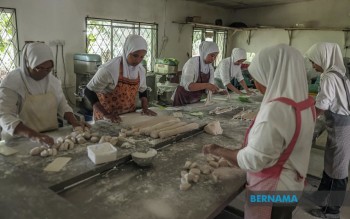
Malaysia is making substantial progress in reducing its dependence on imported halal ingredients through a comprehensive government initiative spanning 23 distinct programmes and projects. Operating under the framework of the Halal Industry Master Plan 2030 (HIMP 2030), these efforts were implemented across seven strategic pillars as of May 30, 2026, according to the Ministry of Investment, Trade and Industry (MITI). The announcement reflects growing recognition within government that bolstering domestic halal ingredient production is essential for the nation's economic resilience and competitive positioning in the global halal sector.
The breadth of this initiative demonstrates a multi-pronged approach rather than reliance on single policy interventions. Of the 23 programmes active under HIMP 2030, seven specifically target halal ingredient development through focused research and development channels. Beyond R&D, the government has established parallel pathways addressing critical gaps in the halal supply chain ecosystem: dedicated financing mechanisms for micro, small and medium enterprises that form the backbone of ingredient manufacturing; talent pipeline development to ensure skilled workforce availability; and commercialisation support to accelerate the journey from laboratory innovation to market-ready products.
Implementation is being pursued systematically through sequential phases, beginning with comprehensive mapping of critical ingredient categories that represent both significant import volumes and realistic candidates for domestic substitution. This analytical foundation allows policymakers to prioritise resources toward sectors where Malaysia possesses genuine competitive advantages or nascent production capacity. Following the mapping phase, the government is facilitating research and commercialisation of identified priority ingredients, supported by investment facilitation schemes designed to attract capital toward halal ingredient manufacturing enterprises. The strategy also emphasises cultivating leading companies capable of anchoring entire supply chain ecosystems, recognising that anchor firms drive supporting industries through procurement demands and knowledge spillovers.
A notable technological dimension underpins these efforts through the MyHALALINGREDIENTS system, implemented by JAKIM (the Department of Islamic Development Malaysia) beginning August 15, 2025. This data collection platform represents a critical infrastructure upgrade for the halal ingredient sector, enabling systematic recording and assessment of raw materials used throughout Malaysian manufacturing. Rather than operating in isolation, MyHALALINGREDIENTS integrates seamlessly with the existing MYeHALAL certification platform, creating a unified digital ecosystem that simplifies certification pathways and accelerates approvals across all Malaysian halal schemes. This technological coherence matters significantly for manufacturers navigating compliance requirements, as integration reduces redundant documentation and cross-checking processes that previously consumed both time and resources.
The government's methodology reflects strategic selectivity in determining which imports to substitute. Rather than pursuing blanket import reduction across all halal ingredients, MITI has adopted a targeted approach focusing on ingredient categories meeting three specific criteria: demonstrable strategic value to the broader economy or food security, high existing dependence on foreign supply chains, and realistic potential for economically viable domestic production. This triangulated framework prevents wasteful investment in uncompetitive ventures while concentrating support where genuine opportunity exists to build lasting capacity. The approach recognises that not every imported ingredient is a suitable candidate for domestic production, and that attempting broad-based substitution could prove economically counterproductive.
Industry collaboration mechanisms constitute another essential pillar of the HIMP 2030 framework. The government is actively facilitating matching between ingredient producers and leading companies throughout the halal supply chain, creating procurement relationships that incentivise increased use of locally sourced content. These matchmaking initiatives reduce barriers that small and medium producers typically face in accessing established commercial channels, while simultaneously encouraging larger firms to evaluate domestic alternatives to historical import suppliers. When leading companies commit to sourcing locally available ingredients meeting their quality and cost specifications, this creates stable demand that justifies investment by upstream suppliers in capacity expansion and quality enhancement.
For Malaysia's broader economic strategy, these halal ingredient initiatives carry significance extending beyond sectoral boundaries. The halal industry represents a substantial portion of the Malaysian economy and has emerged as a significant export category generating valuable foreign exchange. By strengthening domestic ingredient supply chains, Malaysia positions itself more competitively in global halal trade, reducing production costs and improving supply reliability for halal manufacturers serving international markets. This advantage proves particularly valuable given increasing global competition within the halal sector and growing importance of supply chain resilience demonstrated by recent global disruptions.
The timing of these initiatives reflects recognition that Malaysia's halal sector has matured beyond basic certification towards industrial development. Earlier policy focus concentrated on establishing certification frameworks and building consumer trust. Current initiatives shift attention towards productive capacity and competitiveness, treating halal ingredient manufacturing as a genuine manufacturing opportunity rather than merely a regulatory compliance domain. This represents evolution in how government conceptualises the halal sector's role within broader industrial policy.
REGIONAL AND INTERNATIONAL DIMENSIONS merit consideration as well. Southeast Asia lacks integrated halal ingredient supply chains, with most regional manufacturers importing from external sources or relying on imports within ASEAN. If Malaysia successfully builds competitive domestic production, opportunities emerge for regional supply relationships extending to neighbouring Muslim-majority nations and other ASEAN producers. Building resilient halal ingredient supply chains strengthens ASEAN's overall economic independence while positioning Malaysian firms as preferred suppliers throughout the region.
The HIMP 2030 framework's emphasis on SME support addresses a particularly important gap. Small and medium enterprises produce the vast majority of halal ingredients globally, yet these firms typically face constraints accessing development capital, technical expertise, and commercial networks necessary for scaling. By creating dedicated financing channels and matching programmes, the government removes friction points that disproportionately constrain smaller producers while giving them pathways to engagement with larger commercial entities that previously sourced only from established international suppliers.
Looking forward, success in these initiatives depends substantially on execution quality and sustained commitment beyond political cycles. MITI's phased implementation timeline suggests realistic acknowledgment that building competitive ingredient production capacity requires years rather than months. The integration of MyHALALINGREDIENTS with existing platforms demonstrates strategic thinking about infrastructure, while targeted import substitution reflects pragmatic prioritisation. These elements collectively position Malaysia's halal ingredient sector for meaningful advancement, though realising the full potential of HIMP 2030 will require consistent policy reinforcement and business sector engagement.

