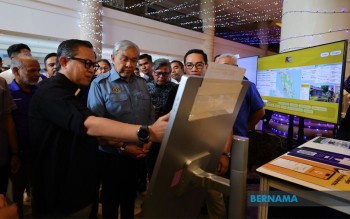
Deputy Prime Minister Datuk Seri Dr Ahmad Zahid Hamidi has unveiled a significant price target for Malaysia's rubber sector, projecting that minimum prices will reach RM5 per kilogramme by the conclusion of 2027. The ambitious objective forms part of a comprehensive strategy to elevate the economic circumstances and living standards of more than 500,000 smallholder rubber producers scattered across the nation. Ahmad Zahid, who concurrently holds the portfolio of Minister of Rural and Regional Development, delivered these remarks during his address at the opening of RISDA's Central Zone Smallholders Convention in Seremban, signalling the government's commitment to revitalising the industry from within.
The challenge embedded in this initiative is substantial, acknowledged Ahmad Zahid, as it requires the Rubber Industry Smallholders Development Authority (RISDA) to pioneer innovative methodologies that can sustain elevated pricing even as international commodity markets remain volatile and unpredictable. Global supply and demand dynamics have historically constrained Malaysia's ability to command premium prices, yet the government believes that strategic intervention and market positioning can help overcome these structural constraints. This perspective reflects a pragmatic shift away from passive acceptance of world market forces towards proactive price stabilisation mechanisms that protect producer incomes.
Central to the government's rationale is the recognition that smallholders constitute approximately 80 per cent of Malaysia's total rubber production, positioning them as critical stakeholders whose prosperity directly impacts the sector's overall health and sustainability. Without meaningful income improvements, Ahmad Zahid warned, the industry risks losing appeal to younger Malaysians who increasingly view agriculture as economically unviable compared to urban employment alternatives. The departure of young workers from rubber cultivation threatens to hollow out the supply base and undermine the industry's long-term competitiveness, making income support not merely an economic intervention but a necessity for demographic survival.
The deputy prime minister articulated a broader philosophical approach that transcends simplistic price elevation. While acknowledging the reality that commodity prices respond to global economic laws, he stressed that policymakers must pursue unconventional strategies that ensure smallholders receive compensation reflecting rubber's genuine intrinsic value. This framing positions the initiative as fundamentally about restoring dignity and economic recognition to those whose labour underpins national rubber production, rather than merely managing market mechanics. Ahmad Zahid emphasised that this mission addresses not only income supplementation but also the foundational question of whether Malaysia's rural communities can sustain viable livelihoods within agriculture.
Complementing the price target, the government is promoting productivity enhancements through technological modernisation and improved agricultural practices. Ahmad Zahid specifically advocated for smallholders to abandon substandard seedlings and exclusively utilise high-quality planting materials, recognising that yield improvements represent a parallel strategy to price appreciation for expanding farmer earnings. Mechanisation, digitalisation, and systematic plantation management have been identified as priority areas where technology transfer and capacity building can measurably increase per-hectare output without requiring proportional increases in labour or input costs.
Recent production data underscores the sector's momentum. Malaysia's natural rubber output has expanded by 9.1 per cent year-to-date, demonstrating that growth is achievable even within current market constraints. In Negeri Sembilan alone, collections reached 636.47 tonnes valued at over RM2.53 million through mid-July, whilst nationwide RISDA operations have accumulated more than 7,095 metric tonnes worth exceeding RM29 million since January. These figures suggest that when market conditions align and collection infrastructure functions effectively, smallholders can mobilise significant production volumes.
The government simultaneously recognises that rubber monoculture exposes smallholders to excessive income volatility and commodity price risk. Ahmad Zahid advocated expanding income diversification through subsidiary agricultural enterprises, livestock operations, agribusiness ventures, and downstream industrial engagement. This multi-pronged approach transforms smallholders from commodity producers into entrepreneurial operators managing diversified portfolios of revenue streams. Such transformation requires substantial investment in extension services, market linkages, and business advisory support to equip farmers with necessary skills and confidence.
A critical component of this modernisation effort is the newly launched MyPK RISDA mobile application, a digital platform engineered to streamline service delivery and enhance transparency for all 500,000-plus registered smallholders. Digital accessibility represents a crucial enabler for farmers seeking market information, extension guidance, and administrative services without navigating traditional bureaucratic channels. By reducing friction between smallholders and support services, the application facilitates faster decision-making and improves trust in institutional frameworks governing the industry.
The RM5 per kilogramme target aligns with Malaysia's broader production ambition to reach one million metric tonnes annually by 2030, a volume milestone that demands simultaneous expansion across productivity and producer participation dimensions. Achieving this output level whilst maintaining floor prices requires coordinated intervention across multiple policy domains including export promotion, domestic processing incentives, research and development funding, and direct income support where necessary. The initiative thus represents a comprehensive sectoral strategy rather than an isolated pricing mechanism.
For Southeast Asian observers, Malaysia's approach carries instructive implications regarding commodity producer support in an era of volatile global markets. The integration of traditional price stabilisation with technological modernisation, income diversification, and digital platform development suggests a more sophisticated policy toolkit than historical commodity agreements alone provided. Whether this model can successfully stabilise smallholder incomes whilst maintaining international competitiveness will influence broader thinking about agricultural sustainability across the region, particularly in nations similarly dependent on commodity exports and smallholder production systems.

