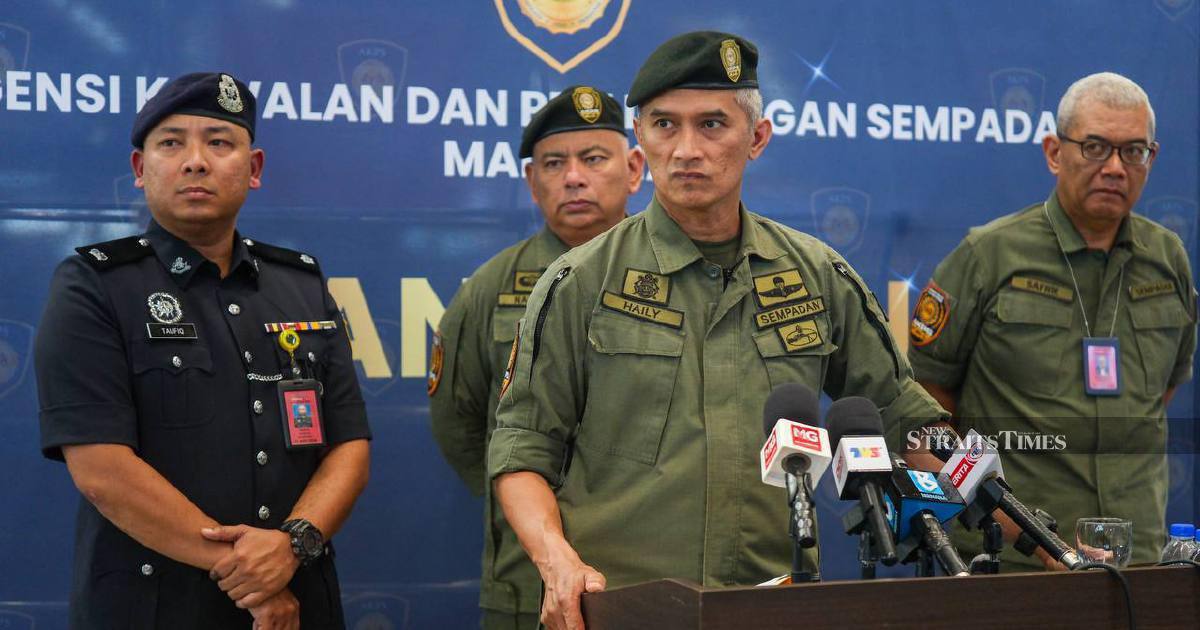
The Malaysian Customs and Border Agency (MCBA) has stood firm in its assertion that screening protocols at Kuala Lumpur International Airport were executed correctly when handling the Malaysia Airlines pilot subsequently detained by Indonesian authorities on allegations of attempting to smuggle narcotics. The incident, which has drawn scrutiny towards airport security measures and the effectiveness of screening technologies, prompted officials to publicly clarify that established procedures were comprehensively adhered to at each stage of the passenger processing.
The case centres on whether advanced artificial intelligence-assisted scanning equipment failed to detect prohibited items in the pilot's baggage as he prepared to travel. The MCBA's statement indicates that despite the sophisticated nature of modern screening machinery, personnel followed every checkpoint requirement and verification step mandated by their operational framework. This distinction between technological limitations and procedural compliance has become crucial in understanding how the situation unfolded at Malaysia's busiest international air hub.
Airport security screening represents a complex interplay between mechanical detection systems and human oversight. While AI-enhanced scanning devices have revolutionised border security by processing vast amounts of baggage data in seconds, they remain subject to technical constraints and false-negative possibilities. The equipment deployed at KLIA operates within predetermined sensitivity thresholds designed to balance thoroughness with operational efficiency, ensuring that passenger throughput is maintained whilst detection capabilities remain robust. That the scanner may not have flagged the pilot's luggage does not necessarily indicate a procedural breach, but rather reflects the reality of how such systems function in practice.
The administrative framework governing airport screening in Malaysia involves multiple layers of verification. Beyond X-ray and imaging technology, staff are trained to exercise visual inspection, documentation review, and risk-assessment protocols. The MCBA's emphasis on full SOP adherence suggests that regardless of whether technological systems registered anomalies, the broader security architecture encompassed all required human decision-making and verification steps. This layered approach is typical of modern international aviation hubs, where technology serves as a supplement to rather than replacement for trained personnel judgment.
Indonesia's subsequent apprehension of the pilot represents an important geographical distinction in this narrative. The arrest occurred outside Malaysian airspace and jurisdiction, suggesting that whatever contraband may have been involved cleared Malaysian borders but was intercepted during Indonesian customs operations. This timeline raises complex questions about inter-agency coordination and intelligence-sharing between nations, particularly given the pilot's professional status and the likelihood he would have crossed multiple checkpoints without extraordinary suspicion. Regional cooperation on narcotics trafficking remains an evolving challenge across Southeast Asia, where transnational criminal networks exploit variations in enforcement intensity and detection capabilities across borders.
The aviation sector has faced intensified scrutiny globally regarding crew and personnel screening, particularly following high-profile incidents involving commercial airline employees. Malaysia's aviation authority maintains one of Asia's more rigorous compliance regimes, yet the profession's trusted status and frequent border crossings create inherent vulnerabilities that criminals occasionally attempt to exploit. The pilot's position within a major airline would ordinarily confer certain presumptions regarding trustworthiness, factors that screening protocols must balance against comprehensive security requirements.
For Malaysia Airlines and the broader civil aviation sector in the country, this incident carries implications beyond immediate operational procedures. Reputational considerations weigh heavily in an industry where passenger confidence in safety and security proves foundational to commercial viability. The airline's need to demonstrate commitment to rigorous internal vetting alongside confidence in national border security measures creates competing demands. Malaysian carriers compete regionally and internationally, and security incidents—regardless of their technical merit—inevitably generate media attention and potential passenger hesitation.
The technical specifications of AI-assisted scanning equipment have evolved considerably over recent years, incorporating machine learning algorithms designed to identify contraband with increasing accuracy. Nevertheless, these systems require regular calibration, operator training, and maintenance protocols to function optimally. The MCBA's reference to AI involvement signals Malaysia's modernisation efforts in border management, yet simultaneously illustrates that technological advancement does not eliminate human elements or guarantee perfect interception rates. No screening system achieves one-hundred-percent effectiveness, and this reality underscores why multiple verification layers remain essential.
Regional intelligence networks and cooperation frameworks represent an increasingly important dimension of drug trafficking prevention across Southeast Asia. The Indonesian arrest may have resulted from separate intelligence operations or enhanced scrutiny applied by Indonesian authorities rather than deficiency in Malaysian screening. Indonesia's own sophisticated customs apparatus has expanded capabilities in recent years, creating scenarios where contraband successfully exits one jurisdiction but faces interception upon entry to another. This geographical reality complicates attribution of responsibility and highlights that security effectiveness increasingly depends on coordinated regional responses rather than isolated national efforts.
The MCBA's public statement defending screening procedures reflects a broader trend of border agencies providing transparency regarding their operations and capabilities. Stakeholders including aviation operators, passenger advocacy groups, and international partners benefit from clear communication regarding how screening processes function. The agency's willingness to publicly assert that procedures were followed demonstrates confidence in its protocols whilst acknowledging the inherent complexities involved in perfect detection. Moving forward, this incident may prompt review of inter-agency communication protocols between Malaysian and Indonesian authorities, potentially strengthening mechanisms through which intelligence regarding suspected trafficking activity is rapidly shared and acted upon before departure.
For Malaysian travellers and the broader public, the case underscores the importance of understanding how modern border security operates—balancing efficiency with thoroughness, and technology with human judgment. The MCBA's procedural compliance indicates that institutional frameworks functioned as designed, even if outcomes were not entirely preventative. In an increasingly interconnected region where legitimate travel coexists with criminal exploitation of transportation networks, ongoing refinement of detection capabilities and inter-agency coordination remains paramount to maintaining security standards whilst facilitating the legitimate movement of people and goods across borders.

