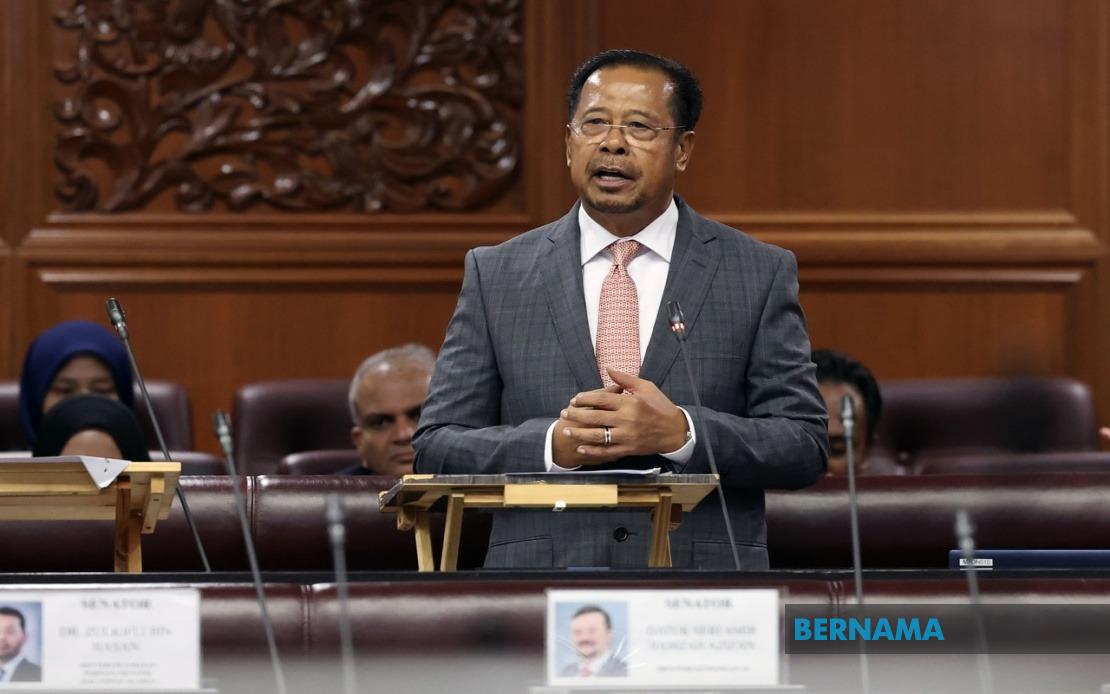
Malaysia's Cabinet has endorsed a substantial RM1.7 billion investment programme designed to systematically replace approximately 1,800 kilometres of ageing water distribution pipes across the nation. Deputy Minister of Energy Transition and Water Transformation Datuk Seri Abdul Rahman Mohamad outlined the ambitious undertaking during parliamentary proceedings in the Dewan Negara, positioning the initiative as a cornerstone of the government's broader strategy to bolster the resilience and efficiency of the country's water supply network.
The replacement scheme will concentrate initially on deteriorating asbestos-cement pipes and other critical conduits that have outlived their original design specifications. These ageing assets represent a significant vulnerability in Malaysia's water infrastructure, contributing substantially to Non-Revenue Water losses—water that enters the distribution system but is lost through leakage before reaching consumers. By systematically upgrading these compromised sections, the government aims to substantially narrow the gap between water production and actual consumer delivery, a persistent challenge that has strained both resources and fiscal budgets across the nation's water authorities.
Non-Revenue Water remains a critical performance indicator for Malaysia's water sector. In 2025, Peninsular Malaysia and the Federal Territory of Labuan recorded an NRW rate of 34.4 per cent, meaning that approximately one-third of treated water fails to generate revenue for water utilities due to leakage, theft, and metering inaccuracies. Abdul Rahman indicated that updated figures for 2026 would only become available after that reporting year concludes, suggesting an ongoing monitoring mechanism to evaluate the programme's effectiveness over time. This persistent problem has been a focal point for government intervention, as reducing NRW directly translates to more efficient resource utilisation and lower operational costs for struggling water authorities.
The programme will unfold in phases, allowing for coordinated execution across multiple regions while managing financial disbursement strategically. Each replacement project will be required to adhere to rigorous safety standards established by the Department of Occupational Safety and Health, addressing public health concerns that have grown in prominence as awareness of asbestos hazards has increased. The regulation of asbestos-related risks during pipe replacement operations has become particularly important, given the occupational dangers associated with asbestos dust exposure during removal and disposal activities. By embedding stringent safety compliance into all project specifications, the government seeks to protect both construction workers and communities adjacent to replacement work zones.
Sabah, a state facing particular challenges with water infrastructure across rural and urban areas, stands to benefit substantially from targeted allocations within the broader programme. The state has identified 110.4 kilometres of water pipes classified as critical and requiring urgent replacement, with engineering estimates placing the remedial cost at RM99.35 million. This significant portion of the national initiative underscores regional disparities in infrastructure age and condition—factors that have historically affected service reliability in Sabah's expanding population centres. Beyond pipe replacement itself, the federal government has committed an additional RM558,000 specifically toward initiatives aimed at reducing Sabah's NRW rate, acknowledging that infrastructure renewal must be complemented by operational efficiency improvements and targeted water-loss reduction strategies.
The timing of this investment programme reflects mounting pressure on water authorities to demonstrate meaningful progress in addressing infrastructure deficiencies. Malaysia's water sector has faced persistent criticism from consumers regarding service reliability, supply interruptions, and unequal distribution across different regions. The scale of the RM1.7 billion allocation signals executive-level commitment to a problem that has festered for decades, compounded by population growth, urbanisation, and the challenges of maintaining nineteenth and twentieth-century pipe networks in tropical climates. Rust, corrosion, and structural fatigue in ageing pipes have accelerated replacement imperatives across Peninsular Malaysia and the East Malaysian states.
From a regional perspective, Malaysia's water infrastructure renewal programme carries implications for Southeast Asian water security discourse. As the region confronts climate variability, pollution challenges, and competing demands for freshwater resources, the efficiency of distribution networks becomes increasingly material. Countries throughout Southeast Asia operate comparable water systems with comparable NRW challenges—Thailand, Indonesia, and the Philippines all contend with similar losses through ageing infrastructure. Malaysia's willingness to commit substantial capital to systematic renewal may influence regional policy thinking about infrastructure investment priorities, particularly among middle-income nations balancing competing fiscal demands.
The procurement and implementation of such a large-scale programme will necessarily engage Malaysia's engineering and construction sectors, generating employment opportunities across planning, installation, and quality assurance functions. Water authorities will need to coordinate closely with local contractors, ensuring that technical expertise matches project specifications while maintaining service continuity for existing consumers. The phased approach permits staged workforce mobilisation and protects against supply disruption, a critical consideration in densely populated urban areas dependent on continuous water service.
Successful execution of this replacement programme will require sustained political commitment beyond electoral cycles and ministerial tenures. Previous Malaysian infrastructure initiatives have occasionally faltered due to implementation delays, budget reallocation, or administrative transition. The establishment of clear accountability mechanisms and transparent reporting frameworks will be essential to maintaining momentum. Abdul Rahman's parliamentary positioning of the programme as a government priority signals official resolve, yet converting parliamentary endorsement into completed infrastructure improvements across 1,800 kilometres remains a substantial operational undertaking spanning multiple years and requiring coordination among federal authorities, state water boards, and local contractors.
The long-term benefits of systematic pipe replacement extend beyond quantifiable NRW reduction. Communities receive more reliable water service, water authorities improve financial sustainability through reduced non-revenue losses, and the national water supply system becomes more resilient to future shocks and stresses. For Malaysian consumers, particularly in regions prone to water supply disruptions, this programme represents a tangible commitment to infrastructure improvement that directly affects household access to clean water—a fundamental service that underpins public health and quality of life.

