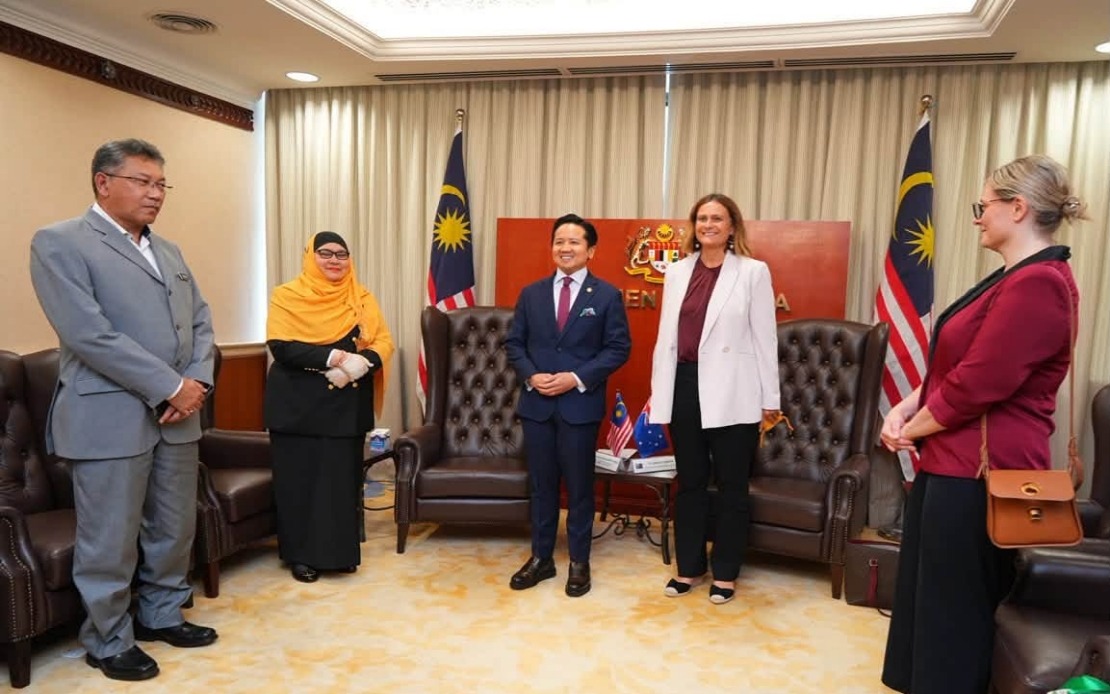
Malaysia and Australia are moving forward with collaborative initiatives in rare earth elements and critical minerals, signalling growing strategic alignment in sectors increasingly vital to the region's economic competitiveness. The Natural Resources and Environmental Sustainability Ministry confirmed the development following discussions between Minister Datuk Seri Arthur Joseph Kurup and Australian High Commissioner to Malaysia Danielle Heinecke at the Parliament building, underscoring the significance both nations attach to this partnership.
The timing of these discussions reflects broader geopolitical currents reshaping supply chains across Asia-Pacific. Rare earth elements and critical minerals have become focal points in global trade and technology development, with nations worldwide seeking to reduce dependence on traditional suppliers and build resilient domestic capabilities. Australia's established position as a significant minerals producer and Malaysia's growing commitment to developing a complete rare earth value chain create complementary advantages that both countries aim to leverage.
Malaysia's strategy centres on constructing a comprehensive domestic rare earth elements ecosystem spanning midstream to downstream operations, a framework aligned with the National Mineral Policy 3. This represents an evolution beyond Malaysia's historical role as primarily a processor of imported materials. The nation now seeks to develop integrated capabilities that capture greater value within its borders, creating employment opportunities and strengthening industrial competitiveness. Neodymium magnet manufacturing stands out as a particularly strategic area, given its applications across renewable energy, electric vehicles, and advanced manufacturing sectors experiencing rapid global expansion.
Australian technical expertise becomes invaluable in this context. As a country with extensive experience in critical minerals extraction, processing, and technology development, Australia can provide Malaysia with knowledge transfer and best practice frameworks. The discussions specifically highlighted management of rare earth processing residues, particularly neutralisation underflow residue, a technical challenge that has constrained sustainable expansion of the sector. Developing effective solutions for managing these residues addresses both environmental concerns and economic viability, creating pathways for expanded production without compromising environmental standards.
The partnership operates within the broader Malaysia-Australia Comprehensive Strategic Partnership established in 2021, a framework that has gradually expanded beyond traditional security and trade dimensions into emerging sectors like green technology and sustainable resource management. This institutional architecture provides structured mechanisms for cooperation, reducing transaction costs and enabling long-term strategic planning that transcends individual government cycles or leadership changes.
For Malaysian policymakers, this cooperation supports National Mineral Policy 3 objectives while potentially positioning Malaysia as a regional hub for rare earth processing and manufacturing. The country's existing infrastructure, industrial base, and geographical position within Southeast Asia offer distinct advantages. Success in developing neodymium magnet manufacturing could attract regional investment and create clustering effects, drawing related industries and research capabilities to Malaysia.
The discussions also encompassed hazardous waste management and marine ecosystem conservation, reflecting recognition that sustainable critical minerals development requires comprehensive environmental safeguards. Climate financing emerged as another shared concern, particularly relevant as both nations work toward commitments under the UN Climate Change Conference framework, including Malaysia's engagement with COP31. This integrated approach to critical minerals, environment, and climate reflects evolving standards where extractive industries increasingly operate within environmental and social governance constraints.
From a regional perspective, the Malaysia-Australia partnership contributes to Southeast Asian economic diversification and technological advancement. As global supply chains reorganise around resilience and sustainability rather than purely cost considerations, Southeast Asian nations that can demonstrate technical capability, environmental responsibility, and reliable governance frameworks gain strategic importance. Malaysia's positioning in rare earth elements development could influence regional trajectories, potentially inspiring neighbouring countries to develop their own critical minerals capabilities.
The competitive dimension warrants attention as well. China currently dominates rare earth elements processing globally, creating dependencies that many nations regard as strategically concerning. Diversifying supply sources through partnerships like the Malaysia-Australia initiative contributes to more resilient global supply chains. This competition is not merely commercial but reflects broader efforts by Western-aligned nations to develop alternatives to established supply chains concentrated in strategic competitors' hands.
Implementing these cooperation frameworks presents genuine challenges beyond diplomatic statements. Malaysia requires sustained investment in research institutions, processing facilities, and technical workforce development. Knowledge transfer from Australia must translate into practical capabilities embedded within Malaysian organisations and institutions. Market development for neodymium magnets and downstream rare earth products requires coordination with manufacturers and end-users globally, involving regulatory compliance and quality assurance standards. Success depends on moving beyond exploratory discussions to concrete projects with defined timelines, funding commitments, and performance metrics.
The partnership also reflects recognition that critical minerals development cannot proceed through purely market mechanisms or individual corporate initiatives. Government coordination becomes essential for establishing standards, managing environmental impacts, coordinating research investment, and ensuring alignment with broader strategic objectives. Australia and Malaysia both acknowledge that state-level cooperation creates conditions within which private investment and industrial activity can flourish sustainably.
Looking forward, the Malaysia-Australia cooperation in rare earth elements could become a model for Southeast Asian partnerships addressing critical minerals and green technology development. As global transitions toward renewable energy and electric vehicles accelerate, demand for rare earth elements and associated technologies will intensify. Nations that establish domestic capabilities and secure reliable supply partnerships position themselves advantageously for the emerging economic landscape. Malaysia's exploration of closer cooperation with Australia represents strategic planning for an era where critical minerals rival conventional energy resources in economic and geopolitical significance.

